








Environmental Statement
EMAS STATEMENT REPORTING PLATFORM

Environmental Statement
EMAS EUROPEAN REGULATIONS

Environmental Statement
EMAS STATEMENT REPORTING PLATFORM
GRUPO CEMENTOS PORTLAND VALDERRIVAS:
ALCALÁ DE GUADAÍRA FACTORY
Annex IV.B Environmental statement
- A summary of the organisation's activities, products and services, the organisation's relationship to central organisations, if applicable, and a clear and unambiguous description of the scope of the EMAS registration, including a list of the sites included in this registration;
 |
General data |
Introductory Presentation
Environmental Statement 2025
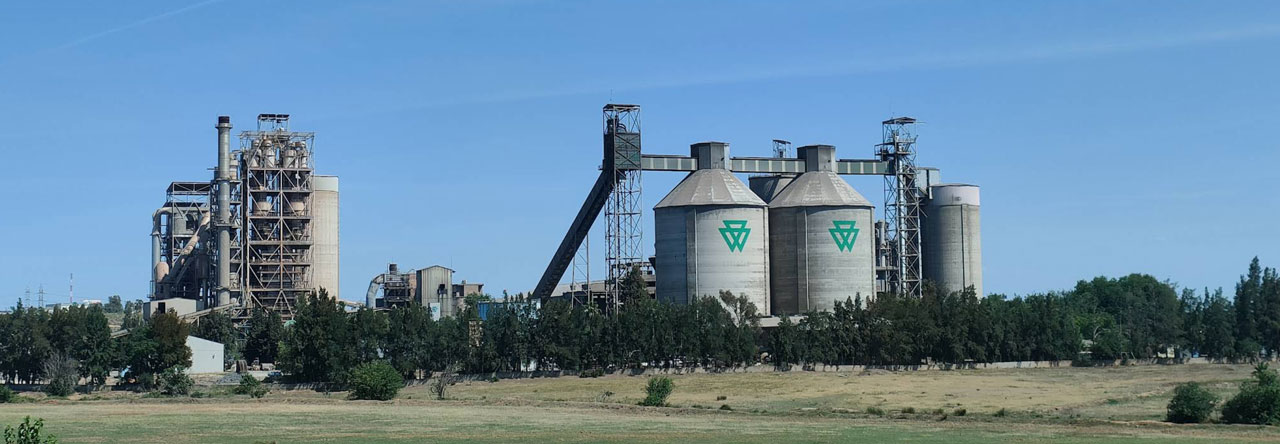
Once again this year, the Alcalá de Guadaíra Plant of Cementos Portland Valderrivas, S.A., a member of GRUPO CEMENTOS PORTLAND VALDERRIVAS, is making this new Environmental Statement available to its stakeholders—the seventeenth issued in accordance with the European EMAS Regulation— with the aim of providing all necessary environmental information regarding the relevant environmental aspects and activities associated with its cement and clinker production operations and marl quarrying activities.
This Statement provides an update on the results of quantitative indicators related to environmental management aspects achieved in 2025: consumption of raw materials, fuels, electricity, and water; Recovery ; emissions to air, soil, and water; biodiversity initiatives; and environmental emergencies.
The Environmental Management System is based on the UNE-EN ISO 14001:2015 standard, which takes into account the factory’s context through a risk and opportunity management approach based on the life cycle of the manufactured products, encompassing:
- Planning of actions to control risks associated with environmental aspects and context analysis.
- Compliance with applicable requirements and performance evaluation.
- Environmental improvement plans.
- Action planning for the control of stakeholders' needs and expectations.
Priority is given to indicators that summarize information regarding environmental aspects, which were previously explained in detail in earlier Statements in order to demonstrate the environmental improvements achieved.
All Statements are available on our website, www.valderrivas.es, or may be requested through the various channels listed in this Statement.
The contents of this Statement have been reviewed by those responsible for its management and approved by the company’s management; as with previous years’ Statements, AENOR has been asked to act as an independent third party. Its validation certificate is included in this Statement.
We trust that this Statement—which was drafted with the primary aim of serving as a useful information tool and an effective channel of communication regarding the various aspects of our environmental responsibility—will be of interest to our readers.
The Grupo Cementos Portland Valderrivas an integrated industrial group active across the entire cement industry value chain, with Cementos Portland Valderrivas serving as the parent company, to which the Alcalá de Guadaíra plant belongs.
The efficient management of our Group’s interactions with the environment and its surrounding context is becoming increasingly important, and our updated Environmental Policy reflects this commitment, guiding all actions across our various operations in line with our dedication to sustainable development.
Cement is an essential component of our society, and our Group is committed to ensuring that its production is consistent with climate protection and the principles of sustainable development. To this end, we have adopted an environmental management approach to cement production based on life-cycle analysis and management, taking into account the supply, production, use, distribution, and end-of-life phases.
Support for environmental management systems and environmental programs is therefore essential. This involves conducting a risk and opportunity analysis within our operational context, assigning roles to stakeholders, and defining environmental objectives applicable to all plants within the Spain Cement Business in order to improve our environmental performance year after year.
As evidence of this, the Group applies the basic principles of the circular economy by implementing strategies for Recovery and material Recovery from waste, with the aim of improving our production conditions while generating positive synergies with our environment, so that we can face the present and the near future with full confidence in the success and sustainability of our processes.
We continue to strive, yet another year, to ensure that our operations remain aligned with sustainable development, while fulfilling our strategic mission to adapt to the current environment and meet the needs and expectations of our stakeholders. We remain convinced that continuous improvement in environmental performance continues to be an opportunity to optimize our competitiveness, our service to the community, and profitability for our shareholders. Additionally, Cementos Portland Valderrivas has implemented and certified the UNE-EN ISO 50001:2015 Energy Management Standard at its cement plants in Spain, integrated into the Environmental Management System.
This milestone allows us to maintain a high level of commitment to improving our environmental performance and energy efficiency, integrating climate considerations into the company’s overall management, embracing the challenge of decarbonization, and managing it as an opportunity to ensure our competitiveness, our service to the community, and profitability for our shareholders.
We remain committed to providing reliable, relevant, transparent, comparable, and verified environmental information, as reflected in this Environmental Statement and in the Global Environmental Product Declarations (EPDs) verified by AENOR. Anyone interested in learning more about our environmental management practices may contact us through the communication channels described in this Statement.
The Alcalá de Guadaíra Plant, whose operations are classified under NACE-07 code 23.51 (Manufacture of cement) and NACE-07 code 08.11 (Quarrying of limestone), is part of the Grupo Cementos Portland Valderrivas.
The Alcalá de Guadaíra plant began operations in 1964 as Sociedad Andaluza de Cementos Portland. Since then, it has undergone several changes in ownership; notably, in August 2002, the company merged with and was absorbed by Cementos Portland, S.A., and in July 2003, it was renamed Cementos Portland Valderrivas, S.A.
The Grupo Cementos Portland Valderrivas is an industrial group with a significant mining component that operates across the entire construction industry value chain. It comprises a large number of companies and has a presence in Spain—with seven cement plants located throughout the country—as well as in the United States and Tunisia.
The scope of this Environmental Statement covers the activities of “clinker and grey cement production and the extraction of marl.”
The plant has a clinker production line, four cement mills, and covers an area of 458,918square meters. It also has 11,100,000square meters of authorized quarry extraction area. The plant’s facilities are located in the municipality of Alcalá de Guadaíra.
Agenda 2030. Related Sustainable Development Goals
This Environmental Statement includes at the end a specific section with information on the 2030 Agenda.






 |
2025 |
From January 1, 2025, to December 31, 2025
 Centre/s
2
 Workers
135
 Surface
11.558.918 m2
 Activity in
manufactured product
Total production: 978,752.74 tons.
Unit Ref.: Manufactured product = Cement produced + Clinker sold
Our organisation presents this validated Environmental Statement as part of our commitment to transparency and environmental improvement of our activities, operations and facilities.
LOCATION- MAIN CENTER
|
Description of the activity |
Activities and scope of the Environmental Statement
The Alcalá de Guadaíra Plant, whose operations are classified under NACE-07 code 23.51 (Manufacture of cement) and NACE-07 code 08.11 (Quarrying of limestone), is part of the Grupo Cementos Portland Valderrivas. The Alcalá de Guadaíra plant began operations in 1964 as Sociedad Andaluza de Cementos Portland. Since then, it has undergone several changes in ownership; notably, in August 2002, the company merged with and was absorbed by Cementos Portland, S.A., and in July 2003, it was renamed Cementos Portland Valderrivas, S.A. The Grupo Cementos Portland Valderrivas is an industrial group with a significant mining component that operates across the entire construction industry value chain. It comprises a large number of companies and has a presence in Spain—with seven cement plants located throughout the country—as well as in the United States and Tunisia. The scope of this Environmental Statement covers the activities of “clinker and grey cement production and the extraction of marl.” The plant has a clinker production line and four cement mills, and occupies an area of 458,918square meters. It also has 11,100,000square meters of authorized quarry extraction area. The plant’s facilities are located in the municipality of Alcalá de Guadaíra. The Environmental Statement covers the production of clinker and gray cement, and the extraction of marl. The plant has a clinker production line, four cement mills, a surface area of 458,918 m² and an authorized quarry of 11,100,000 m², located in Alcalá de Guadaíra. Plant location: Seville-Málaga Highway, Km 7.4 - 41500 Alcalá de Guadaíra (Seville).


Our organisation presents this validated Environmental Statement as part of our commitment to transparency and environmental improvement of our activities, operations and facilities.
|
Environmental management and governance approach |
Description of the Environmental Management System
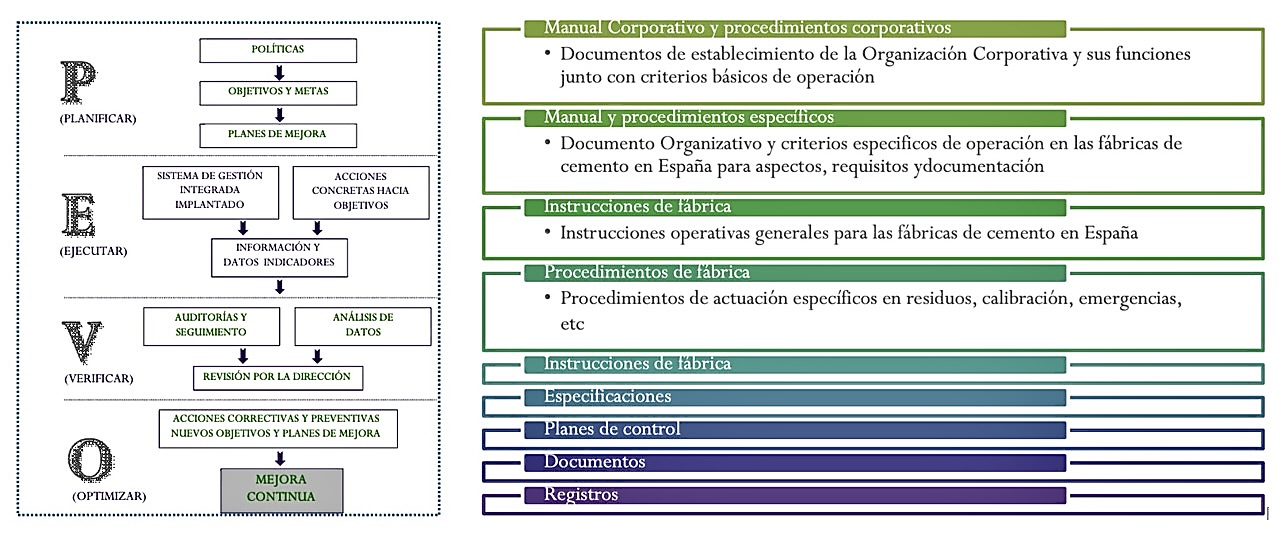
In order to ensure the achievement of its business objectives, the Grupo Cementos Portland Valderrivas—and, consequently, its plants in Spain—has implemented an Environmental Management System tailored to the characteristics, specific features, and needs of the organization and its facilities, and inspired by the principles of continuous improvement. The management system implemented complies with the international standards UNE-EN ISO 14001:2015 and European Regulation 1505/2017 (EMAS)—registered in 2008 under code EAN-000050—which is incorporated as part of the Organization’s system that adopts the principles of Environmental Management as a fundamental pillar of its operations. This management system, the audits, and the reviews carried out by management allow us to maintain a dynamic approach to environmental management, always based on the following fundamental principles: Inspired by the philosophy of continuous improvement, it will follow the PDCA cycle (Plan – Do – Check – Act). The development and implementation of the Environmental Management System and its compliance with relevant standards depend on establishing an appropriate organizational structure to assign the necessary environmental roles and responsibilities.
Location and contact
Address: Cementos Portland Valderrivas, Seville-Malaga Highway, km 7.4, 41500 Alcalá de Guadaíra, Seville. – Phone: 955629800 – Email: pedrojesus.lanagran@gcpv.com
Web: www.valderrivas.es
.
Main and secondary CNAE Code: 07 23.51, 07 08.11
|
Environmental policy |
Organizational Policy
Politics
Our commitment to environmental protection and conservation is clearly reflected in the Environmental and Energy Policy approved by the Director of Operations for Spain in May 2025, which is aligned with the requirements of the UNE-EN ISO 14001:2015 and UNE-EN ISO 50001:2015 standards and is based on the following guiding principles (excerpted in their entirety and verbatim from the Environmental and Energy Policy).
At the Cementos Portland Group, we firmly believe that our current and future business success depends largely on developing an environmentally sustainable business across all our operations, which focus on the production of basic construction materials and products such as cement, aggregate, concrete, and mortar. The Spain Operations Division establishes its environmental strategy by committing to environmental protection and pollution prevention, taking into account the context in which it operates and striving to understand the needs and expectations of stakeholders.
Our commitment to improving the Environmental and Energy Management System and its performance is based on the following principles:
- PROVIDE the necessary resources and means to ensure, at all times, the establishment and fulfillment of environmental and energy objectives, as well as compliance with applicable laws and regulations, including other commitments made to stakeholders with the aim of going beyond mere compliance
- PROMOTE a policy of continuous improvement in the management of production facilities, environmental aspects, and the energy use and consumption of the products, activities, and services over which we have influence, taking into account a life-cycle analysis approach, the promotion of renewable energy, and decarbonization.
- ESTABLISH action plans and allocate resources to implement them, with the aim of achieving energy transition and decarbonization goals that are aligned with sectoral, national, and international strategies, as well as with the company’s sustainability and business strategies
- INCORPORATE climate, environmental, and energy considerations into strategic planning, investment programs, and equipment procurement, and further advance the progressive implementation of Best Available Techniques.
- PROMOTE the efficient use of energy resources by implementing energy-saving and efficiency measures in our processes and ensuring the monitoring and tracking of significant energy consumption.
- IDENTIFY the impacts, risks, and opportunities associated with our activities, focusing on air, water, and soil pollution, as well as any other pollutants resulting from our operations, in order to effectively plan the implementation of measures for protection, prevention, response, and remediation.
- PROMOTE efforts to combat climate change through the monitoring and reduction of greenhouse gas emissions across all sectors, as well as adaptation and innovation aimed at developing products and technologies that are less carbon-intensive and more environmentally friendly
- CONDUCT periodic assessments of physical, transitional, and expected climate risks, identifying current and potential impacts on our operations and value chain, and developing adaptation plans to mitigate potential adverse effects and increase the resilience of our operations.
- POSITION OURSELVES as suppliers of sustainable products that help our customers adapt to climate change through solutions that enhance the resilience of infrastructure, facilities, buildings, homes, and, more broadly, any structures in which our building materials are used.
- ADOPT circular economy principles in all our operations, promoting durability, reuse, repairability, recycling, and the optimal use of products and materials.
- IMPLEMENT practices for the sustainable use of natural resources, promoting efficiency and reducing consumption, while prioritizing the recycling and reuse of resources, such as the use of alternative raw materials and fuels.
- IMPLEMENT strategies to optimize water use in our operations, reducing consumption and improving efficiency through the use of water treatment and reuse technologies, thereby reducing water discharge.
- IMPLEMENT waste minimization practices—for both Hazardous Hazardous—by promoting reduction, reuse, recovery, or recycling, and prioritizing Recovery over disposal or landfilling.
- PRESERVE the natural environment surrounding our facilities by assessing impacts and identifying critical areas, high conservation value (HCV) areas, and protected areas, with the aim of implementing measures to preserve, reduce, mitigate, and restore ecosystems affected by our operations, thereby preserving and even enhancing biodiversity.
- FACILITATE training, awareness-raising, and collaboration among our employees so that they participate in and support our climate, environmental, and energy policies and goals, act in an environmentally responsible manner, and promote the efficient use of both material and energy resources in both their professional and personal lives.
- COMMUNICATE our sustainable environmental and energy principles to our stakeholders, using various communication techniques and sharing our best practices.
- ESTABLISH partnerships and alliances with external stakeholders, such as government agencies, civil and business associations, educational institutions, customers, and suppliers, etc., fostering strong, lasting, and mutually beneficial relationships—particularly within the communities where we operate—and ensuring that they share the commitments set forth in this Policy.
External Transparency Policy
This Environmental Statement is reviewed annually and made available to the public and other interested parties through the channels provided by CEMENTOS PORTLAND VALDERRIVAS (including free printed copies and the corporate website, among others).
The Alcalá de Guadaíra Plant is committed to publishing its next Environmental Statements in June of the coming years.
To obtain our Environmental Statement, make a suggestion, or request more information about our environmental performance, please contact us at:
www.valderrivas.es and atcecoma.alcaladeguadaira@gcpv.com
AENOR Validation
The next validation of the Declaration is scheduled for June 2027.
POLICY: Environmental and Energy Policy May 2025 Signed: c2db3347
Mission
.
Vision
 |
Communication and participation |
Communication and stakeholder engagement
As in any business project, in the Alcalá de Guadaíra Factory, the participation of stakeholders in the development of the business is an essential element of its Strategy. Thus, we try to disclose our activities in a clear and transparent way to be more and better known.
Shareholders
The channels that ensure communication and dialogue between the Group and its shareholders are as follows:
- Specific e-mail: relaciones.inversores@gcpv.com
- The General Shareholders' Meeting
- Specific call center service
- The corporate website in its section aimed exclusively at shareholders
Employees
Ensuring the satisfaction and motivation of the Group’s staff is one of our greatest challenges.
We have developed different internal communication channels that provide our employees with continuous information on our activities while encouraging their participation and involvement in decision-making related to environmental issues:
- Periodic awareness-raising sessions and Environmental Committees between Management and Department Heads and between Department Heads and their operators, and meetings with the industrial and environmental departments to discuss common issues and establish action strategies.
- Training sessions: Scheduled in accordance with the Annual Training Plan, these sessions serve as a two-way platform through which we share information on environmental issues. In 2025, one training session was held.
- Works Councils and Health and Safety Committees: channels through which employees can share their opinions and suggestions on issues such as Recovery and improvements in risk prevention and environmental protection. Relevant information—whether generated by these committees or promoted by the Company and employees—is disseminated through personalized letters and bulletin boards.
- Internet portal: in accordance with current legislation, the Group makes the corporate website www.valderrivas.es available to the company.
The dissemination of relevant information on environmental matters, arising in these committees or promoted by the Company and employees, is done through personalized letters and bulletin boards.
Suppliers, auxiliary industry and customers
Our goal is to further our commitment to extending our Environmental Policy to suppliers and contractors, involving them in our environmental practices so that we can all work in a manner that respects the environment. To this end, we provide them with guidelines and request information from our suppliers regarding their environmental management practices, recognizing that ultimately meeting our customers’ needs depends on the quality of the entire supply chain.
As a company, we focus our efforts on offering competitive, high-quality products through our Quality Management System, which complies with UNE-EN ISO 9001:2015. This system ensures consistency in our primary commitment to our customers, all within a framework of respect for the environment. The communication channels established to meet the environmental information needs of these stakeholders are the Commercial Support Department and our Group’s website.
Public and private administrations
La Fábrica de Alcalá de Guadaíra collaborates with public and private institutions in the promotion of initiatives or projects of interest to the community through sponsorships, collaboration agreements, participation in conferences and other events.
Regional Administration: Continuous formal communications are maintained with the Autonomous Administration. Daily validations of the emission data of the main emission sources are sent.
Local Administration: Formal communications and meetings are regularly held with the City Council of Alcalá de Guadaíra, given the degree of impact that the factory has on the economic and social activity of the municipality. The most common communications of an environmental nature are those related to the request for licenses and authorizations for new facilities, as well as others of a legislative and informative nature.
Associations and business groups: At the national level, our Group is a member of the following associations and organizations:
- AFCA, Agrupación de Fabricantes de Cemento Artificial de Andalucía, is a non-profit business organization formed by cement manufacturing companies, clinker producers, whose factories are located in Andalusia.
- OFICEMEN, a business group formed by companies engaged in the manufacture of artificial cement with their own clinker production in the country.
- FLACEMA, Fundación Laboral Andaluza del Cemento y el Medio Ambiente. It is a non-profit joint institution, constituted by AFCA, the Construction Federations of the Major Trade Unions established in Andalusia (MCA-UGT, Federación de Metal Construcción y Afines de la Unión General de Trabajadores. FECOMA-CC.OO, Federación Andaluza de Construcción, Madera y Afines de Comisiones Obreras).
- Environment Committee of the Andalusian Confederation of Businessmen (CEA).
- CEMA Foundation, The CEMA Foundation (FUNDACIÓN CEMA), a nationwide labor foundation for the cement and environment sectors, was established in accordance with the provisions of the Sectoral Agreement for Recovery , signed by the Association of Spanish Cement Manufacturers (OFICEMEN), the Metal, Construction, and Related Industries Union, the UGT National Federation (MCA-UGT), and the CC.OO. National Federation of Construction, Wood, and Related Industries (FECOMA-CC.OO).
- FICA, Federation of Industrialists and Traders of Alcalá de Guadaíra.
- CEA, Confederation of Businessmen of Andalusia.
Society in general
With social organizations - neighborhood associations, universities, trade unions, business associations, foundations, etc. - we are strengthening ties through a wide variety of actions, which are summarized below:
- Participation in School Outreach Events (Tierno Galván High School, Doña Leonor High School, Cristóbal Monroy High School)
- Participation in University Conferences (University of Seville and Loyola University)
- Training sessions were held at CEE Molinos del Guadaíra and cCEIP Ángeles Martín Mateo, both at their respective facilities and at the cement plant itself, to educate students about the importance of recycling and waste prevention, as well as to teach them about the cement manufacturing process.
- Participation in conferences/seminars/publications.
- Organization of guided factory tours for students and other groups.
- Agreements of the Sectoral Committee for Recovery in the Andalusian Cement Industry.
- A focus group was held in October 2023 with the participation of representatives from the La Liebre neighborhood (it was not possible to organize one in 2024 or 2025).
Sustainability Reports:In accordance with the Global Reporting (GRI) Guidelines for the Preparation of Sustainability Reports, they provide a balanced and reasonable presentation of the company’s economic, environmental, and social performance.
Social initiatives:We actively participate in sponsorships and campaigns, and we regularly organize workshops with the main stakeholders at the Alcalá de Guadaíra plant.
In 2025, a new edition of the “Children’s Painting Contest for Schools” was held, with Luz Mª Méndez Kostich, afifth-grade student at CEIP Ángeles Martín Mateo, emerging as the winner. The main goal of this initiative is to continue strengthening ties between the factory and its surrounding community and to demonstrate that a genuine and valuable coexistence between Alcalá’s industry and its neighbors is possible.

Social information
Link here to our main social networks.
 |
 |
 |
 |
Environmental assessment and performance |
|
Key metrics |
◉ Global indicators 2025
Includes the sum of all the organisation's sites under the EMAS Register.
ENERGY CONSUMPTION

953,641.78MWh
• Renewable energy consumption : 10.73%
• Renewable generation:0%
WATER CONSUMPTION

93,647cubic meters
• Supply network22.56%
Source: Other
TOTAL DISCHARGES

21,129cubic meters
CO2 EMISSIONS

640,046.74 (ETS)tons
WASTE

688.10tons
• Hazardous 5.13%
• Recovery 97.8%
Unit values on production/performance
0.974 MWh/ton of manufactured product
0.096 m³/t of manufactured product
0.022 m³/t of manufactured product
0.654 Tn/ton of manufactured product
0.0007 Tn/ton of manufactured product
Unit Ref.: t of manufactured productManufactured product = Cement produced + clinker sold
|
Dimension of the activity |
Description of the main activity
The production process begins with the extraction—involving bulldozer stripping, crushing, and stockpiling—of raw materials from a nearby marl quarry located in the municipality of Alcalá de Guadaíra, which covers an approximate area of 11,100,000square meters. The most significant environmental impacts associated with quarrying are: visual impact, changes in landform, occupation of natural areas, depletion of natural resources, and issues related to quarrying operations, such as noise and particulate emissions, primarily. Next, the pre-homogenized marl, together with other limestone and clay-based raw materials, is ground and mixed to produce the raw mix. This raw meal, heated to over 1,450°Cusing petroleum coke, non-waste biomass, and various types of Hazardous waste Hazardous fuel—all of which have been pre-ground and conditioned— in a horizontal rotary kiln and a cyclone tower, results in the intermediate product clinker, consisting primarily of calcium silicates, which are responsible for the irreversible hardening of cement upon contact with water and/or air. The most significant environmental impacts associated with cement manufacturing are: air pollution from grinding and combustion processes, global warming, noise pollution, and the depletion of natural resources, fossil fuels, and energy. When ground, along with other additives and a setting regulator such as gypsum in appropriate proportions, it produces cement with specific, standardized chemical, physical, and mechanical properties that depend on the type of additive—ranging from limestone to fly ash, among others—and the fineness of the grind. The final product is stored in silos for sale in bulk or for later bagging. *The most significant environmental impacts associated with quarrying are: visual impact, changes in land morphology, occupation of natural habitats, depletion of natural resources, and issues related to quarrying operations, such as noise and particulate emissions, primarily.
*The most significant environmental impacts associated with cement manufacturing are: air pollution from grinding and combustion processes, global warming, noise emissions, and the depletion of natural resources, fossil fuels, and energy.
Evolution of production activity
Business performance
Activity by type
Type of productive activity
| HOLDING | COMPANY | SITE | STATUS | wdt_ID | userid | YEAR | rp | SCOPE | CENTER | MAGNITUDE | UNIT | ACTIVITY | %RECYCLED | % Hazardous | SALES (€) | DESTINATION COUNTRY | REF. REPORT | REMARKS | link route | post_author | post_type |
|---|---|---|---|---|---|---|---|---|---|---|---|---|---|---|---|---|---|---|---|---|---|
| GCPV | CEMENTOS PORTLAND VALDERRIVAS, SA | ALCALÁ | VALIDATED | 221 | 2.094 | 2023 | PRODUCTION | Quarry | 1.052.334,00 | t | Extraction and production of MARGA | Spain | EMAS | 2.094 | emas_statement | ||||||
| GCPV | CEMENTOS PORTLAND VALDERRIVAS, SA | ALCALÁ | VALIDATED | 222 | 2.094 | 2024 | PRODUCTION | Quarry | 804.199,00 | t | Extraction and production of MARGA | Spain | EMAS | 2.094 | emas_statement | ||||||
| GCPV | CEMENTOS PORTLAND VALDERRIVAS, SA | ALCALÁ | VALIDATED | 224 | 2.094 | 2023 | PRODUCTION | Factory | 897.155,00 | t | Production of GREY CLINKER | Spain | EMAS | 2.094 | emas_statement | ||||||
| GCPV | CEMENTOS PORTLAND VALDERRIVAS, SA | ALCALÁ | VALIDATED | 225 | 2.094 | 2024 | PRODUCTION | Factory | 740.439,00 | t | Production of GREY CLINKER | Spain | EMAS | 2.094 | emas_statement | ||||||
| GCPV | CEMENTOS PORTLAND VALDERRIVAS, SA | ALCALÁ | VALIDATED | 227 | 2.094 | 2023 | PRODUCTION | Factory | 872.727,40 | t | Production of GREY CEMENT | Spain | EMAS | 2.094 | emas_statement | ||||||
| GCPV | CEMENTOS PORTLAND VALDERRIVAS, SA | ALCALÁ | VALIDATED | 228 | 2.094 | 2024 | PRODUCTION | Factory | 823.740,90 | t | Production of GREY CEMENT | Spain | EMAS | 2.094 | emas_statement | ||||||
| GCPV | CEMENTOS PORTLAND VALDERRIVAS, SA | ALCALÁ | VALIDATED | 230 | 2.094 | 2023 | PRODUCTION | Factory | 930.800,30 | t | Product manufactured | Spain | EMAS | Manufactured product = cement produced + clinker sold. | 2.094 | emas_statement | |||||
| GCPV | CEMENTOS PORTLAND VALDERRIVAS, SA | ALCALÁ | VALIDATED | 231 | 2.094 | 2024 | PRODUCTION | Factory | 976.612,00 | t | Product manufactured | Spain | EMAS | Manufactured product = cement produced + clinker sold. | 2.094 | emas_statement | |||||
| GCPV | CEMENTOS PORTLAND VALDERRIVAS, SA | ALCALÁ | VALIDATED | 447 | 2.094 | 2025 | PRODUCTION | Quarry | 854.412,00 | t | Extraction and production of MARGA | Spain | EMAS | 2.094 | emas_statement | ||||||
| GCPV | CEMENTOS PORTLAND VALDERRIVAS, SA | ALCALÁ | VALIDATED | 448 | 2.094 | 2025 | PRODUCTION | Factory | 759.967,00 | t | Production of GREY CLINKER | Spain | EMAS | 2.094 | emas_statement | ||||||
| GCPV | CEMENTOS PORTLAND VALDERRIVAS, SA | ALCALÁ | VALIDATED | 449 | 2.094 | 2025 | PRODUCTION | Factory | 817.548,27 | t | Production of GREY CEMENT | Spain | EMAS | 2.094 | emas_statement | ||||||
| GCPV | CEMENTOS PORTLAND VALDERRIVAS, SA | ALCALÁ | VALIDATED | 450 | 2.094 | 2025 | PRODUCTION | Factory | 978.752,74 | t | Product manufactured | Spain | EMAS | Manufactured product = cement produced + clinker sold. | 2.094 | emas_statement | |||||
Evolution of production activity
The wide range of products manufactured allows for the ideal selection based on the application. The cements produced in 2025 at the Alcalá de Guadaíra plant come in six different grades, all of which are certified with AENOR’s “N” Product Certification mark and bear the CE mark, complying with current legislation and regulatory requirements.
CEMENT PRODUCED
PRODUCT % OF TOTAL PRODUCTION
CEM II/B-L 32.5 N BULK 23.91
CEM I 42.5 R-SR 3 BULK 16.74
CEM II/A-L 42.5 R BULK 41.11
CEM I 52.5 R SR-3 BULK 18.09
CEM III/A 42.5 N 0.16
Data source: SAP, factory production reports
Production in 2025 totaled 759,967 metric tons of clinker, a 2.64% increase from 2024, and 817,548.27 metric tons of cement, a 0.75% decrease from 2024.
On the other hand, marl extraction from the quarry in 2025 totaled 854,412 tons, an increase of 6.24% compared to 2024.
*In 2025, the Environmental Product Declarations for the cement sold from the Alcalá de Guadaíra plant were drafted and verified.

 |
Energy use and management |
Energy management
The monitoring of environmental performance at the Alcalá de Guadaíra plant is carried out, as at the other plants of the Grupo Cementos Portland Valderrivas, by measuring a series of basic environmental and management performance indicators, as no sector-specific reference documents, sector-specific guidelines, or relevant indicators by type of activity—adapted to the EMAS III Regulation—have been published to date. This Statement includes a comprehensive list of key indicators, and the following sections present the trends in the most relevant environmental indicators in absolute and relative terms, based on the production unit of raw materials, ground lime, clinker, cement produced, or finished product (cement produced plus clinker shipped); the remaining indicators are presented below in a more simplified format. The key indicators are established as a benchmark for the plant’s main data, given that no industry-specific reference document has been published to date. The processes involved in cement manufacturing—which include the calcination and grinding of raw materials, fuels, and clinker—require significant energy consumption. This energy comes from fuels (thermal energy) and electricity (electrical energy), and some of the planned improvement objectives are aimed at optimizing these processes. In 2019, an energy audit was conducted by IECA, resulting in a series of conclusions that are being taken into account for future environmental objectives, as well as for monitoring data from the Energy Management System, in accordance with the UNE EN ISO 50001 standard implemented and certified in 2023.

Environmental management and control
In 2019, IECA conducted an energy audit, which yielded a series of findings that are being taken into account for future environmental goals, as well as for monitoring data from the Energy Management System, in accordance with the UNE EN ISO 50001 standard, which was implemented and certified in 2023. In 2024, a permit was obtained to recover energy and materials from various types of Hazardous waste, contributing to the circular economy and the more efficient use of resources.
FUEL CONSUMPTION:The fuels most commonly used in cement plants are petroleum-based fuels, such as coke and fuel oil. For several years now, the strategic policy of Grupo Cementos Portland Valderrivas to harnessing the energy contained in waste, partially replacing these fossil fuels with alternative fuels, some of which contain biomass and are neutral in terms of emissions of gases that negatively impact global warming.
In recent years, intensive efforts have continued to utilize renewable energy from biomass fuels to reduce greenhouse gas emissions, and this work will continue, always in accordance with best practices and in strict compliance with regulations.
By 2025, it had become necessary to reduce the use of alternative fuels in order to keep the furnace running.
Recovery : Recovery cement plants is considered one of the most efficient methods for the complete destruction of organic compounds, while inorganic compounds are incorporated into the raw materials and leave the process as part of the clinker. It does not increase the total amount of greenhouse gases emitted. It contributes to sustainable development by conserving non-renewable energy resources. It prevents the accumulation of waste in landfills, managing it in a safe and environmentally friendly manner. It reduces cement manufacturing costs.
www.recuperaresiduosencementeras.org
ELECTRICITY: Electricity is used in the process primarily for crushing materials extracted from quarries and grinding raw materials, fuels, and clinker, with the latter accounting for the largest share of electricity consumption.
Electricity consumption has increased in 2025 as a result of the types of cement produced. The Alcalá de Guadaíra plant has solar panels that are used to power auxiliary services. Additionally, regarding energy, the Alcalá de Guadaíra plant is certified under the UNE-EN ISO 50001 standard, which is integrated into the Environmental Management System.
Evolution of specific metrics and ratios
Units of energy consumption in MWh and their ratios associated with the activity.
Energy consumption by fuel
Uses of energy
The energy magnitudes are always parameterized in MWh, showing in each cell its transformation to GJ, by means of the standard MWh*3.6 conversion (factor officially recognized and used by the SI (BIPM), Eurostat, IEA, IPCC and in Spain by MITECO).
| wdt_ID | userid | Year | Center | Units Pr. | Unit | Uses / Info | Electricity Consumption (MWh) | LNG/LPG consumption (MWh) | Oil / Coal (MWh) | Other Consumption (MWh) | gasnatural_gl | tankers_gl | other_gl | ind_gasnatural_gl | ind_petroliferos_gl | ind_other_gl | post_type | post_author | Electricity Ratio (Units Pr. | GN RatioPr.Units Pr. | Gasoline Ratio (Units Pr. | Ratio of other MWh toUnits Pr. | Total consumption ratio (Units Pr. | Total consumption (MWh) | Ratio of Total GJ/ Udp | Total GJ | Electrical in GJ | Electric GJ/udp Ratio |
|---|---|---|---|---|---|---|---|---|---|---|---|---|---|---|---|---|---|---|---|---|---|---|---|---|---|---|---|---|
| 147 | 2.094 | 2023 | Factory | 897.155,000 | t Clinker fabricated | PETROLEUM COKE / Fossil fuel | 0,000 | 0,000 | 888.526,630 | 0,000 | 0,000 | 3.198.695,868 | 0,000 | 0,000 | 3,565 | 0,000 | review | 2.094 | 0,000 | 0,000 | 0,990 | 0,000 | 0,990 | 888.526,630 | 3,565 | 3.198.695,868 | 0,000 | 0,000 |
| 148 | 2.094 | 2023 | Factory | 930.800,330 | t Product manufactured | FACTORY DIESEL / Fossil fuel | 0,000 | 0,000 | 2.675,588 | 0,000 | 0,000 | 9.632,117 | 0,000 | 0,000 | 0,010 | 0,000 | review | 2.094 | 0,000 | 0,000 | 0,003 | 0,000 | 0,003 | 2.675,588 | 0,010 | 9.632,117 | 0,000 | 0,000 |
| 149 | 2.094 | 2023 | Quarry | 1.052.344,000 | t Extracted marl | QUARRY DIESEL / Fossil fuel | 0,000 | 0,000 | 4.720,922 | 0,000 | 0,000 | 16.995,319 | 0,000 | 0,000 | 0,016 | 0,000 | review | 2.094 | 0,000 | 0,000 | 0,004 | 0,000 | 0,004 | 4.720,922 | 0,016 | 16.995,319 | 0,000 | 0,000 |
| 150 | 2.094 | 2023 | Factory | 930.800,330 | t Product manufactured | ELECTRICITY | 126.090,640 | 0,000 | 0,000 | 0,000 | 0,000 | 0,000 | 0,000 | 0,000 | 0,000 | 0,000 | review | 2.094 | 0,135 | 0,000 | 0,000 | 0,000 | 0,135 | 126.090,640 | 0,488 | 453.926,304 | 453.926,304 | 0,488 |
| 154 | 2.094 | 2024 | Factory | 976.611,970 | t Product manufactured | ELECTRICITY | 112.477,130 | 0,000 | 0,000 | 0,000 | 0,000 | 0,000 | 0,000 | 0,000 | 0,000 | 0,000 | review | 2.094 | 0,115 | 0,000 | 0,000 | 0,000 | 0,115 | 112.477,130 | 0,415 | 404.917,668 | 404.917,668 | 0,415 |
| 352 | 2.094 | 2023 | Factory | 897.155,000 | t Clinker fabricated | FUEL OIL / Fossil fuel | 0,000 | 0,000 | 1.601,320 | 0,000 | 0,000 | 5.764,752 | 0,000 | 0,000 | 0,006 | 0,000 | review | 2.094 | 0,000 | 0,000 | 0,002 | 0,000 | 0,002 | 1.601,320 | 0,006 | 5.764,752 | 0,000 | 0,000 |
| 353 | 2.094 | 2023 | Factory | 897.155,000 | t Clinker fabricated | BIOMASS / Renewable fuel | 0,000 | 0,000 | 0,000 | 98.998,450 | 0,000 | 0,000 | 356.394,420 | 0,000 | 0,000 | 0,397 | review | 2.094 | 0,000 | 0,000 | 0,000 | 0,110 | 0,110 | 98.998,450 | 0,397 | 356.394,420 | 0,000 | 0,000 |
| 354 | 2.094 | 2023 | Factory | 897.155,000 | t Clinker fabricated | CDR, NFU / Alternative fuel | 0,000 | 0,000 | 0,000 | 0,000 | 0,000 | 0,000 | 0,000 | 0,000 | 0,000 | 0,000 | review | 2.094 | 0,000 | 0,000 | 0,000 | 0,000 | 0,000 | 0,000 | 0,000 | 0,000 | 0,000 | 0,000 |
| 355 | 2.094 | 2024 | Factory | 740.439,000 | t Clinker fabricated | PETROLEUM COKE / Fossil fuel | 0,000 | 0,000 | 692.364,600 | 0,000 | 0,000 | 2.492.512,560 | 0,000 | 0,000 | 3,366 | 0,000 | review | 2.094 | 0,000 | 0,000 | 0,935 | 0,000 | 0,935 | 692.364,600 | 3,366 | 2.492.512,560 | 0,000 | 0,000 |
| 356 | 2.094 | 2024 | Factory | 740.439,000 | t Clinker fabricated | FUEL OIL / Fossil fuel | 0,000 | 0,000 | 1.910,020 | 0,000 | 0,000 | 6.876,072 | 0,000 | 0,000 | 0,009 | 0,000 | review | 2.094 | 0,000 | 0,000 | 0,003 | 0,000 | 0,003 | 1.910,020 | 0,009 | 6.876,072 | 0,000 | 0,000 |
| 357 | 2.094 | 2024 | Factory | 740.439,000 | t Clinker fabricated | BIOMASS / Renewable fuel | 0,000 | 0,000 | 0,000 | 99.421,300 | 0,000 | 0,000 | 357.916,680 | 0,000 | 0,000 | 0,483 | review | 2.094 | 0,000 | 0,000 | 0,000 | 0,134 | 0,134 | 99.421,300 | 0,483 | 357.916,680 | 0,000 | 0,000 |
| 358 | 2.094 | 2024 | Factory | 740.439,000 | t Clinker fabricated | CDR, NFU / Alternative fuel | 0,000 | 0,000 | 0,000 | 6.597,940 | 0,000 | 0,000 | 23.752,584 | 0,000 | 0,000 | 0,032 | review | 2.094 | 0,000 | 0,000 | 0,000 | 0,009 | 0,009 | 6.597,940 | 0,032 | 23.752,584 | 0,000 | 0,000 |
| 359 | 2.094 | 2024 | Factory | 976.611,970 | t Product manufactured | FACTORY DIESEL / Fossil fuel | 0,000 | 0,000 | 3.124,890 | 0,000 | 0,000 | 11.249,604 | 0,000 | 0,000 | 0,012 | 0,000 | review | 2.094 | 0,000 | 0,000 | 0,003 | 0,000 | 0,003 | 3.124,890 | 0,012 | 11.249,604 | 0,000 | 0,000 |
| 360 | 2.094 | 2024 | Quarry | 804.199,000 | t Extracted marl | QUARRY DIESEL / Fossil fuel | 0,000 | 0,000 | 4.289,970 | 0,000 | 0,000 | 15.443,892 | 0,000 | 0,000 | 0,019 | 0,000 | review | 2.094 | 0,000 | 0,000 | 0,005 | 0,000 | 0,005 | 4.289,970 | 0,019 | 15.443,892 | 0,000 | 0,000 |
| 361 | 2.094 | 2025 | Factory | 759.967,000 | t Clinker fabricated | PETROLEUM COKE / Fossil fuel | 0,000 | 0,000 | 785.776,410 | 0,000 | 0,000 | 2.828.795,076 | 0,000 | 0,000 | 3,722 | 0,000 | review | 2.094 | 0,000 | 0,000 | 1,034 | 0,000 | 1,034 | 785.776,410 | 3,722 | 2.828.795,076 | 0,000 | 0,000 |
| 362 | 2.094 | 2025 | Factory | 759.967,000 | t Clinker fabricated | FUEL OIL / Fossil fuel | 0,000 | 0,000 | 3.368,911 | 0,000 | 0,000 | 12.128,080 | 0,000 | 0,000 | 0,016 | 0,000 | review | 2.094 | 0,000 | 0,000 | 0,004 | 0,000 | 0,004 | 3.368,911 | 0,016 | 12.128,080 | 0,000 | 0,000 |
| 363 | 2.094 | 2025 | Factory | 759.967,000 | t Clinker fabricated | BIOMASS / Renewable fuel | 0,000 | 0,000 | 0,000 | 37.542,040 | 0,000 | 0,000 | 135.151,344 | 0,000 | 0,000 | 0,178 | review | 2.094 | 0,000 | 0,000 | 0,000 | 0,049 | 0,049 | 37.542,040 | 0,178 | 135.151,344 | 0,000 | 0,000 |
| 364 | 2.094 | 2025 | Factory | 759.967,000 | t Clinker fabricated | CDR, NFU / Alternative fuel | 0,000 | 0,000 | 0,000 | 890,180 | 0,000 | 0,000 | 3.204,648 | 0,000 | 0,000 | 0,004 | review | 2.094 | 0,000 | 0,000 | 0,000 | 0,001 | 0,001 | 890,180 | 0,004 | 3.204,648 | 0,000 | 0,000 |
| 365 | 2.094 | 2025 | Factory | 978.752,740 | t Product manufactured | FACTORY DIESEL / Fossil fuel | 0,000 | 0,000 | 3.169,370 | 0,000 | 0,000 | 11.409,732 | 0,000 | 0,000 | 0,012 | 0,000 | review | 2.094 | 0,000 | 0,000 | 0,003 | 0,000 | 0,003 | 3.169,370 | 0,012 | 11.409,732 | 0,000 | 0,000 |
| 366 | 2.094 | 2025 | Quarry | 854.412,000 | t Extracted marl | QUARRY DIESEL / Fossil fuel | 0,000 | 0,000 | 4.596,890 | 0,000 | 0,000 | 16.548,804 | 0,000 | 0,000 | 0,019 | 0,000 | review | 2.094 | 0,000 | 0,000 | 0,005 | 0,000 | 0,005 | 4.596,890 | 0,019 | 16.548,804 | 0,000 | 0,000 |
| 367 | 2.094 | 2025 | Factory | 978.752,740 | t Product manufactured | ELECTRICITY | 118.297,960 | 0,000 | 0,000 | 0,000 | 0,000 | 0,000 | 0,000 | 0,000 | 0,000 | 0,000 | review | 2.094 | 0,121 | 0,000 | 0,000 | 0,000 | 0,121 | 118.297,960 | 0,435 | 425.872,656 | 425.872,656 | 0,435 |
| Year | Center | |||||||||||||||||||||||||||
| ∑ = $18,073,529.080 |
|
Renewable energies |
Energías Renovables
Configuración Colores
| wdt_ID | userid | Year | Center | Units Pr. | Units | Uses | Renewable consumed from third parties (MWh) | Renewable consumed self-generated (MWh) | Renewable generated (MWh) | post_author | Total renewable energy consumed (MWh) | Ratio of MWh of renewable energy consumed toUnits Pr. | Ratio of MWh of renewable energy generated perUnits of Pr. |
|---|---|---|---|---|---|---|---|---|---|---|---|---|---|
| 81 | 2.094 | 2023 | Factory | 897.155,000 | t Clinker fabricated | Production | 98.998,447 | 0,000 | 0,000 | 2.094 | 98.998,447 | 0,1103 | 0,0000 |
| 82 | 2.094 | 2024 | Factory | 740.439,000 | t Clinker fabricated | Production | 106.019,240 | 0,000 | 0,000 | 2.094 | 106.019,240 | 0,1432 | 0,0000 |
| 83 | 2.094 | 2024 | Factory | 976.611,970 | t Product manufactured | Production | 72.079,160 | 0,000 | 0,000 | 2.094 | 72.079,160 | 0,0738 | 0,0000 |
| 161 | 2.094 | 2025 | Factory | 978.752,740 | t Product manufactured | Production | 63.887,030 | 0,000 | 0,000 | 2.094 | 63.887,030 | 0,0653 | 0,0000 |
| 162 | 2.094 | 2025 | Factory | 759.967,000 | t Clinker fabricated | Production | 38.432,240 | 0,000 | 0,000 | 2.094 | 38.432,240 | 0,0506 | 0,0000 |
| 171 | 2.094 | 2023 | Factory | 930.800,330 | t Product manufactured | Production | 80.633,940 | 0,000 | 0,000 | 2.094 | 80.633,940 | 0,0866 | 0,0000 |
| wdt_ID | userid | Year | Center | Units | post_author | ||||||||
| ∑ = 5,283,726.040 |
Note: Biomass consumed as fuel in the company's production process. The total consumed in 2024 was 99,421.3 MWh, equivalent to 357,916.67 GJ. Conversion factor 1 gigajoule = 0.2777777778 megawatt hours. Electricity consumed Mixed renewable of total supplied-consumed 64.1%.
 |
Water use and management |
Water management
Water is used at the Alcalá de Guadaíra plant for cleaning and flushing the facilities, cooling, watering the tracks and roads, and for human consumption. The Alcalá de Guadaíra plant draws water from the eight authorized wells currently in use, each of which has an abstraction limit of 21,900m³.

Environmental management and control
In 2025, total water consumption from well intake was 72,518m³, an increase from 2024 (70,346m³) due to the process requirements for cooling the gases.
As for municipal water consumption, it totaled 21,129m³ in 2025, which is lower than in 2024 (25,307m³) and slightly below the usual level.
Evolution of specific metrics and ratios
Water consumption (m³) and ratios
Water Uses
| state | wdt_ID | userid | Year | Center | Units Pr. | Unit | Origin of water | Uses | m3 | ID | post_author | Ratio (Units Pr. |
|---|---|---|---|---|---|---|---|---|---|---|---|---|
| VALIDATED | 151 | 2.094 | 2024 | Factory | 976.611,970 | t Product manufactured | Public supply network | Various uses | 25.307,000 | 139.019 | 2.094 | 0,025913 |
| VALIDATED | 153 | 2.094 | 2023 | Factory | 930.800,330 | t Product manufactured | Public supply network | Various uses | 34.697,200 | 139.019 | 2.094 | 0,037277 |
| VALIDATED | 305 | 2.094 | 2025 | Factory | 978.752,740 | t Product manufactured | Public supply network | Various uses | 21.129,000 | 139.019 | 2.094 | 0,021588 |
| VALIDATED | 325 | 2.094 | 2023 | Factory | 930.800,330 | t Product manufactured | Wells | Various uses | 5.415,000 | 139.019 | 2.094 | 0,005818 |
| VALIDATED | 326 | 2.094 | 2023 | Factory | 930.800,330 | t Product manufactured | Wells | Various uses | 18.924,000 | 139.019 | 2.094 | 0,020331 |
| VALIDATED | 327 | 2.094 | 2023 | Factory | 930.800,330 | t Product manufactured | Wells | Various uses | 14.705,000 | 139.019 | 2.094 | 0,015798 |
| VALIDATED | 328 | 2.094 | 2023 | Factory | 930.800,330 | t Product manufactured | Wells | Various uses | 1.398,000 | 139.019 | 2.094 | 0,001502 |
| VALIDATED | 329 | 2.094 | 2023 | Factory | 930.800,330 | t Product manufactured | Wells | Various uses | 0,000 | 139.019 | 2.094 | 0,000000 |
| VALIDATED | 330 | 2.094 | 2023 | Factory | 930.800,330 | t Product manufactured | Wells | Various uses | 2.008,000 | 139.019 | 2.094 | 0,002157 |
| VALIDATED | 331 | 2.094 | 2023 | Factory | 930.800,330 | t Product manufactured | Wells | Various uses | 12.215,000 | 139.019 | 2.094 | 0,013123 |
| VALIDATED | 332 | 2.094 | 2023 | Factory | 930.800,330 | t Product manufactured | Wells | Various uses | 2.477,000 | 139.019 | 2.094 | 0,002661 |
| VALIDATED | 333 | 2.094 | 2024 | Factory | 976.611,970 | t Product manufactured | Wells | Various uses | 7.147,000 | 139.019 | 2.094 | 0,007318 |
| VALIDATED | 334 | 2.094 | 2024 | Factory | 976.611,970 | t Product manufactured | Wells | Various uses | 16.364,000 | 139.019 | 2.094 | 0,016756 |
| VALIDATED | 335 | 2.094 | 2024 | Factory | 976.611,970 | t Product manufactured | Wells | Various uses | 12.058,000 | 139.019 | 2.094 | 0,012347 |
| VALIDATED | 336 | 2.094 | 2024 | Factory | 976.611,970 | t Product manufactured | Wells | Various uses | 3.155,000 | 139.019 | 2.094 | 0,003231 |
| VALIDATED | 337 | 2.094 | 2024 | Factory | 976.611,970 | t Product manufactured | Wells | Various uses | 11,000 | 139.019 | 2.094 | 0,000011 |
| VALIDATED | 338 | 2.094 | 2024 | Factory | 976.611,970 | t Product manufactured | Wells | Various uses | 11.044,000 | 139.019 | 2.094 | 0,011308 |
| VALIDATED | 339 | 2.094 | 2024 | Factory | 976.611,970 | t Product manufactured | Wells | Various uses | 20.508,000 | 139.019 | 2.094 | 0,020999 |
| VALIDATED | 340 | 2.094 | 2024 | Factory | 976.611,970 | t Product manufactured | Wells | Various uses | 59,000 | 139.019 | 2.094 | 0,000060 |
| VALIDATED | 341 | 2.094 | 2025 | Factory | 978.752,740 | t Product manufactured | Wells | Various uses | 6.218,000 | 139.019 | 2.094 | 0,006353 |
| VALIDATED | 342 | 2.094 | 2025 | Factory | 978.752,740 | t Product manufactured | Wells | Various uses | 17.389,000 | 139.019 | 2.094 | 0,017766 |
| VALIDATED | 343 | 2.094 | 2025 | Factory | 978.752,740 | t Product manufactured | Wells | Various uses | 9.710,000 | 139.019 | 2.094 | 0,009921 |
| VALIDATED | 344 | 2.094 | 2025 | Factory | 978.752,740 | t Product manufactured | Wells | Various uses | 803,000 | 139.019 | 2.094 | 0,000820 |
| VALIDATED | 345 | 2.094 | 2025 | Factory | 978.752,740 | t Product manufactured | Wells | Various uses | 0,000 | 139.019 | 2.094 | 0,000000 |
| VALIDATED | 346 | 2.094 | 2025 | Factory | 978.752,740 | t Product manufactured | Wells | Various uses | 13.299,000 | 139.019 | 2.094 | 0,013588 |
| VALIDATED | 347 | 2.094 | 2025 | Factory | 978.752,740 | t Product manufactured | Wells | Various uses | 19.948,000 | 139.019 | 2.094 | 0,020381 |
| VALIDATED | 348 | 2.094 | 2025 | Factory | 978.752,740 | t Product manufactured | Wells | Various uses | 5.151,000 | 139.019 | 2.094 | 0,005263 |
| state | wdt_ID | userid | Year | Center | Unit | Origin of water | Uses | ID | post_author |
Note:
 |
Waste water discharge management |
Wastewater management
The discharge of water to the network is another environmental aspect of our activity, although the discharges that occur are derived from sanitary wastewater from the use of toilets and showers of the personnel, and from the discharge of rainwater. In the case of process water, these are recirculated in a closed circuit, with only water consumption to replace evaporation losses.
Environmental management and control
The following table shows the analytical results for the past three years.
Public waterway receiving the discharge: Quintanilla Stream - stormwater / Sewer system - municipal water supply.
| state | wdt_ID | userid | Year | Center | Units Pr. | Unit | Pollutant | Destination | Concentration | Limit | Conc. unit | Mass value kg | Total Volume m3 | pre-set concentration | ID | post_author |
|---|---|---|---|---|---|---|---|---|---|---|---|---|---|---|---|---|
| VALIDATED | 377 | 2.094 | 2023 | Factory | 930.800,330 | t Product manufactured | pH | Inland waters | 7,310 | Units. pH | 139.019 | 2.094 | ||||
| VALIDATED | 378 | 2.094 | 2023 | Factory | 930.800,330 | t Product manufactured | Suspended solids 0.8-1.2 µ | Inland waters | 5,000 | (mg/l) | < | 139.019 | 2.094 | |||
| VALIDATED | 379 | 2.094 | 2023 | Factory | 930.800,330 | t Product manufactured | Oils and fats | Inland waters | 0,900 | (mg/l) | 139.019 | 2.094 | ||||
| VALIDATED | 380 | 2.094 | 2023 | Factory | 930.800,330 | t Product manufactured | Conductivity at 25ºc | Inland waters | 330,000 | (µS/cm) | 139.019 | 2.094 | ||||
| VALIDATED | 381 | 2.094 | 2023 | Factory | 930.800,330 | t Product manufactured | DBO 5 | Inland waters | 5,000 | (mg O2/l) | < | 139.019 | 2.094 | |||
| VALIDATED | 382 | 2.094 | 2023 | Factory | 930.800,330 | t Product manufactured | COD | Inland waters | 16,000 | (mg O2/l) | 139.019 | 2.094 | ||||
| VALIDATED | 383 | 2.094 | 2024 | Factory | 976.611,970 | t Product manufactured | pH | Inland waters | 7,700 | Units. pH | 139.019 | 2.094 | ||||
| VALIDATED | 384 | 2.094 | 2024 | Factory | 976.611,970 | t Product manufactured | Suspended solids 0.8-1.2 µ | Inland waters | 91,000 | (mg/l) | 139.019 | 2.094 | ||||
| VALIDATED | 385 | 2.094 | 2024 | Factory | 976.611,970 | t Product manufactured | Oils and fats | Inland waters | 4,000 | (mg/l) | 139.019 | 2.094 | ||||
| VALIDATED | 386 | 2.094 | 2024 | Factory | 976.611,970 | t Product manufactured | Conductivity at 25ºc | Inland waters | 1.339,000 | (µS/cm) | 139.019 | 2.094 | ||||
| VALIDATED | 387 | 2.094 | 2024 | Factory | 976.611,970 | t Product manufactured | DBO 5 | Inland waters | 32,000 | (mg O2/l) | 139.019 | 2.094 | ||||
| VALIDATED | 388 | 2.094 | 2024 | Factory | 976.611,970 | t Product manufactured | COD | Inland waters | 95,000 | (mg O2/l) | 139.019 | 2.094 | ||||
| VALIDATED | 910 | 2.094 | 2025 | Factory | 978.752,740 | t Product manufactured | pH | Inland waters | 8,100 | Units. pH | 139.019 | 2.094 | ||||
| VALIDATED | 911 | 2.094 | 2025 | Factory | 978.752,740 | t Product manufactured | Suspended solids 0.8-1.2 µ | Inland waters | 23,000 | (mg/l) | 139.019 | 2.094 | ||||
| VALIDATED | 912 | 2.094 | 2025 | Factory | 978.752,740 | t Product manufactured | Oils and fats | Inland waters | 10,000 | (mg/l) | < | 139.019 | 2.094 | |||
| VALIDATED | 913 | 2.094 | 2025 | Factory | 978.752,740 | t Product manufactured | Conductivity at 25ºc | Inland waters | 10,000 | (µS/cm) | 139.019 | 2.094 | ||||
| VALIDATED | 914 | 2.094 | 2025 | Factory | 978.752,740 | t Product manufactured | DBO 5 | Inland waters | 5,000 | (mg O2/l) | < | 139.019 | 2.094 | |||
| VALIDATED | 915 | 2.094 | 2025 | Factory | 978.752,740 | t Product manufactured | COD | Inland waters | 19,000 | (mg O2/l) | 139.019 | 2.094 | ||||
| state | wdt_ID | userid | Year | Center | Unit | Pollutant | Destination | |||||||||
| ∑ = 17,316,990.240 |
 |
Atmospheric emissions |
Emissions management
Our operations generate various types of air emissions, with particulate matter and combustion gases being the most common. Emissions generated during the handling, transport, storage, and processing of powdered materials are released through both ducted and fugitive sources, while combustion gases are emitted through the furnace stack, withCO2,NOx, andSO2 being the most common, along with other minor pollutants. Emissions can be contained, ducted, or fugitive. Pollutant emissions are monitored by ECCMA (Collaborating Entities of the Regional Ministry of the Environment of the Regional Government of Andalusia) or by continuous monitoring systems installed on factory chimneys, in accordance with the requirements of an Environmental Monitoring Plan that complies with the Integrated Environmental Authorization.

Environmental management and control
Particulate matter and combustion gases are the most characteristic atmospheric emissions from our operations. Emissions generated during the handling, transport, storage, and processing of powdered materials are released through both ducted and diffuse sources, while combustion gases are emitted through the furnace stack; the most characteristic of these areCO₂,NOx, andSO₂, along with other minor pollutants. The Alcalá de Guadaíra plant has thirteen main sources of emissions from chimneys: two from the kiln process (the kiln and the cooler), and the rest from the processes of raw material storage, fuel grinding, cement production, cement transport, bagging, and raw material crushing in the marl crusher. All of them have purification systems based on sleeve filters, which are some of the Best Available Techniques in the sector, and continuous measurement systems for pollutants, except for the crusher, cement transport and bagging plants, for which periodic controls are carried out by companies collaborating with the Department of the Environment. The particle emissions recorded, expressed in mg/Nm3, are in all cases below the legally established limit value of 20 mg/Nm3 for the furnace and 10 mg/Nm3 for the rest of the sources. Emissions of pollutants are monitored by ECCMA (Collaborating Entities of the Regional Ministry of the Environment of the Regional Government of Andalusia) or by continuous monitoring systems installed on factory stacks, in accordance with the requirements of an Environmental Monitoring Plan that complies with the Integrated Environmental Authorization. The combustion of fossil fuels primarily generatesCO2,SO2, andNOx, whose concentrations—expressed inmg/Nm³ at 10% oxygen—are continuously monitored against their established emission limits: 500mg/Nm³ forNOx, and 50mg/Nm³ forSO₂, in accordance with the Integrated Environmental Authorization effective since April 2017. Since April 2017, it has also been necessary to continuously measure NH₃ emissions, with an emission limit value (ELV) of 50mg/Nm³; the average value for 2025 was 2.33mg/Nm³. Emissions limits were met in 2025. Data on the pollutants specified in the State Register of Emissions and Pollution Sources (PRTR Spain) are reported annually in the form of pollutant loads from piped emissions. The data for each parameter can be found in the table of indicators included in this document. The minimization of emissions resulting from the transfer and movement of powdery materials has been achieved based on the adoption of a series of preventive measures established in the "Manual of Good Practices for the control of diffuse emissions of pollutants by non-channeled sources" of the Alcalá de Guadaíra Factory, such as paving in circulation areas, fairing of conveyor belts, suction devices at transfer, loading and unloading points, wind protection screens, and watering of runways and roads, among others. In March 2023, as a requirement of the Environmental Impact Statement being processed to obtain a substantial amendment to the Integrated Environmental Authorization—which would allow for the use of various types of Hazardous waste Hazardous fuel—an air quality monitoring station was installed. The data from this station is publicly available on the Andalusian Regional Government’s website. Two environmental incidents have been reported to the Seville Regional Office of the Department of the Environment, involving episodes of diffuse emissions in March and June 2025. The table shows the results of the regulatory measurements conducted in 2025. In the voluntary self-monitoring of settleable particles and total suspended particles, all controls were also met. The results of the regulatory inspections conducted at the quarry in 2025 are also shown in the table of values. All limit values were met in all inspections conducted at the factory and quarry in 2025. Noise emissions from industrial facilities cause disturbances to the local population and wildlife. At the Alcalá de Guadaíra plant, measurements of external noise levels are taken. The table shows the highest value recorded during these measurements. *The measured values are not comparable to the limits because it has not been possible to subtract background noise, as measurements could not be taken while factory operations and surrounding activities were at a standstill and there was no traffic. Confined and diffuse atmospheric emissions
Emissions from channeled sources
Confined flue gas emissions (mg/Nm³)
Emissions of other pollutants
Diffuse source emissions
Sound emissions
| state | wdt_ID | userid | Year | Centre/Focus | Units Pr. | Unit | Origin/Type | Pollutant | Concentration | Conc. unit | Limit | Mass emission (kg) | ID | post_author | Ratio (kgUnits Pr. |
|---|---|---|---|---|---|---|---|---|---|---|---|---|---|---|---|
| VALIDATED | 201 | 2.094 | 2023 | Factory | 930.800,330 | t Product manufactured | Diffuse emissions | SETTLEABLE PARTICLES | 105,300 | mg/m2 per day | 300 | 139.019 | 2.094 | 0,000 | |
| VALIDATED | 202 | 2.094 | 2023 | Factory | 930.800,330 | t Product manufactured | Diffuse emissions | SETTLEABLE PARTICLES | 120,900 | mg/m2 per day | 300 | 139.019 | 2.094 | 0,000 | |
| VALIDATED | 203 | 2.094 | 2023 | Factory | 930.800,880 | t Product manufactured | Diffuse emissions | SETTLEABLE PARTICLES | 106,300 | mg/m2 per day | 300 | 139.019 | 2.094 | 0,000 | |
| VALIDATED | 204 | 2.094 | 2024 | Factory | 976.611,970 | t Product manufactured | Diffuse emissions | SETTLEABLE PARTICLES | 77,700 | mg/m2 per day | 300 | 139.019 | 2.094 | 0,000 | |
| VALIDATED | 205 | 2.094 | 2024 | Factory | 976.611,970 | t Product manufactured | Diffuse emissions | SETTLEABLE PARTICLES | 83,700 | mg/m2 per day | 300 | 139.019 | 2.094 | 0,000 | |
| VALIDATED | 206 | 2.094 | 2024 | Factory | 976.611,970 | t Product manufactured | Diffuse emissions | SETTLEABLE PARTICLES | 86,300 | mg/m2 per day | 300 | 139.019 | 2.094 | 0,000 | |
| VALIDATED | 210 | 2.094 | 2023 | Quarry | 930.800,330 | t Product manufactured | Diffuse emissions | SETTLEABLE PARTICLES | 85,600 | mg/m2 per day | 300 | 139.019 | 2.094 | 0,000 | |
| VALIDATED | 211 | 2.094 | 2023 | Quarry | 930.800,330 | t Product manufactured | Diffuse emissions | SETTLEABLE PARTICLES | 72,800 | mg/m2 per day | 300 | 139.019 | 2.094 | 0,000 | |
| VALIDATED | 212 | 2.094 | 2023 | Quarry | 930.800,880 | t Product manufactured | Diffuse emissions | SETTLEABLE PARTICLES | 69,900 | mg/m2 per day | 300 | 139.019 | 2.094 | 0,000 | |
| VALIDATED | 213 | 2.094 | 2024 | Quarry | 976.611,970 | t Product manufactured | Diffuse emissions | SETTLEABLE PARTICLES | 64,500 | mg/m2 per day | 300 | 139.019 | 2.094 | 0,000 | |
| VALIDATED | 214 | 2.094 | 2024 | Quarry | 976.611,970 | t Product manufactured | Diffuse emissions | SETTLEABLE PARTICLES | 72,000 | mg/m2 per day | 300 | 139.019 | 2.094 | 0,000 | |
| VALIDATED | 215 | 2.094 | 2024 | Quarry | 976.611,970 | t Product manufactured | Diffuse emissions | SETTLEABLE PARTICLES | 69,500 | mg/m2 per day | 300 | 139.019 | 2.094 | 0,000 | |
| VALIDATED | 220 | 2.094 | 2023 | Factory | 930.800,330 | t Product manufactured | Diffuse emissions | TOTAL SUSPENDED PARTICLES | 38,820 | (μg/m³) | 150 | 139.019 | 2.094 | 0,000 | |
| VALIDATED | 221 | 2.094 | 2023 | Factory | 930.800,330 | t Product manufactured | Diffuse emissions | TOTAL SUSPENDED PARTICLES | 30,060 | (μg/m³) | 150 | 139.019 | 2.094 | 0,000 | |
| VALIDATED | 222 | 2.094 | 2023 | Factory | 930.800,330 | t Product manufactured | Diffuse emissions | TOTAL SUSPENDED PARTICLES | 23,580 | (μg/m³) | 150 | 139.019 | 2.094 | 0,000 | |
| VALIDATED | 223 | 2.094 | 2024 | Factory | 976.611,970 | t Product manufactured | Diffuse emissions | TOTAL SUSPENDED PARTICLES | 11,740 | (μg/m³) | 150 | 139.019 | 2.094 | 0,000 | |
| VALIDATED | 224 | 2.094 | 2024 | Factory | 976.611,970 | t Product manufactured | Diffuse emissions | TOTAL SUSPENDED PARTICLES | 26,190 | (μg/m³) | 150 | 139.019 | 2.094 | 0,000 | |
| VALIDATED | 225 | 2.094 | 2024 | Factory | 976.611,970 | t Product manufactured | Diffuse emissions | TOTAL SUSPENDED PARTICLES | 17,870 | (μg/m³) | 150 | 139.019 | 2.094 | 0,000 | |
| VALIDATED | 228 | 2.094 | 2023 | Quarry | 930.800,330 | t Product manufactured | Diffuse emissions | TOTAL SUSPENDED PARTICLES | 38,300 | (μg/m³) | 150 | 139.019 | 2.094 | 0,000 | |
| VALIDATED | 229 | 2.094 | 2023 | Quarry | 930.800,330 | t Product manufactured | Diffuse emissions | TOTAL SUSPENDED PARTICLES | 37,870 | (μg/m³) | 150 | 139.019 | 2.094 | 0,000 | |
| VALIDATED | 230 | 2.094 | 2023 | Quarry | 930.800,330 | t Product manufactured | Diffuse emissions | TOTAL SUSPENDED PARTICLES | 40,950 | (μg/m³) | 150 | 139.019 | 2.094 | 0,000 | |
| VALIDATED | 231 | 2.094 | 2024 | Quarry | 976.611,970 | t Product manufactured | Diffuse emissions | TOTAL SUSPENDED PARTICLES | 27,830 | (μg/m³) | 150 | 139.019 | 2.094 | 0,000 | |
| VALIDATED | 232 | 2.094 | 2024 | Quarry | 976.611,970 | t Product manufactured | Diffuse emissions | TOTAL SUSPENDED PARTICLES | 36,110 | (μg/m³) | 150 | 139.019 | 2.094 | 0,000 | |
| VALIDATED | 233 | 2.094 | 2024 | Quarry | 976.611,970 | t Product manufactured | Diffuse emissions | TOTAL SUSPENDED PARTICLES | 107,500 | (μg/m³) | 150 | 139.019 | 2.094 | 0,000 | |
| VALIDATED | 235 | 2.094 | 2023 | Factory | 930.800,330 | t Product manufactured | Vehicle emission source | Particles | 6,820 | mg/Nm3 | 20°C | 139.019 | 2.094 | 0,000 | |
| VALIDATED | 250 | 2.094 | 2023 | Factory | 930.800,330 | t Product manufactured | Vehicle emission source | NOx | 378,810 | mg/Nm3 | 500 | 139.019 | 2.094 | 0,000 | |
| VALIDATED | 251 | 2.094 | 2023 | Factory | 930.800,330 | t Product manufactured | Vehicle emission source | SO2 | 0,557 | mg/Nm3 | 50 | 139.019 | 2.094 | 0,000 | |
| VALIDATED | 252 | 2.094 | 2023 | Factory | 930.800,330 | t Product manufactured | Vehicle emission source | HCl | 0,180 | mg/Nm3 | 10 | 139.019 | 2.094 | 0,000 | |
| VALIDATED | 253 | 2.094 | 2023 | Factory | 930.800,330 | t Product manufactured | Vehicle emission source | HF | 0,025 | mg/Nm3 | 1 | 139.019 | 2.094 | 0,000 | |
| VALIDATED | 254 | 2.094 | 2023 | Factory | 930.800,330 | t Product manufactured | Vehicle emission source | NH3 | 3,410 | mg/Nm3 | 50 | 139.019 | 2.094 | 0,000 | |
| VALIDATED | 255 | 2.094 | 2023 | Factory | 930.800,330 | t Product manufactured | Vehicle emission source | Hg | 0,003 | mg/Nm3 | 0,05 | 139.019 | 2.094 | 0,000 | |
| VALIDATED | 256 | 2.094 | 2023 | Factory | 930.800,330 | t Product manufactured | Vehicle emission source | Cd+Tl | 0,001 | mg/Nm3 | 0,05 | 139.019 | 2.094 | 0,000 | |
| VALIDATED | 257 | 2.094 | 2023 | Factory | 930.800,330 | t Product manufactured | Vehicle emission source | Sb + As + Pb + Cr + Co + Cu + Mn + Ni + V | 0,022 | mg/Nm3 | 0,5 | 139.019 | 2.094 | 0,000 | |
| VALIDATED | 258 | 2.094 | 2023 | Factory | 930.800,330 | t Product manufactured | Vehicle emission source | Dioxins and Furans | 0,002 | ng/Nm3 | 0,1 | 139.019 | 2.094 | 0,000 | |
| VALIDATED | 259 | 2.094 | 2023 | Factory | 930.800,330 | t Product manufactured | Vehicle emission source | SO2 | kg/year | 1.694,860 | 139.019 | 2.094 | 0,002 | ||
| VALIDATED | 260 | 2.094 | 2023 | Factory | 930.800,330 | t Product manufactured | Vehicle emission source | NOx | kg/year | 1.222.624,730 | 139.019 | 2.094 | 1,314 | ||
| VALIDATED | 261 | 2.094 | 2023 | Factory | 930.800,330 | t Product manufactured | Vehicle emission source | Particles | kg/year | 74.658,250 | 139.019 | 2.094 | 0,080 | ||
| VALIDATED | 262 | 2.094 | 2024 | Factory | 976.611,970 | t Product manufactured | Vehicle emission source | Cd+Tl | 0,004 | mg/Nm3 | 0,05 | 139.019 | 2.094 | 0,000 | |
| VALIDATED | 263 | 2.094 | 2024 | Factory | 976.611,970 | t Product manufactured | Vehicle emission source | Particles | 4,510 | mg/Nm3 | 20°C | 139.019 | 2.094 | 0,000 | |
| VALIDATED | 264 | 2.094 | 2024 | Factory | 976.611,970 | t Product manufactured | Vehicle emission source | SO2 | 0,835 | mg/Nm3 | 50 | 139.019 | 2.094 | 0,000 | |
| VALIDATED | 265 | 2.094 | 2024 | Factory | 976.611,970 | t Product manufactured | Vehicle emission source | HCl | 0,700 | mg/Nm3 | 10 | 139.019 | 2.094 | 0,000 | |
| VALIDATED | 266 | 2.094 | 2024 | Factory | 976.611,970 | t Product manufactured | Vehicle emission source | HF | 0,041 | mg/Nm3 | 1 | 139.019 | 2.094 | 0,000 | |
| VALIDATED | 267 | 2.094 | 2024 | Factory | 976.611,970 | t Product manufactured | Vehicle emission source | NH3 | 3,280 | mg/Nm3 | 50 | 139.019 | 2.094 | 0,000 | |
| VALIDATED | 268 | 2.094 | 2024 | Factory | 976.611,970 | t Product manufactured | Vehicle emission source | Sb + As + Pb + Cr + Co + Cu + Mn + Ni + V | 0,047 | mg/Nm3 | 0,5 | 139.019 | 2.094 | 0,000 | |
| VALIDATED | 269 | 2.094 | 2024 | Factory | 976.611,970 | t Product manufactured | Vehicle emission source | SO2 | kg/year | 1.571,700 | 139.019 | 2.094 | 0,002 | ||
| VALIDATED | 270 | 2.094 | 2024 | Factory | 976.611,970 | t Product manufactured | Vehicle emission source | Dioxins and Furans | 0,003 | ng/Nm3 | 0,1 | 139.019 | 2.094 | 0,000 | |
| VALIDATED | 271 | 2.094 | 2024 | Factory | 976.611,970 | t Product manufactured | Vehicle emission source | NOx | kg/year | 860.047,820 | 139.019 | 2.094 | 0,881 | ||
| VALIDATED | 272 | 2.094 | 2024 | Factory | 976.611,970 | t Product manufactured | Vehicle emission source | Particles | kg/year | 46.765,200 | 139.019 | 2.094 | 0,048 | ||
| VALIDATED | 273 | 2.094 | 2024 | Factory | 976.611,970 | t Product manufactured | Vehicle emission source | NOx | 394,510 | mg/Nm3 | 500 | 139.019 | 2.094 | 0,000 | |
| VALIDATED | 631 | 2.094 | 2025 | Factory | 978.752,740 | t Product manufactured | Vehicle emission source | Cd+Tl | 0,002 | mg/Nm3 | 0,05 | 139.019 | 2.094 | 0,000 | |
| VALIDATED | 633 | 2.094 | 2025 | Factory | 978.752,740 | t Product manufactured | Vehicle emission source | NOx | 350,550 | mg/Nm3 | 500 | 139.019 | 2.094 | 0,000 | |
| VALIDATED | 634 | 2.094 | 2025 | Factory | 978.752,740 | t Product manufactured | Vehicle emission source | SO2 | 0,997 | mg/Nm3 | 50 | 139.019 | 2.094 | 0,000 | |
| VALIDATED | 635 | 2.094 | 2025 | Factory | 978.752,740 | t Product manufactured | Vehicle emission source | HCl | 0,660 | mg/Nm3 | 10 | 139.019 | 2.094 | 0,000 | |
| VALIDATED | 636 | 2.094 | 2025 | Factory | 978.752,740 | t Product manufactured | Vehicle emission source | HF | 0,053 | mg/Nm3 | 1 | 139.019 | 2.094 | 0,000 | |
| VALIDATED | 637 | 2.094 | 2025 | Factory | 978.752,740 | t Product manufactured | Vehicle emission source | NH3 | 2,330 | mg/Nm3 | 50 | 139.019 | 2.094 | 0,000 | |
| VALIDATED | 638 | 2.094 | 2024 | Factory | 976.611,970 | t Product manufactured | Vehicle emission source | Hg | 0,006 | mg/Nm3 | 0,05 | 139.019 | 2.094 | 0,000 | |
| VALIDATED | 639 | 2.094 | 2025 | Factory | 978.752,740 | t Product manufactured | Vehicle emission source | Hg | 0,000 | mg/Nm3 | 0,05 | 139.019 | 2.094 | 0,000 | |
| VALIDATED | 640 | 2.094 | 2025 | Factory | 978.752,740 | t Product manufactured | Vehicle emission source | Sb + As + Pb + Cr + Co + Cu + Mn + Ni + V | 0,010 | mg/Nm3 | 0,5 | 139.019 | 2.094 | 0,000 | |
| VALIDATED | 641 | 2.094 | 2025 | Factory | 978.752,740 | t Product manufactured | Vehicle emission source | Dioxins and Furans | 0,002 | ng/Nm3 | 0,1 | 139.019 | 2.094 | 0,000 | |
| VALIDATED | 642 | 2.094 | 2025 | Factory | 978.752,740 | t Product manufactured | Vehicle emission source | SO2 | 0,000 | kg/year | 1.873,780 | 139.019 | 2.094 | 0,002 | |
| VALIDATED | 643 | 2.094 | 2025 | Factory | 978.752,740 | t Product manufactured | Vehicle emission source | NOx | 0,000 | kg/year | 1.114.543,760 | 139.019 | 2.094 | 1,139 | |
| VALIDATED | 644 | 2.094 | 2025 | Factory | 978.752,740 | t Product manufactured | Vehicle emission source | Particles | 0,000 | kg/year | 57.277,570 | 139.019 | 2.094 | 0,059 | |
| VALIDATED | 645 | 2.094 | 2025 | Factory | 978.752,740 | t Product manufactured | Diffuse emissions | SETTLEABLE PARTICLES | 64,800 | mg/m2 per day | 300 | 139.019 | 2.094 | 0,000 | |
| VALIDATED | 646 | 2.094 | 2025 | Factory | 978.752,740 | t Product manufactured | Diffuse emissions | SETTLEABLE PARTICLES | 72,700 | mg/m2 per day | 300 | 139.019 | 2.094 | 0,000 | |
| VALIDATED | 647 | 2.094 | 2025 | Factory | 978.752,740 | t Product manufactured | Diffuse emissions | SETTLEABLE PARTICLES | 67,300 | mg/m2 per day | 300 | 139.019 | 2.094 | 0,000 | |
| VALIDATED | 648 | 2.094 | 2025 | Factory | 978.752,740 | t Product manufactured | Diffuse emissions | TOTAL SUSPENDED PARTICLES | 49,000 | (μg/m³) | 150 | 139.019 | 2.094 | 0,000 | |
| VALIDATED | 649 | 2.094 | 2025 | Factory | 978.752,740 | t Product manufactured | Diffuse emissions | TOTAL SUSPENDED PARTICLES | 68,080 | (μg/m³) | 150 | 139.019 | 2.094 | 0,000 | |
| VALIDATED | 650 | 2.094 | 2025 | Factory | 978.752,740 | t Product manufactured | Diffuse emissions | TOTAL SUSPENDED PARTICLES | 19,560 | (μg/m³) | 150 | 139.019 | 2.094 | 0,000 | |
| VALIDATED | 651 | 2.094 | 2025 | Quarry | 978.752,740 | t Product manufactured | Diffuse emissions | SETTLEABLE PARTICLES | 82,100 | mg/m2 per day | 300 | 139.019 | 2.094 | 0,000 | |
| VALIDATED | 652 | 2.094 | 2025 | Quarry | 978.752,740 | t Product manufactured | Diffuse emissions | SETTLEABLE PARTICLES | 73,200 | mg/m2 per day | 300 | 139.019 | 2.094 | 0,000 | |
| VALIDATED | 653 | 2.094 | 2025 | Quarry | 978.752,740 | t Product manufactured | Diffuse emissions | SETTLEABLE PARTICLES | 72,600 | mg/m2 per day | 300 | 139.019 | 2.094 | 0,000 | |
| VALIDATED | 654 | 2.094 | 2025 | Quarry | 978.752,740 | t Product manufactured | Diffuse emissions | TOTAL SUSPENDED PARTICLES | 33,810 | (μg/m³) | 150 | 139.019 | 2.094 | 0,000 | |
| VALIDATED | 655 | 2.094 | 2025 | Quarry | 978.752,740 | t Product manufactured | Diffuse emissions | TOTAL SUSPENDED PARTICLES | 34,760 | (μg/m³) | 150 | 139.019 | 2.094 | 0,000 | |
| VALIDATED | 656 | 2.094 | 2025 | Quarry | 978.752,740 | t Product manufactured | Diffuse emissions | TOTAL SUSPENDED PARTICLES | 93,170 | (μg/m³) | 150 | 139.019 | 2.094 | 0,000 | |
| VALIDATED | 667 | 2.094 | 2025 | Factory | 978.752,740 | t Product manufactured | Vehicle emission source | Particles Oven | 6,610 | mg/Nm3 | 20 | 139.019 | 2.094 | 0,000 | |
| VALIDATED | 668 | 2.094 | 2025 | Factory | 978.752,740 | t Product manufactured | Vehicle emission source | Particle Cooler | 8,980 | mg/Nm3 | 10 | 139.019 | 2.094 | 0,000 | |
| VALIDATED | 669 | 2.094 | 2025 | Factory | 978.752,740 | t Product manufactured | Vehicle emission source | Coal Particle Mill | 7,840 | mg/Nm3 | 10 | 139.019 | 2.094 | 0,000 | |
| VALIDATED | 670 | 2.094 | 2025 | Factory | 978.752,740 | t Product manufactured | Vehicle emission source | Particles M. Cement 2 | 1,610 | mg/Nm3 | 10 | 139.019 | 2.094 | 0,000 | |
| VALIDATED | 671 | 2.094 | 2025 | Factory | 978.752,740 | t Product manufactured | Vehicle emission source | Particle Separator M. 2 | 1,210 | mg/Nm3 | 10 | 139.019 | 2.094 | 0,000 | |
| VALIDATED | 672 | 2.094 | 2025 | Factory | 978.752,740 | t Product manufactured | Vehicle emission source | Particles M. Cement 3 | 4,450 | mg/Nm3 | 10 | 139.019 | 2.094 | 0,000 | |
| VALIDATED | 673 | 2.094 | 2025 | Factory | 978.752,740 | t Product manufactured | Vehicle emission source | Particle Separator M. 3 | 3,460 | mg/Nm3 | 10 | 139.019 | 2.094 | 0,000 | |
| VALIDATED | 674 | 2.094 | 2025 | Factory | 978.752,740 | t Product manufactured | Vehicle emission source | Particles M. Cement 4 | 6,370 | mg/Nm3 | 10 | 139.019 | 2.094 | 0,000 | |
| VALIDATED | 675 | 2.094 | 2025 | Factory | 978.752,740 | t Product manufactured | Vehicle emission source | Particle Separator M. 4 | 4,200 | mg/Nm3 | 10 | 139.019 | 2.094 | 0,000 | |
| VALIDATED | 676 | 2.094 | 2024 | Factory | 976.611,970 | t Product manufactured | Vehicle emission source | Particles Oven | 4,510 | mg/Nm3 | 20 | 139.019 | 2.094 | 0,000 | |
| VALIDATED | 677 | 2.094 | 2024 | Factory | 976.611,970 | t Product manufactured | Vehicle emission source | Particle Cooler | 8,520 | mg/Nm3 | 10 | 139.019 | 2.094 | 0,000 | |
| VALIDATED | 678 | 2.094 | 2024 | Factory | 976.611,970 | t Product manufactured | Vehicle emission source | Coal Particle Mill | 5,090 | mg/Nm3 | 10 | 139.019 | 2.094 | 0,000 | |
| VALIDATED | 679 | 2.094 | 2024 | Factory | 976.611,970 | t Product manufactured | Vehicle emission source | Particles M. Cement 2 | 1,620 | mg/Nm3 | 10 | 139.019 | 2.094 | 0,000 | |
| VALIDATED | 680 | 2.094 | 2024 | Factory | 976.611,970 | t Product manufactured | Vehicle emission source | Particle Separator M. 2 | 7,310 | mg/Nm3 | 10 | 139.019 | 2.094 | 0,000 | |
| VALIDATED | 681 | 2.094 | 2024 | Factory | 976.611,970 | t Product manufactured | Vehicle emission source | Particles M. Cement 3 | 2,750 | mg/Nm3 | 10 | 139.019 | 2.094 | 0,000 | |
| VALIDATED | 682 | 2.094 | 2024 | Factory | 976.611,970 | t Product manufactured | Vehicle emission source | Particle Separator M. 3 | 8,970 | mg/Nm3 | 10 | 139.019 | 2.094 | 0,000 | |
| VALIDATED | 683 | 2.094 | 2024 | Factory | 976.611,970 | t Product manufactured | Vehicle emission source | Particles M. Cement 4 | 2,300 | mg/Nm3 | 10 | 139.019 | 2.094 | 0,000 | |
| VALIDATED | 684 | 2.094 | 2024 | Factory | 976.611,970 | t Product manufactured | Vehicle emission source | Particle Separator M. 4 | 4,110 | mg/Nm3 | 10 | 139.019 | 2.094 | 0,000 | |
| VALIDATED | 685 | 2.094 | 2023 | Factory | 930.800,330 | t Product manufactured | Vehicle emission source | Particles Oven | 6,820 | mg/Nm3 | 20 | 139.019 | 2.094 | 0,000 | |
| VALIDATED | 686 | 2.094 | 2023 | Factory | 930.800,330 | t Product manufactured | Vehicle emission source | Particle Cooler | 9,930 | mg/Nm3 | 10 | 139.019 | 2.094 | 0,000 | |
| VALIDATED | 687 | 2.094 | 2023 | Factory | 930.800,330 | t Product manufactured | Vehicle emission source | Coal Particle Mill | 7,000 | mg/Nm3 | 10 | 139.019 | 2.094 | 0,000 | |
| VALIDATED | 688 | 2.094 | 2023 | Factory | 930.800,330 | t Product manufactured | Vehicle emission source | Particles M. Cement 2 | 4,840 | mg/Nm3 | 10 | 139.019 | 2.094 | 0,000 | |
| VALIDATED | 689 | 2.094 | 2023 | Factory | 930.800,330 | t Product manufactured | Vehicle emission source | Particle Separator M. 2 | 8,110 | mg/Nm3 | 10 | 139.019 | 2.094 | 0,000 | |
| VALIDATED | 690 | 2.094 | 2023 | Factory | 930.800,330 | t Product manufactured | Vehicle emission source | Particles M. Cement 3 | 1,150 | mg/Nm3 | 10 | 139.019 | 2.094 | 0,000 | |
| VALIDATED | 691 | 2.094 | 2023 | Factory | 930.800,330 | t Product manufactured | Vehicle emission source | Particle Separator M. 3 | 8,920 | mg/Nm3 | 10 | 139.019 | 2.094 | 0,000 | |
| VALIDATED | 692 | 2.094 | 2023 | Factory | 930.800,330 | t Product manufactured | Vehicle emission source | Particles M. Cement 4 | 2,210 | mg/Nm3 | 10 | 139.019 | 2.094 | 0,000 | |
| VALIDATED | 693 | 2.094 | 2023 | Factory | 930.800,330 | t Product manufactured | Vehicle emission source | Particle Separator M. 4 | 5,760 | mg/Nm3 | 10 | 139.019 | 2.094 | 0,000 | |
| state | wdt_ID | userid | Year | Centre/Focus | Unit | Origin/Type | Pollutant | ID | post_author | ||||||
| ∑ = 97,150,859.720 |
The measured values cannot be compared with the limits because it has not been possible to subtract background noise, since measurements could not be taken while the factory and surrounding activities were shut down and there was no traffic.
 |
CO2 emissions |
CONFINED GREENHOUSE GAS EMISSIONS
In 2025, a total of 640,049.74 metric tons ofCO2 were emitted into the atmosphere as a result of the decarbonation of the raw material—through the transformation of limestone into calcium oxide at the high temperatures of the process —and the combustion process—through the oxidation of carbon in fuels in the presence of oxygen, which amounted to 842.20 kgCO2/t of clinker, higher than the figure recorded in 2024 (811.23 kgCO2/t of clinker, due to the reduced use of biomass fuels, although the process emission factor linked to the use of decarbonated raw materials has been reduced.
Total greenhouse gas emissions amount to 842 kg ofCO2 equivalent per ton of clinker (fromCO2 andCH4).
By 2025, the use of biomass as a fuel has prevented the emission of more than 12,500 tons ofCO2 from fossil fuels.
CO₂ emissions per center.
GHG calculated
| wdt_ID | userid | Year | Center | Units Pr. | Units | Origin/Type | CO2eq Direct (S1) | CO2eq Indirect (S2) | CO2eq Indirect (S3) | CO2eq Saved/Compensated | ID | post_author | Category GHG (S3) | T CO2eq Total | TotalUnits Pr. | IndirectUnits ratio | DirectUnits ratio | Ratio of CO2eq Savings toUnits Pr. |
|---|---|---|---|---|---|---|---|---|---|---|---|---|---|---|---|---|---|---|
| 212 | 2.094 | 2024 | Factory | 740.439,000 | t Clinker fabricated | Process emissions: Decarbonization and combustion. | 600.664,070 | 0,000 | 0,000 | -34.336,290 | 139.019 | 2.094 | 600.664,070 | 0,811227 | 0,000000 | 0,811227 | 0,046373 | |
| 213 | 2.094 | 2023 | Factory | 897.155,000 | t Clinker fabricated | Process emissions: Decarbonization and combustion. | 741.650,820 | 0,000 | 0,000 | -32.938,510 | 139.019 | 2.094 | 741.650,820 | 0,826670 | 0,000000 | 0,826670 | 0,036714 | |
| 217 | 2.094 | 2023 | Factory | 930.800,330 | t Product manufactured | Refrigerant gas leaks | 21,957 | 0,000 | 0,000 | 0,000 | 139.019 | 2.094 | 21,957 | 0,000024 | 0,000000 | 0,000024 | 0,000000 | |
| 218 | 2.094 | 2024 | Factory | 976.611,970 | t Product manufactured | Refrigerant gas leaks | 49,086 | 0,000 | 0,000 | 0,000 | 139.019 | 2.094 | 49,086 | 0,000050 | 0,000000 | 0,000050 | 0,000000 | |
| 225 | 2.094 | 2024 | Factory | 976.611,970 | t Product manufactured | CO2 electricity consumption | 0,000 | 11.996,460 | 0,000 | -20.398,400 | 139.019 | 2.094 | 11.996,460 | 0,012284 | 0,012284 | 0,000000 | 0,020887 | |
| 570 | 2.094 | 2025 | Factory | 759.967,000 | t Clinker fabricated | Process emissions: Decarbonization and combustion. | 640.046,740 | 0,000 | 0,000 | 0,000 | 139.019 | 2.094 | 640.046,740 | 0,842203 | 0,000000 | 0,842203 | 0,000000 | |
| 571 | 2.094 | 2025 | Factory | 978.752,740 | t Product manufactured | Refrigerant gas leaks | 59,331 | 0,000 | 0,000 | 0,000 | 139.019 | 2.094 | 59,331 | 0,000061 | 0,000000 | 0,000061 | 0,000000 | |
| 733 | 2.094 | 2025 | Factory | 978.752,740 | t Product manufactured | CO2 electricity consumption | 0,000 | 15.398,290 | 0,000 | 0,000 | 139.019 | 2.094 | 15.398,290 | 0,015733 | 0,015733 | 0,000000 | 0,000000 | |
| 759 | 2.094 | 2025 | Factory | 978.752,740 | t Product manufactured | Replacement of fossil fuels (Biomass) | 0,000 | 0,000 | 0,000 | -12.804,780 | 139.019 | 2.094 | 0,000 | 0,000000 | 0,000000 | 0,000000 | 0,013083 | |
| 760 | 2.094 | 2025 | Factory | 978.752,740 | t Product manufactured | CO2 SAVED through renewable electricity consumption | 0,000 | 0,000 | 0,000 | -18.080,030 | 139.019 | 2.094 | 0,000 | 0,000000 | 0,000000 | 0,000000 | 0,018473 | |
| 763 | 2.094 | 2023 | Factory | 930.800,330 | t Product manufactured | Factory CO2 emissions from diesel fuel consumption. | 747,677 | 0,000 | 0,000 | 0,000 | 139.019 | 2.094 | 747,677 | 0,000803 | 0,000000 | 0,000803 | 0,000000 | |
| 764 | 2.094 | 2024 | Factory | 976.611,970 | t Product manufactured | Factory CO2 emissions from diesel fuel consumption. | 873,232 | 0,000 | 0,000 | 0,000 | 139.019 | 2.094 | 873,232 | 0,000894 | 0,000000 | 0,000894 | 0,000000 | |
| 765 | 2.094 | 2025 | Factory | 978.752,740 | t Product manufactured | Factory CO2 emissions from diesel fuel consumption. | 872,887 | 0,000 | 0,000 | 0,000 | 139.019 | 2.094 | 872,887 | 0,000892 | 0,000000 | 0,000892 | 0,000000 | |
| 767 | 2.094 | 2023 | Quarry | 1.052.334,000 | t Loam production | CO2 emissions from diesel fuel consumption at the quarry. | 1.319,234 | 0,000 | 0,000 | 0,000 | 139.019 | 2.094 | 1.319,234 | 0,001254 | 0,000000 | 0,001254 | 0,000000 | |
| 768 | 2.094 | 2024 | Quarry | 804.199,000 | t Loam production | CO2 emissions from diesel fuel consumption at the quarry. | 1.198,806 | 0,000 | 0,000 | 0,000 | 139.019 | 2.094 | 1.198,806 | 0,001491 | 0,000000 | 0,001491 | 0,000000 | |
| 769 | 2.094 | 2025 | Quarry | 854.412,000 | t Loam production | CO2 emissions from diesel fuel consumption at the quarry. | 1.266,046 | 0,000 | 0,000 | 0,000 | 139.019 | 2.094 | 1.266,046 | 0,001482 | 0,000000 | 0,001482 | 0,000000 | |
| 771 | 2.094 | 2023 | Factory | 930.800,330 | t Product manufactured | CO2 electricity consumption | 0,000 | 13.727,920 | 0,000 | 0,000 | 139.019 | 2.094 | 13.727,920 | 0,014749 | 0,014749 | 0,000000 | 0,000000 | |
| 799 | 2.094 | 2023 | Factory | 930.800,330 | t Product manufactured | CO2 electricity consumption | 0,000 | 11.996,460 | 0,000 | -24.351,450 | 139.019 | 2.094 | 11.996,460 | 0,012888 | 0,012888 | 0,000000 | 0,026162 | |
| wdt_ID | userid | Year | Center | Units Pr. | Units | Origin/Type | ID | post_author | Category GHG (S3) |
Note: Scope 1 (S1) emissions include only those verified under the European Union's Greenhouse Gas Emissions Trading Directive and implementing regulations.
 |
Waste production and management |
GenerWaste generation
The cement manufacturing process does not give rise to the generation of waste, which is derived from facility maintenance activities, modification works, building cleaning, laboratory, medical service, among others. The management criteria established are based on minimization in the generation process, reuse and recycling, with internal segregation and appropriate external management for each type of waste.

Environmental management and control
By waste type, the most significant categories are used oils, contaminated containers, grease, hydrocarbon-contaminated materials, aqueous cleaning solutions, and, by 2025, PCB-containing transformers, given that five transformers have been managed. By 2025, the amount of all types of Hazardous waste has decreased Hazardous although waste generation is linked to maintenance operations).
As for Hazardous waste, construction and demolition waste (CDW), bulky items, wood, pruning waste, and scrap metal are the most commonly generated types. The total amount of Hazardous waste generated Hazardous 2025 decreased compared to 2024, primarily due to a reduction in CDW generation, an increase in paper and wood waste generation, and a decrease in bulky waste (which appears to indicate improved source separation).
Hazardous Waste Reduction Plan
The Hazardous Waste Reduction Plan, established at the Alcalá de Guadaíra Plant for the 2025–2028 period, has the primary objective of reducing Hazardous waste generation by 2.5% Hazardous to the baseline (the 2021–2023 average).
Evolution of specific metrics and ratios
Generación de residuos
Destination of waste
Type and destination
| wdt_ID | userid | Year | Center | Units Pr. | Units | Non Hazardous | Hazardous | Disposal/ Controlled landfill | Other treatments | Recovery | By-products | post_author | NP Ratio (kg)Units Pr. | RP Ratio (kg)Units Pr. | Totals (t) | Total ratio (t)Units Pr. |
|---|---|---|---|---|---|---|---|---|---|---|---|---|---|---|---|---|
| 87 | 2.094 | 2023 | Factory and Quarry | 930.800,330 | t Product manufactured | 592,120 | 79,373 | 13,728 | 657,770 | 2.094 | 0,636 | 0,08527392765 | 671,49 | 0,000721414656 | ||
| 88 | 2.094 | 2024 | Factory and Quarry | 976.611,970 | t Product manufactured | 675,240 | 57,256 | 13,728 | 718,760 | 2.094 | 0,691 | 0,05862717411 | 732,50 | 0,000750037909 | ||
| 154 | 2.094 | 2025 | Factory and Quarry | 978.752,740 | t Product manufactured | 652,800 | 35,300 | 15,130 | 672,976 | 2.094 | 0,667 | 0,03606631027 | 688,10 | 0,000703037623 | ||
| wdt_ID | userid | Year | Center | Units | post_author | |||||||||||
| ∑ = 2,886,165.040 |
List of waste
| wdt_ID | userid | Year | Center | Units Pr. | Units | Description of the waste | CER/LER code. | Treatment | Hazardous | Quantity (t) | post_author | Ratio quantity (t)/pdU. |
|---|---|---|---|---|---|---|---|---|---|---|---|---|
| 1.324 | 2.094 | 2023 | Factory and Quarry | 930.800,330 | t Product manufactured | Wood | 200138 | R13 | No | 66,900 | 2.094 | 0,000071873632 |
| 1.325 | 2.094 | 2023 | Factory and Quarry | 930.800,330 | t Product manufactured | Plastic | 200139 | R13 | No | 17,560 | 2.094 | 0,000018865485 |
| 1.326 | 2.094 | 2023 | Factory and Quarry | 930.800,330 | t Product manufactured | Scrap | 200140 | R13 | No | 49,420 | 2.094 | 0,000053094094 |
| 1.327 | 2.094 | 2023 | Factory and Quarry | 930.800,330 | t Product manufactured | Non-segregated solid waste | 200199 | D15 | No | 13,730 | 2.094 | 0,000014750747 |
| 1.328 | 2.094 | 2023 | Factory and Quarry | 930.800,330 | t Product manufactured | Sleeves | 101313 | R13 | No | 16,480 | 2.094 | 0,000017705194 |
| 1.329 | 2.094 | 2023 | Factory and Quarry | 930.800,330 | t Product manufactured | Rubber | 200139 | R13 | No | 32,940 | 2.094 | 0,000035388900 |
| 1.330 | 2.094 | 2023 | Factory and Quarry | 930.800,330 | t Product manufactured | Paper and cardboard | 200101 | R13 | No | 4,260 | 2.094 | 0,000004576707 |
| 1.331 | 2.094 | 2023 | Factory and Quarry | 930.800,330 | t Product manufactured | Sludge | 200304 | R13 | No | 3,000 | 2.094 | 0,000003223033 |
| 1.332 | 2.094 | 2023 | Factory and Quarry | 930.800,330 | t Product manufactured | Toner cartridges | 160214 | R13 | No | 0,000 | 2.094 | 0,000000000000 |
| 1.333 | 2.094 | 2023 | Factory and Quarry | 930.800,330 | t Product manufactured | Electrical and electronic waste | 200136 | R13 | No | 1,640 | 2.094 | 0,000001761925 |
| 1.334 | 2.094 | 2023 | Factory and Quarry | 930.800,330 | t Product manufactured | Construction and demolition waste | 170904 | R13 | No | 304,000 | 2.094 | 0,000326600658 |
| 1.335 | 2.094 | 2023 | Factory and Quarry | 930.800,330 | t Product manufactured | Pruning residues | 200201 | R13 | No | 41,190 | 2.094 | 0,000044252240 |
| 1.336 | 2.094 | 2023 | Factory and Quarry | 930.800,330 | t Product manufactured | Voluminous | 200307 | R13 | No | 41,000 | 2.094 | 0,000044048115 |
| 1.337 | 2.094 | 2023 | Factory and Quarry | 930.800,330 | t Product manufactured | Used oils | 130205 | R13 | Yes | 12,170 | 2.094 | 0,000013074770 |
| 1.338 | 2.094 | 2023 | Factory and Quarry | 930.800,330 | t Product manufactured | Sanitary wastes | 180103 | R3 | Yes | 0,006 | 2.094 | 0,000000006016 |
| 1.339 | 2.094 | 2023 | Factory and Quarry | 930.800,330 | t Product manufactured | Contaminated packaging | 150110 | R13 | Yes | 1,720 | 2.094 | 0,000001847872 |
| 1.340 | 2.094 | 2023 | Factory and Quarry | 930.800,330 | t Product manufactured | Waste grease residues | 120112 | R13 | Yes | 8,883 | 2.094 | 0,000009543400 |
| 1.341 | 2.094 | 2023 | Factory and Quarry | 930.800,330 | t Product manufactured | Parts cleaning solvents | 140603 | R13 | Yes | 0,550 | 2.094 | 0,000000590889 |
| 1.342 | 2.094 | 2023 | Factory and Quarry | 930.800,330 | t Product manufactured | Materials impregnated with hazardous substances | 150202 | R13 | Yes | 11,277 | 2.094 | 0,000012115380 |
| 1.343 | 2.094 | 2023 | Factory and Quarry | 930.800,330 | t Product manufactured | Laboratory waste | 160506 | R13 | Yes | 0,572 | 2.094 | 0,000000614525 |
| 1.344 | 2.094 | 2023 | Factory and Quarry | 930.800,330 | t Product manufactured | Fluorescent | 200121 | R13 | Yes | 0,000 | 2.094 | 0,000000000000 |
| 1.345 | 2.094 | 2023 | Factory and Quarry | 930.800,330 | t Product manufactured | Used oil filters | 160107 | R13 | Yes | 0,197 | 2.094 | 0,000000211646 |
| 1.346 | 2.094 | 2023 | Factory and Quarry | 930.800,330 | t Product manufactured | Aerosol containers | 160504 | R13 | Yes | 0,113 | 2.094 | 0,000000121401 |
| 1.347 | 2.094 | 2023 | Factory and Quarry | 930.800,330 | t Product manufactured | Aqueous cleaning solutions | 70101 | D15 | Yes | 0,400 | 2.094 | 0,000000429738 |
| 1.348 | 2.094 | 2023 | Factory and Quarry | 930.800,330 | t Product manufactured | Water with hydrocarbons | 160708 | R13 | Yes | 43,480 | 2.094 | 0,000046712489 |
| 1.349 | 2.094 | 2024 | Factory and Quarry | 976.611,970 | t Product manufactured | Wood | 200138 | R13 | No | 25,180 | 2.094 | 0,000025783014 |
| 1.350 | 2.094 | 2024 | Factory and Quarry | 976.611,970 | t Product manufactured | Plastic | 200139 | R13 | No | 3,100 | 2.094 | 0,000003174239 |
| 1.351 | 2.094 | 2024 | Factory and Quarry | 976.611,970 | t Product manufactured | Scrap | 200140 | R13 | No | 51,020 | 2.094 | 0,000052241834 |
| 1.352 | 2.094 | 2024 | Factory and Quarry | 976.611,970 | t Product manufactured | Non-segregated solid waste | 200399 | D15 | No | 13,730 | 2.094 | 0,000014058808 |
| 1.353 | 2.094 | 2024 | Factory and Quarry | 976.611,970 | t Product manufactured | Sleeves | 150203 | R13 | No | 9,600 | 2.094 | 0,000009829902 |
| 1.354 | 2.094 | 2024 | Factory and Quarry | 976.611,970 | t Product manufactured | Rubber | 200139 | R13 | No | 1,000 | 2.094 | 0,000001023948 |
| 1.355 | 2.094 | 2024 | Factory and Quarry | 976.611,970 | t Product manufactured | Paper and cardboard | 200101 | R13 | No | 2,240 | 2.094 | 0,000002293644 |
| 1.356 | 2.094 | 2024 | Factory and Quarry | 976.611,970 | t Product manufactured | Sludge | 200304 | R13 | No | 55,860 | 2.094 | 0,000057197743 |
| 1.357 | 2.094 | 2024 | Factory and Quarry | 976.611,970 | t Product manufactured | Toner cartridges | 160214 | R13 | No | 0,050 | 2.094 | 0,000000051197 |
| 1.358 | 2.094 | 2024 | Factory and Quarry | 976.611,970 | t Product manufactured | Electrical and electronic waste | 200136 | R13 | No | 1,470 | 2.094 | 0,000001505204 |
| 1.359 | 2.094 | 2024 | Factory and Quarry | 976.611,970 | t Product manufactured | Construction and demolition waste | 170107 | R13 | No | 368,550 | 2.094 | 0,000377376083 |
| 1.360 | 2.094 | 2024 | Factory and Quarry | 976.611,970 | t Product manufactured | Pruning residues | 200201 | R13 | No | 22,940 | 2.094 | 0,000023489370 |
| 1.361 | 2.094 | 2024 | Factory and Quarry | 976.611,970 | t Product manufactured | Voluminous | 200307 | R13 | No | 120,500 | 2.094 | 0,000123385750 |
| 1.362 | 2.094 | 2024 | Factory and Quarry | 976.611,970 | t Product manufactured | Used oils | 130205 | R13 | Yes | 28,969 | 2.094 | 0,000029662753 |
| 1.363 | 2.094 | 2024 | Factory and Quarry | 976.611,970 | t Product manufactured | Sanitary wastes | 180103 | R13 | Yes | 0,007 | 2.094 | 0,000000007168 |
| 1.364 | 2.094 | 2024 | Factory and Quarry | 976.611,970 | t Product manufactured | Contaminated packaging | 150110 | R13 | Yes | 0,826 | 2.094 | 0,000000845781 |
| 1.365 | 2.094 | 2024 | Factory and Quarry | 976.611,970 | t Product manufactured | Waste grease residues | 120112 | R13 | Yes | 4,915 | 2.094 | 0,000005032705 |
| 1.366 | 2.094 | 2024 | Factory and Quarry | 976.611,970 | t Product manufactured | Parts cleaning solvents | 140603 | R13 | Yes | 0,660 | 2.094 | 0,000000675806 |
| 1.367 | 2.094 | 2024 | Factory and Quarry | 976.611,970 | t Product manufactured | Materials impregnated with hazardous substances | 150202 | R13 | Yes | 3,237 | 2.094 | 0,000003314520 |
| 1.368 | 2.094 | 2024 | Factory and Quarry | 976.611,970 | t Product manufactured | Laboratory waste | 160506 | R13 | Yes | 0,413 | 2.094 | 0,000000422891 |
| 1.369 | 2.094 | 2024 | Factory and Quarry | 976.611,970 | t Product manufactured | Fluorescent | 200121 | R13 | Yes | 0,350 | 2.094 | 0,000000358382 |
| 1.370 | 2.094 | 2024 | Factory and Quarry | 976.611,970 | t Product manufactured | Used oil filters | 160107 | R13 | Yes | 0,319 | 2.094 | 0,000000326639 |
| 1.371 | 2.094 | 2024 | Factory and Quarry | 976.611,970 | t Product manufactured | Aerosol containers | 160504 | R13 | Yes | 0,000 | 2.094 | 0,000000000000 |
| 1.372 | 2.094 | 2024 | Factory and Quarry | 976.611,970 | t Product manufactured | Aqueous cleaning solutions | 120301 | D15 | Yes | 0,600 | 2.094 | 0,000000614369 |
| 1.373 | 2.094 | 2024 | Factory and Quarry | 976.611,970 | t Product manufactured | Water with hydrocarbons | 160708 | R13 | Yes | 16,960 | 2.094 | 0,000017366160 |
| 2.303 | 2.094 | 2025 | Factory and Quarry | 978.752,740 | t Product manufactured | Wood | 200138 | R13 | No | 64,100 | 2.094 | 0,000065491515 |
| 2.304 | 2.094 | 2025 | Factory and Quarry | 978.752,740 | t Product manufactured | Wooden containers | 150103 | R13 | No | 59,000 | 2.094 | 0,000060280802 |
| 2.305 | 2.094 | 2025 | Factory and Quarry | 978.752,740 | t Product manufactured | Rubber | 200139 | R13 | No | 0,000 | 2.094 | 0,000000000000 |
| 2.306 | 2.094 | 2025 | Factory and Quarry | 978.752,740 | t Product manufactured | Plastic | 200139 | R13 | No | 12,520 | 2.094 | 0,000012791790 |
| 2.307 | 2.094 | 2025 | Factory and Quarry | 978.752,740 | t Product manufactured | Plastic containers | 150102 | R13 | No | 9,880 | 2.094 | 0,000010094480 |
| 2.308 | 2.094 | 2025 | Factory and Quarry | 978.752,740 | t Product manufactured | Scrap | 200140 | R13 | No | 65,180 | 2.094 | 0,000066594960 |
| 2.309 | 2.094 | 2025 | Factory and Quarry | 978.752,740 | t Product manufactured | Sleeves | 150203 | R13 | No | 38,960 | 2.094 | 0,000039805763 |
| 2.310 | 2.094 | 2025 | Factory and Quarry | 978.752,740 | t Product manufactured | Non-segregated solid waste | 200399 | D15 | No | 13,730 | 2.094 | 0,000014028058 |
| 2.311 | 2.094 | 2025 | Factory and Quarry | 978.752,740 | t Product manufactured | Paper and cardboard | 200101 | R13 | No | 17,750 | 2.094 | 0,000018135326 |
| 2.312 | 2.094 | 2025 | Factory and Quarry | 978.752,740 | t Product manufactured | Sludge | 200304 | R13 | No | 28,580 | 2.094 | 0,000029200429 |
| 2.313 | 2.094 | 2025 | Factory and Quarry | 978.752,740 | t Product manufactured | Toner cartridges | 160214 | R13 | No | 0,016 | 2.094 | 0,000000016347 |
| 2.314 | 2.094 | 2025 | Factory and Quarry | 978.752,740 | t Product manufactured | Electrical and electronic waste | 200136 | R13 | No | 0,690 | 2.094 | 0,000000704979 |
| 2.315 | 2.094 | 2025 | Factory and Quarry | 978.752,740 | t Product manufactured | Voluminous | 200307 | R13 | No | 63,610 | 2.094 | 0,000064990878 |
| 2.316 | 2.094 | 2025 | Factory and Quarry | 978.752,740 | t Product manufactured | Pruning residues | 200201 | R13 | No | 29,530 | 2.094 | 0,000030171052 |
| 2.317 | 2.094 | 2025 | Factory and Quarry | 978.752,740 | t Product manufactured | Construction and demolition waste | 170107 | R13 | No | 249,250 | 2.094 | 0,000254660845 |
| 2.318 | 2.094 | 2025 | Factory and Quarry | 978.752,740 | t Product manufactured | Used oils | 130205 | R13 | Yes | 14,264 | 2.094 | 0,000014573650 |
| 2.319 | 2.094 | 2025 | Factory and Quarry | 978.752,740 | t Product manufactured | Sanitary wastes | 180103 | R13 | Yes | 0,006 | 2.094 | 0,000000006130 |
| 2.320 | 2.094 | 2025 | Factory and Quarry | 978.752,740 | t Product manufactured | Contaminated packaging | 150110 | R13 | Yes | 2,523 | 2.094 | 0,000002577771 |
| 2.321 | 2.094 | 2025 | Factory and Quarry | 978.752,740 | t Product manufactured | Waste grease residues | 120112 | R13 | Yes | 1,440 | 2.094 | 0,000001471260 |
| 2.322 | 2.094 | 2025 | Factory and Quarry | 978.752,740 | t Product manufactured | Parts cleaning solvents | 140603 | R13 | Yes | 0,610 | 2.094 | 0,000000623242 |
| 2.323 | 2.094 | 2025 | Factory and Quarry | 978.752,740 | t Product manufactured | Aqueous cleaning solutions | 120301 | D15 | Yes | 1,400 | 2.094 | 0,000001430392 |
| 2.324 | 2.094 | 2025 | Factory and Quarry | 978.752,740 | t Product manufactured | Materials impregnated with hazardous substances | 150202 | R13 | Yes | 0,839 | 2.094 | 0,000000857213 |
| 2.325 | 2.094 | 2025 | Factory and Quarry | 978.752,740 | t Product manufactured | Laboratory waste | 160506 | R13 | Yes | 0,050 | 2.094 | 0,000000051085 |
| 2.326 | 2.094 | 2025 | Factory and Quarry | 978.752,740 | t Product manufactured | Used oil filters | 160107 | R13 | Yes | 0,350 | 2.094 | 0,000000357598 |
| 2.327 | 2.094 | 2025 | Factory and Quarry | 978.752,740 | t Product manufactured | Fluorescent | 200121 | R13 | Yes | 0,218 | 2.094 | 0,000000222732 |
| 2.328 | 2.094 | 2025 | Factory and Quarry | 978.752,740 | t Product manufactured | Aerosol containers | 160504 | R13 | Yes | 0,000 | 2.094 | 0,000000000000 |
| 2.329 | 2.094 | 2025 | Factory and Quarry | 978.752,740 | t Product manufactured | Rags contaminated with PCBs | 160209 | R04 | Yes | 13,600 | 2.094 | 0,000013895236 |
| 2.330 | 2.094 | 2025 | Factory and Quarry | 978.752,740 | t Product manufactured | Water with hydrocarbons | 160708 and 130502 | R13 | Yes | 0,000 | 2.094 | 0,000000000000 |
| wdt_ID | userid | Year | Center | Units | Description of the waste | CER/LER code. | Hazardous | post_author | ||||
| ∑ = 75,090,384.220 |
 |
Management of raw materials and resources |
Management of material resources
The cement manufacturing process requires the consumption of large quantities of raw materials. The main raw material used is stone extracted from marl and limestone quarries, although there are also other materials that are essential in smaller quantities to achieve an adequate composition of intermediate and final products, with external origin. Most of them are also natural raw materials from other exploitations.
Environmental management and control
In recent years, the Alcalá de Guadaíra factory, as part of the Grupo Cementos Portland Valderrivas's strategic policy, has been committed to replacing these natural raw materials with waste and by-products, as a means of reducing and optimizing their use. These secondary raw materials come from other industrial processes and are used with the previous ones in the production of raw meal or as an addition depending on the type of cement to be produced.
These Recovery practices Recovery a number of environmental benefits, including a reduction in the extraction of raw materials, a decrease inCO2 emissions from decarbonation, and a reduction in the amount of waste sent to landfills—all without compromising product quality or the safety of workers and the environment.
In 2025, the total consumption of secondary raw materials in the raw mix decreased due to increased bauxite consumption, which was intended to improve kiln production; as a result, the consumption of white slag and paval was reduced. Furthermore, it was not possible to continue testing the use of stainless steel slag; in the case of cement, Recovery has decreased due to the type of cement produced; in any case, this remains a strategic objective for the plant and the company.
Evolution of specific metrics and ratios
Resource consumption
Type of materials
| wdt_ID | userid | Year | Center | Units Pr. | Units | Type of Materials | % Recycled | % Hazardous | Quantity of raw materials (t) | Quantity of Auxiliary Materials. (t) | Quantity Containers & Packs (t) | Total (t) | Total ratio (t)/LU. | Hazardous Materials (t) | Recycled Materials (t) |
|---|---|---|---|---|---|---|---|---|---|---|---|---|---|---|---|
| 258 | 2.094 | 2023 | Factory | 930.800,330 | t Product manufactured | Wood placed on the market | 0,000 | 0,000 | 0,000 | 0,000 | 931 | 931,92 | 0,001001 | 0,00 | 0,00 |
| 259 | 2.094 | 2024 | Factory | 976.611,970 | t Product manufactured | Wood placed on the market | 0,000 | 0,000 | 0,000 | 0,000 | 1.308 | 1.308,14 | 0,001339 | 0,00 | 0,00 |
| 544 | 2.094 | 2025 | Factory | 978.752,740 | t Product manufactured | Wood placed on the market | 0,000 | 0,000 | 0,000 | 0,000 | 1.262 | 1.262,38 | 0,001290 | 0,00 | 0,00 |
| 582 | 2.094 | 2023 | Factory | 930.800,330 | t Product manufactured | Bags placed on the market | 0,000 | 0,000 | 0,000 | 0,000 | 711 | 711,00 | 0,000764 | 0,00 | 0,00 |
| 583 | 2.094 | 2023 | Factory | 930.800,330 | t Product manufactured | Plastic placed on the market | 0,000 | 0,000 | 0,000 | 0,000 | 72 | 72,58 | 0,000078 | 0,00 | 0,00 |
| 584 | 2.094 | 2024 | Factory | 976.611,970 | t Product manufactured | Bags placed on the market | 0,000 | 0,000 | 0,000 | 0,000 | 803 | 803,37 | 0,000823 | 0,00 | 0,00 |
| 585 | 2.094 | 2024 | Factory | 976.611,970 | t Product manufactured | Plastic placed on the market | 0,000 | 0,000 | 0,000 | 0,000 | 82 | 82,12 | 0,000084 | 0,00 | 0,00 |
| 586 | 2.094 | 2025 | Factory | 978.752,740 | t Product manufactured | Bags placed on the market | 0,000 | 0,000 | 0,000 | 0,000 | 855 | 855,27 | 0,000874 | 0,00 | 0,00 |
| 587 | 2.094 | 2025 | Factory | 978.752,740 | t Product manufactured | Plastic placed on the market | 0,000 | 0,000 | 0,000 | 0,000 | 87 | 87,42 | 0,000089 | 0,00 | 0,00 |
| 605 | 2.094 | 2023 | Factory | 897.155,000 | t Clinker fabricated | MARGA | 0,000 | 0,000 | 974.671,500 | 0,000 | 0 | 974.671,50 | 1,086403 | 0,00 | 0,00 |
| 606 | 2.094 | 2023 | Factory | 897.155,000 | t Clinker fabricated | RAW LIMESTONE | 0,000 | 0,000 | 368.272,500 | 0,000 | 0 | 368.272,50 | 0,410489 | 0,00 | 0,00 |
| 607 | 2.094 | 2023 | Factory | 897.155,000 | t Clinker fabricated | ALUMINOSA CLAY | 0,000 | 0,000 | 0,000 | 0,000 | 0 | 0,00 | 0,000000 | 0,00 | 0,00 |
| 608 | 2.094 | 2023 | Factory | 897.155,000 | t Clinker fabricated | BAUXITE | 0,000 | 0,000 | 5.389,000 | 0,000 | 0 | 5.389,00 | 0,006007 | 0,00 | 0,00 |
| 609 | 2.094 | 2023 | Factory | 897.155,000 | t Clinker fabricated | FLUORITE | 0,000 | 0,000 | 1.014,800 | 0,000 | 0 | 1.014,80 | 0,001131 | 0,00 | 0,00 |
| 610 | 2.094 | 2023 | Factory | 872.727,420 | Production of GREY CEMENT | PLASTER | 0,000 | 0,000 | 41.166,680 | 0,000 | 0 | 41.166,68 | 0,047170 | 0,00 | 0,00 |
| 611 | 2.094 | 2023 | Factory | 872.727,420 | Production of GREY CEMENT | ADDITIONAL LIMESTONE | 0,000 | 0,000 | 108.963,150 | 0,000 | 0 | 108.963,15 | 0,124854 | 0,00 | 0,00 |
| 612 | 2.094 | 2023 | Factory | 872.727,420 | Production of GREY CEMENT | MARGA ADDITION | 0,000 | 0,000 | 0,000 | 0,000 | 0 | 0,00 | 0,000000 | 0,00 | 0,00 |
| 613 | 2.094 | 2023 | Factory | 872.727,420 | Production of GREY CEMENT | PUZOLANA | 0,000 | 0,000 | 592,540 | 0,000 | 0 | 592,54 | 0,000679 | 0,00 | 0,00 |
| 614 | 2.094 | 2023 | Factory | 897.155,000 | t Clinker fabricated | PYRITE ASHES | 100,000 | 0,000 | 14.801,000 | 0,000 | 0 | 14.801,00 | 0,016498 | 0,00 | 14.801,00 |
| 615 | 2.094 | 2023 | Factory | 897.155,000 | t Clinker fabricated | WHITE SLAG | 100,000 | 0,000 | 13.343,740 | 0,000 | 0 | 13.343,74 | 0,014873 | 0,00 | 13.343,74 |
| 616 | 2.094 | 2023 | Factory | 897.155,000 | t Clinker fabricated | PAVAL | 100,000 | 0,000 | 30.241,000 | 0,000 | 0 | 30.241,00 | 0,033708 | 0,00 | 30.241,00 |
| 617 | 2.094 | 2023 | Factory | 897.155,000 | t Clinker fabricated | SHELL | 100,000 | 0,000 | 2.504,000 | 0,000 | 0 | 2.504,00 | 0,002791 | 0,00 | 2.504,00 |
| 618 | 2.094 | 2023 | Factory | 897.155,000 | t Clinker fabricated | IRON SILICATE | 100,000 | 0,000 | 19.862,400 | 0,000 | 0 | 19.862,40 | 0,022139 | 0,00 | 19.862,40 |
| 619 | 2.094 | 2023 | Factory | 897.155,000 | t Clinker fabricated | STAINLESS STEEL SCALE | 100,000 | 0,000 | 0,000 | 0,000 | 0 | 0,00 | 0,000000 | 0,00 | 0,00 |
| 620 | 2.094 | 2023 | Factory | 930.800,330 | t Product manufactured | SYNTHETIC PLASTER | 100,000 | 0,000 | 0,000 | 949,920 | 0 | 949,92 | 0,001021 | 0,00 | 949,92 |
| 621 | 2.094 | 2023 | Factory | 930.800,330 | t Product manufactured | FLYING ASHES | 100,000 | 0,000 | 0,000 | 0,000 | 0 | 0,00 | 0,000000 | 0,00 | 0,00 |
| 622 | 2.094 | 2023 | Factory | 930.800,330 | t Product manufactured | FERROUS SULFATE | 100,000 | 0,000 | 5.204,650 | 0,000 | 0 | 5.204,65 | 0,005592 | 0,00 | 5.204,65 |
| 623 | 2.094 | 2024 | Factory | 976.611,970 | t Product manufactured | FERROUS SULFATE | 100,000 | 0,000 | 5.090,520 | 0,000 | 0 | 5.090,52 | 0,005212 | 0,00 | 5.090,52 |
| 624 | 2.094 | 2023 | Factory | 930.800,330 | t Product manufactured | BLAST FURNACE SLAG | 100,000 | 0,000 | 1.124,560 | 0,000 | 0 | 1.124,56 | 0,001208 | 0,00 | 1.124,56 |
| 625 | 2.094 | 2024 | Factory | 740.439,000 | t Clinker fabricated | MARGA | 0,000 | 0,000 | 835.635,000 | 0,000 | 0 | 835.635,00 | 1,128567 | 0,00 | 0,00 |
| 626 | 2.094 | 2024 | Factory | 740.439,000 | t Clinker fabricated | RAW LIMESTONE | 0,000 | 0,000 | 342.256,660 | 0,000 | 0 | 342.256,66 | 0,462235 | 0,00 | 0,00 |
| 627 | 2.094 | 2024 | Factory | 740.439,000 | t Clinker fabricated | ALUMINOSA CLAY | 0,000 | 0,000 | 690,660 | 0,000 | 0 | 690,66 | 0,000933 | 0,00 | 0,00 |
| 628 | 2.094 | 2024 | Factory | 740.439,000 | t Clinker fabricated | BAUXITE | 0,000 | 0,000 | 3.221,000 | 0,000 | 0 | 3.221,00 | 0,004350 | 0,00 | 0,00 |
| 629 | 2.094 | 2024 | Factory | 740.439,000 | t Clinker fabricated | FLUORITE | 0,000 | 0,000 | 221,000 | 0,000 | 0 | 221,00 | 0,000298 | 0,00 | 0,00 |
| 630 | 2.094 | 2024 | Factory | 823.740,940 | Production of GREY CEMENT | PLASTER | 0,000 | 0,000 | 39.626,210 | 0,000 | 0 | 39.626,21 | 0,048105 | 0,00 | 0,00 |
| 631 | 2.094 | 2024 | Factory | 823.740,940 | Production of GREY CEMENT | ADDITIONAL LIMESTONE | 0,000 | 0,000 | 120.244,490 | 0,000 | 0 | 120.244,49 | 0,145974 | 0,00 | 0,00 |
| 633 | 2.094 | 2024 | Factory | 823.740,940 | Production of GREY CEMENT | MARGA ADDITION | 0,000 | 0,000 | 0,000 | 0,000 | 0 | 0,00 | 0,000000 | 0,00 | 0,00 |
| 634 | 2.094 | 2024 | Factory | 823.740,940 | Production of GREY CEMENT | PUZOLANA | 0,000 | 0,000 | 226,730 | 0,000 | 0 | 226,73 | 0,000275 | 0,00 | 0,00 |
| 635 | 2.094 | 2024 | Factory | 740.439,000 | t Clinker fabricated | PYRITE ASHES | 100,000 | 0,000 | 6.847,210 | 0,000 | 0 | 6.847,21 | 0,009248 | 0,00 | 6.847,21 |
| 636 | 2.094 | 2024 | Factory | 740.439,000 | t Clinker fabricated | WHITE SLAG | 100,000 | 0,000 | 13.726,990 | 0,000 | 0 | 13.726,99 | 0,018539 | 0,00 | 13.726,99 |
| 637 | 2.094 | 2024 | Factory | 740.439,000 | t Clinker fabricated | PAVAL | 100,000 | 0,000 | 24.459,000 | 0,000 | 0 | 24.459,00 | 0,033033 | 0,00 | 24.459,00 |
| 638 | 2.094 | 2024 | Factory | 740.439,000 | t Clinker fabricated | SHELL | 100,000 | 0,000 | 3.651,190 | 0,000 | 0 | 3.651,19 | 0,004931 | 0,00 | 3.651,19 |
| 639 | 2.094 | 2024 | Factory | 740.439,000 | t Clinker fabricated | IRON SILICATE | 100,000 | 0,000 | 21.000,290 | 0,000 | 0 | 21.000,29 | 0,028362 | 0,00 | 21.000,29 |
| 640 | 2.094 | 2024 | Factory | 740.439,000 | t Clinker fabricated | STAINLESS STEEL SCALE | 100,000 | 0,000 | 1.478,000 | 0,000 | 0 | 1.478,00 | 0,001996 | 0,00 | 1.478,00 |
| 641 | 2.094 | 2024 | Factory | 976.611,970 | t Product manufactured | SYNTHETIC PLASTER | 100,000 | 0,000 | 0,000 | 0,000 | 0 | 0,00 | 0,000000 | 0,00 | 0,00 |
| 642 | 2.094 | 2024 | Factory | 976.611,970 | t Product manufactured | FLYING ASHES | 100,000 | 0,000 | 54,720 | 0,000 | 0 | 54,72 | 0,000056 | 0,00 | 54,72 |
| 643 | 2.094 | 2024 | Factory | 976.611,970 | t Product manufactured | BLAST FURNACE SLAG | 100,000 | 0,000 | 471,090 | 0,000 | 0 | 471,09 | 0,000482 | 0,00 | 471,09 |
| 644 | 2.094 | 2025 | Factory | 759.967,000 | t Clinker fabricated | MARGA | 0,000 | 0,000 | 875.067,500 | 0,000 | 0 | 875.067,50 | 1,151455 | 0,00 | 0,00 |
| 645 | 2.094 | 2025 | Factory | 759.967,000 | t Clinker fabricated | RAW LIMESTONE | 0,000 | 0,000 | 330.185,000 | 0,000 | 0 | 330.185,00 | 0,434473 | 0,00 | 0,00 |
| 646 | 2.094 | 2025 | Factory | 759.967,000 | t Clinker fabricated | ALUMINOSA CLAY | 0,000 | 0,000 | 410,000 | 0,000 | 0 | 410,00 | 0,000539 | 0,00 | 0,00 |
| 647 | 2.094 | 2025 | Factory | 759.967,000 | t Clinker fabricated | BAUXITE | 0,000 | 0,000 | 30.549,000 | 0,000 | 0 | 30.549,00 | 0,040198 | 0,00 | 0,00 |
| 648 | 2.094 | 2025 | Factory | 759.967,000 | t Clinker fabricated | FLUORITE | 0,000 | 0,000 | 778,000 | 0,000 | 0 | 778,00 | 0,001024 | 0,00 | 0,00 |
| 649 | 2.094 | 2025 | Factory | 817.548,270 | Production of GREY CEMENT | PLASTER | 0,000 | 0,000 | 37.336,970 | 0,000 | 0 | 37.336,97 | 0,045669 | 0,00 | 0,00 |
| 650 | 2.094 | 2025 | Factory | 817.548,270 | Production of GREY CEMENT | ADDITIONAL LIMESTONE | 0,000 | 0,000 | 139.214,170 | 0,000 | 0 | 139.214,17 | 0,170283 | 0,00 | 0,00 |
| 651 | 2.094 | 2025 | Factory | 817.548,270 | Production of GREY CEMENT | MARGA ADDITION | 0,000 | 0,000 | 0,000 | 0,000 | 0 | 0,00 | 0,000000 | 0,00 | 0,00 |
| 652 | 2.094 | 2025 | Factory | 817.548,270 | Production of GREY CEMENT | PUZOLANA | 0,000 | 0,000 | 0,000 | 0,000 | 0 | 0,00 | 0,000000 | 0,00 | 0,00 |
| 653 | 2.094 | 2025 | Factory | 759.967,000 | t Clinker fabricated | PYRITE ASHES | 100,000 | 0,000 | 96,000 | 0,000 | 0 | 96,00 | 0,000126 | 0,00 | 96,00 |
| 654 | 2.094 | 2025 | Factory | 759.967,000 | t Clinker fabricated | WHITE SLAG | 100,000 | 0,000 | 2.704,270 | 0,000 | 0 | 2.704,27 | 0,003558 | 0,00 | 2.704,27 |
| 655 | 2.094 | 2025 | Factory | 759.967,000 | t Clinker fabricated | PAVAL | 100,000 | 0,000 | 7.740,000 | 0,000 | 0 | 7.740,00 | 0,010185 | 0,00 | 7.740,00 |
| 656 | 2.094 | 2025 | Factory | 759.967,000 | t Clinker fabricated | SHELL | 100,000 | 0,000 | 1.938,070 | 0,000 | 0 | 1.938,07 | 0,002550 | 0,00 | 1.938,07 |
| 657 | 2.094 | 2025 | Factory | 759.967,000 | t Clinker fabricated | IRON SILICATE | 100,000 | 0,000 | 26.337,000 | 0,000 | 0 | 26.337,00 | 0,034655 | 0,00 | 26.337,00 |
| 658 | 2.094 | 2025 | Factory | 759.967,000 | t Clinker fabricated | STAINLESS STEEL SCALE | 100,000 | 0,000 | 0,000 | 0,000 | 0 | 0,00 | 0,000000 | 0,00 | 0,00 |
| 659 | 2.094 | 2025 | Factory | 978.752,740 | t Product manufactured | SYNTHETIC PLASTER | 100,000 | 0,000 | 0,000 | 0,000 | 0 | 0,00 | 0,000000 | 0,00 | 0,00 |
| 660 | 2.094 | 2025 | Factory | 978.752,740 | t Product manufactured | FLYING ASHES | 100,000 | 0,000 | 0,000 | 0,000 | 0 | 0,00 | 0,000000 | 0,00 | 0,00 |
| 661 | 2.094 | 2025 | Factory | 978.752,740 | t Product manufactured | FERROUS SULFATE | 100,000 | 0,000 | 5.895,000 | 0,000 | 0 | 5.895,00 | 0,006023 | 0,00 | 5.895,00 |
| 662 | 2.094 | 2025 | Factory | 978.752,740 | t Product manufactured | BLAST FURNACE SLAG | 100,000 | 0,000 | 618,720 | 0,000 | 0 | 618,72 | 0,000632 | 0,00 | 618,72 |
| wdt_ID | Year | Center | Units | Type of Materials | |||||||||||
| ∑ = 56,632,392.800 |
Relevant aggregated data
| wdt_ID | userid | Year | Center | Units Pr. | Units | Type of Materials | % Recycled | % Hazardous | Quantity of raw materials (t) | Quantity of Auxiliary Materials. (t) | Quantity Containers & Packs (t) | Total (t) | Total ratio (t)/LU. | Hazardous Materials (t) | Recycled Materials (t) |
|---|---|---|---|---|---|---|---|---|---|---|---|---|---|---|---|
| 706 | 2.094 | 2023 | Factory | 897.155,000 | t Clinker fabricated | CONSUMPTION (t) OF CLINKER | 0,000 | 0,000 | 1.349.347,800 | 0,000 | 0 | 1.349.347,80 | 1,5040297 | 0,00 | 0,00 |
| 707 | 2.094 | 2024 | Factory | 740.439,000 | t Clinker fabricated | CONSUMPTION (t) OF CLINKER | 0,000 | 0,000 | 1.182.024,320 | 0,000 | 0 | 1.182.024,32 | 1,5963831 | 0,00 | 0,00 |
| 708 | 2.094 | 2025 | Factory | 759.967,000 | t Clinker fabricated | CONSUMPTION (t) OF CLINKER | 0,000 | 0,000 | 1.236.989,500 | 0,000 | 0 | 1.236.989,50 | 1,6276884 | 0,00 | 0,00 |
| 712 | 2.094 | 2023 | Factory | 930.800,330 | t Product manufactured | CONSUMPTION (t) CEMENT ADDITION | 0,000 | 0,000 | 1.500.070,170 | 0,000 | 0 | 1.500.070,17 | 1,6115918 | 0,00 | 0,00 |
| 713 | 2.094 | 2024 | Factory | 976.611,970 | t Product manufactured | CONSUMPTION (t) CEMENT ADDITION | 0,000 | 0,000 | 1.342.121,750 | 0,000 | 0 | 1.342.121,75 | 1,3742631 | 0,00 | 0,00 |
| 714 | 2.094 | 2025 | Factory | 978.752,740 | t Product manufactured | CONSUMPTION (t) CEMENT ADDITION | 0,000 | 0,000 | 1.413.540,640 | 0,000 | 0 | 1.413.540,64 | 1,4442265 | 0,00 | 0,00 |
| 716 | 2.094 | 2023 | Factory | 897.155,000 | t Clinker fabricated | CONSUMPTION (t) OF CLINKER | 0,000 | 0,000 | 80.752,140 | 0,000 | 0 | 80.752,14 | 0,0900091 | 0,00 | 0,00 |
| 717 | 2.094 | 2024 | Factory | 740.439,000 | t Clinker fabricated | CONSUMPTION (t) OF CLINKER | 0,000 | 0,000 | 71.162,680 | 0,000 | 0 | 71.162,68 | 0,0961088 | 0,00 | 0,00 |
| 718 | 2.094 | 2025 | Factory | 759.967,000 | t Clinker fabricated | CONSUMPTION (t) OF CLINKER | 0,000 | 0,000 | 38.815,340 | 0,000 | 0 | 38.815,34 | 0,0510750 | 0,00 | 0,00 |
| 720 | 2.094 | 2023 | Factory | 930.800,330 | t Product manufactured | CONSUMPTION (t) CEMENT ADDITION | 0,000 | 0,000 | 88.031,260 | 0,000 | 0 | 88.031,26 | 0,0945759 | 0,00 | 0,00 |
| 721 | 2.094 | 2024 | Factory | 976.611,970 | t Product manufactured | CONSUMPTION (t) CEMENT ADDITION | 0,000 | 0,000 | 76.779,010 | 0,000 | 0 | 76.779,01 | 0,0786177 | 0,00 | 0,00 |
| 722 | 2.094 | 2025 | Factory | 978.752,740 | t Product manufactured | CONSUMPTION (t) CEMENT ADDITION | 0,000 | 0,000 | 45.329,060 | 0,000 | 0 | 45.329,06 | 0,0463131 | 0,00 | 0,00 |
| wdt_ID | Year | Center | Type of Materials | ||||||||||||
| ∑ = 10,567,452.080 |
 |
Biodiversity |
Biodiversity indicators
The main impact of our activity on the landscape is the exploitation of natural resources in the raw material supply quarries, and the Group has defined as a future challenge the "development of integrated management criteria for the restoration of quarries and the promotion of biodiversity". In this sense, the Work Plan establishes the approach and the work to be carried out in such a way that the external surfaces of the quarry are not affected. From the start of operations through December 31, 2025, 63.61 hectares have been restored at the marl quarry of the Alcalá de Guadaíra Factory, representing 53.43% of the affected area. The area classified by land use at the site corresponds to the restoredsquare meters of the quarry.
| wdt_ID | userid | post_author | Year | Center | Units Pr. | Units | Total land use (m2) | Sealed surface area (m²) | Unsealed area (m2) | Land use / nature | Area oriented according to nature at the site (m²) | Non-central area oriented according to nature (m²) | Usage ratio (m2)/Udp. | Sealed ratio (m2)/Udp. | Unsealed Ratio (m2/Udp) | Targeted ratio (m2)/Udp. | Off-center ratio (m2)/Udp. |
|---|---|---|---|---|---|---|---|---|---|---|---|---|---|---|---|---|---|
| 97 | 2.094 | 2.094 | 2024 | Factory | 976.611,970 | t Product manufactured | 458.918 | 182.085 | 276.833 | 0 | 0 | 0,4699 | 0,1864 | 0,2835 | 0,0000 | 0,0000 | |
| 164 | 2.094 | 2.094 | 2025 | Factory | 978.752,740 | t Product manufactured | 458.918 | 184.285 | 274.633 | 0 | 0 | 0,4689 | 0,1883 | 0,2806 | 0,0000 | 0,0000 | |
| 168 | 2.094 | 2.094 | 2023 | Factory | 930.800,330 | t Product manufactured | 458.918 | 177.685 | 281.233 | 0 | 0 | 0,4930 | 0,1909 | 0,3021 | 0,0000 | 0,0000 | |
| 169 | 2.094 | 2.094 | 2023 | Quarry | 1.052.334,000 | t Marga Production | 11.100.000 | 0 | 11.100.000 | 504.500 | 0 | 10,5480 | 0,0000 | 10,5480 | 0,4794 | 0,0000 | |
| 172 | 2.094 | 2.094 | 2024 | Quarry | 804.199,000 | t Marga Production | 11.100.000 | 0 | 11.100.000 | 587.500 | 0 | 13,8026 | 0,0000 | 13,8026 | 0,7305 | 0,0000 | |
| 173 | 2.094 | 2.094 | 2025 | Quarry | 854.412,000 | t Product manufactured | 11.100.000 | 0 | 11.100.000 | 636.100 | 0 | 12,9914 | 0,0000 | 12,9914 | 0,7445 | 0,0000 | |
| Year | Center | ||||||||||||||||
| ∑ = 5,597,110.040 |
 |
Other information of environmental interest |
Indicators and impacts
Our operations also take into account other environmental aspects, such as soil pollution prevention and the prevention and containment of pollutants in emergency situations. Some related indicators are shown below.

Significant and/or sector specific indicators
NOISE EMISSION CONTROL: Noise emissions in the vicinity of manufacturing facilities cause disturbances to the local population and wildlife. At the Alcalá de Guadaíra plant, controls are in place to monitor external noise levels.
SOIL AND GROUNDWATER MONITORING: The activities carried out involve the storage and treatment of substances that may contaminate soil and groundwater. The Integrated Environmental Permit sets forth requirements for the monitoring and control of the subsoil and groundwater, with periodic inspections conducted to assess the condition of storage facilities, as well as the soil and groundwater.
ENVIRONMENTAL EMERGENCY CONTROL:
Real emergency situations and environmental drills allow us to evaluate and update the application of the Emergency Plans designed for the factory and quarry by the Occupational Risk Prevention Department and the environmental accident management procedures defined within the Environmental Management System. These plans contemplate the different emergency hypotheses, the action plans for each one of them and the human teams for their execution.
In 2025, there have been no environmental emergencies.
UNLOADING OF HAZARDOUS MATERIALS
The unloading of dangerous goods is carried out in accordance with the International Agreement on the Transport of Dangerous Goods by Road (ADR).
We have a Safety Officer. We submit an annual report to the relevant authorities.
| wdt_ID | userid | Year | Center | Units | Units Pr. | Indicator description | Origin / Type / Appearance | Value | Unit of value | Information | post_author | Pr. Ratio |
|---|---|---|---|---|---|---|---|---|---|---|---|---|
| 211 | 2.094 | 2024 | Factory | t Clinker fabricated | 740.439,000 | Measurement day | Noise Emissions Factory | 73,200 | Decibels (dBA) | Limit 65+5 Measurement values not comparable with the limits because background noise cannot be subtracted. |
2.094 | 0,000099 |
| 221 | 2.094 | 2024 | Factory | t Clinker fabricated | 740.439,000 | Late measurement | Noise Emissions Factory | 66,800 | Decibels (dBA) | Limit 65+5 Measurement values not comparable with the limits because background noise cannot be subtracted. |
2.094 | 0,000090 |
| 222 | 2.094 | 2024 | Factory | t Clinker fabricated | 740.439,000 | Measurement at night | Noise Emissions Factory | 67,400 | Decibels (dBA) | Limit 55+5 Measurement values not comparable with the limits because background noise cannot be subtracted. |
2.094 | 0,000091 |
| 223 | 2.094 | 2024 | Quarry | t Marga Production | 804.199,000 | Measurement day | Noise Emissions Quarry | 56,800 | Decibels (dBA) | Limit 65+5 Measurement values not comparable with the limits because background noise cannot be subtracted. |
2.094 | 0,000071 |
| 443 | 2.094 | 2025 | Factory | t Clinker fabricated | 759.967,000 | Measurement day | Noise Emissions Factory | 70,400 | Decibels (dBA) | Limit 65+5 Measurement values not comparable with the limits because background noise cannot be subtracted. |
2.094 | 0,000093 |
| 444 | 2.094 | 2025 | Factory | t Clinker fabricated | 759.967,000 | Late measurement | Noise Emissions Factory | 71,500 | Decibels (dBA) | Limit 65+5 Measurement values not comparable with the limits because background noise cannot be subtracted. |
2.094 | 0,000094 |
| 445 | 2.094 | 2025 | Factory | t Clinker fabricated | 759.967,000 | Measurement at night | Noise Emissions Factory | 71,200 | Decibels (dBA) | Limit 55+5 Measurement values not comparable with the limits because background noise cannot be subtracted. |
2.094 | 0,000094 |
| 446 | 2.094 | 2025 | Quarry | t Marga Production | 854.412,000 | Measurement day | Noise Emissions Quarry | 61,200 | Decibels (dBA) | Limit 65+5 Measurement values not comparable with the limits because background noise cannot be subtracted. |
2.094 | 0,000072 |
| wdt_ID | userid | Year | Center | Units | Origin / Type / Appearance | post_author | ||||||
| ∑ = 6,159,829.000 |
 |
Environmental aspects and impacts |
Environmental aspects and impacts
The identification of environmental aspects begins with an analysis of the processes, facilities, and products at the factory and quarry, taking a life-cycle approach to the manufactured products. This objective and quantitative identification takes into account potential interactions with the environment—soil, water, the atmosphere, the natural environment, the socioeconomic environment, the population, etc. —as well as normal and abnormal operating conditions, potential accidental or emergency situations, those generated indirectly, and those that may result from past activities, mindful of the importance of adopting preventive measures from the very outset of our actions. The annual assessment of environmental aspects is generally based on a set of definitive environmental criteria, as indicated below. The assessment of environmental aspects serves as a starting point for reviewing the system, as well as for defining and updating operational control procedures and response procedures for potential accidents and emergency situations.

Description of the most important and significant environmental aspects
Direct Environmental Impacts
Direct environmental aspects are those that arise as a result of the factory’s and quarry’s operations and over which there is full control. Grouped by environmental category, the following environmental aspects have been identified and evaluated under both normal and abnormal conditions.
Normal and Abnormal Environmental Factors
Environmental aspects such as air emissions, discharges, waste, soil contamination, and groundwater contamination resulting from potential emergency situations—including spills, fires, explosions, and failures in water treatment and air emission control systems—are also taken into account.
Based on the identified issues, each one is evaluated according to criteria related to risk—based on proximity to the threshold value, the Group’s target values, or the plant’s maximum efficiency criteria—quantity—based on a comparison with the previous year—and any complaints or legal violations that have occurred.
- Significance (standard) = risk level × quantity × complaints and non-compliance ≥ 10
- Significance (urgency) = probability × severity × complaints and non-compliance ≥ 10
Abnormalities are assessed based on the number of incidents and the complaints or legal violations that have occurred.
- Significance (abnormal) = number of complaints and non-compliance incidents ≥ 5
Emergency issues are assessed based on criteria such as probability—depending on how frequently they have occurred—severity—based on the environment’s capacity to recover—and complaints received or legal violations.
Based on the assessment conducted, significant environmental aspects are those with the greatest impact and which, therefore, receive the highest scores according to the specified criteria. Thus, using the defined assessment methodology, the following environmental aspects have been identified as significant, and a series of improvement actions have been established for them, some of which are included in the environmental program set forth for the coming period.
Significant Environmental Issues in 2024 and 2023
The table shows the key highlights of 2024 and 2023, as they form the basis for developing the Environmental Objectives Program for 2025.
Significant Environmental Issues for 2025
Likewise, in the data table, we can review the significant environmental aspects for the year 2025, which in turn will serve as the basis for developing the Environmental and Energy Objectives Program for 2026, included in the 2026–2028 Environmental and Energy Program, prepared in accordance with the UNE-EN ISO 14001 and UNE-EN ISO 50001 standards.
Indirect Environmental Impacts
Indirect environmental aspects are those aspects arising from the factory’s activities, products, and services over which the factory does not have full control. The following have been identified and assessed as indirect environmental aspects:
- Greenhouse gas emissions resulting from the transportation of purchased goods.
- Greenhouse gas emissions from electricity consumption.
- Containers placed on the market.
Its evaluation is based on the following environmental criteria of quantity - in relation to the previous year - and influence capacity - based on the possibility of establishing actions for its reduction -, and no indirect environmental aspect has been quantified as significant.
- Significance (indirect) = quantity × influence ≥ 20
Description of significant environmental aspects
In conclusion, based on the assessment of environmental aspects and the other tools of the Environmental Management System—including the assessment of legal compliance—it is concluded that the organization’s environmental performance has enabled it to meet the various established requirements. Although some of the proposed objectives have not been met, progress has continued to be made toward the proposed goals and actions, which will lead to future improvements in performance.
| wdt_ID | state | userid | Year | Center | Life Cycle Phase | Environmental Aspect | Impact | Typology | Process | udimpact | Actions | Analysis | Significant | ID | post_author |
|---|---|---|---|---|---|---|---|---|---|---|---|---|---|---|---|
| 1.055 | VALIDATED | 2.094 | 2024 | Factory | PRODUCTION | NOx gray furnaces | AIR POLLUTION | Direct | Production | 10 | Request that the regulatory agencies submit their reports in a timely manner so that calibration procedures can be implemented before the deadline set by the government. | Because an exceedance of the daily limit value was detected on one day (September 25, 2024) in September (detected during the recalculation of the data using the new calibration curves; this has been duly reported to the competent authority) | Yes | 139.019 | 2.094 |
| 1.056 | VALIDATED | 2.094 | 2024 | Factory | PRODUCTION | Gray CO2 | AIR POLLUTION | Direct | Production | 15 | As part of these efforts, CO2 emission reduction targets have been set, based on increasing the rate of material substitution and launching Recovery initiatives through the use of biomass—measures included in the Environmental Program. | Failure to meet the internally proposed benchmark of 693 kg CO2/tck | Yes | 139.019 | 2.094 |
| 1.057 | VALIDATED | 2.094 | 2024 | Factory | PRODUCTION | Bagging machine 1 | AIR POLLUTION | Direct | Production | 15 | The recommended action is to periodically inspect the filters. | Increase compared to the previous year and closer to the ELV Bagging Machine 1 (0.000516 vs. 0.000051 kg/t of product) and close to the ELV (8.8 mg/Nm³ vs. 10 mg/Nm³) |
Yes | 139.019 | 2.094 |
| 1.058 | VALIDATED | 2.094 | 2024 | Factory | PRODUCTION | Settleable particles in the factory | AIR POLLUTION | Direct | Production | 10 | Due to complaints received regarding fugitive emissions, various measures have been taken to reduce uncontrolled emissions (inspection of filters, enclosures, irrigation systems, etc.). | It is considered significant based on the complaints received, even though the data fall within the established limits. | Yes | 139.019 | 2.094 |
| 1.059 | VALIDATED | 2.094 | 2024 | Factory | PRODUCTION | Particulate matter at the factory | AIR POLLUTION | Direct | Production | 10 | Due to complaints received regarding fugitive emissions, various measures have been taken to reduce uncontrolled emissions (inspection of filters, enclosures, irrigation systems, etc.). | It is considered significant based on the complaints received, even though the data fall within the established limits. | Yes | 139.019 | 2.094 |
| 1.060 | VALIDATED | 2.094 | 2024 | Factory | PRODUCTION | Gray thermal consumption | RESOURCE DEPLETION | Direct | Production | 15 | Due to the increase compared to the previous year. These measures include optimizing furnace operation and monitoring key performance indicators. These measures are part of the Environmental and Energy Program. | Because it did not meet the internally proposed benchmark value of 3,300 MJ/tck. | Yes | 139.019 | 2.094 |
| 1.061 | VALIDATED | 2.094 | 2024 | Factory | PRODUCTION | Energy substitution rate | RESOURCE DEPLETION | Direct | Production | 15 | Actions included in the Environmental and Energy Program. | Failing to meet the internally proposed benchmark of 30%. | Yes | 139.019 | 2.094 |
| 1.062 | VALIDATED | 2.094 | 2024 | Factory | ACQUISITION | Factory vehicle diesel consumption | RESOURCE DEPLETION | Direct | Production | 15 | The increase in consumption is attributed to the change in general services provider; the previous provider refueled externally, while the new one refuels at the factory, so the increase in consumption is normal. In any case, the action plan includes monitoring the indicators and overall data. | Due to the increase compared to the previous year (2.7E-04 vs. 2.40E-04 q-o-q for manufactured products) and failure to meet the internally established benchmark of 2.32E-04. | Yes | 139.019 | 2.094 |
| 1.063 | VALIDATED | 2.094 | 2024 | Factory | PRODUCTION | Aqueous cleaning solutions | WASTE GENERATION Hazardous | Direct | Production | 25 | The action involves monitoring its generation. | An increase compared to the previous year (6.1E-07 vs. 4.3E-07 q-o-q for manufactured product) (this is the first year of full maintenance for that new cleaning machine) and because it is waste intended for disposal. | Yes | 139.019 | 2.094 |
| 1.064 | VALIDATED | 2.094 | 2024 | Factory | PRODUCTION | Raw material storage yard | SOIL DISTURBANCE | Direct | Production | 15 | A quantitative risk analysis was conducted, and the frequency of monitoring was increased. | Based on inspections conducted at the storage facilities and visual checks. | Yes | 139.019 | 2.094 |
| 1.065 | VALIDATED | 2.094 | 2024 | Factory | PRODUCTION | Coke storage park | SOIL DISTURBANCE | Direct | Production | 15 | A quantitative risk analysis was conducted, and the frequency of monitoring was increased. | Based on inspections conducted at the storage facilities and visual checks. | Yes | 139.019 | 2.094 |
| 1.066 | VALIDATED | 2.094 | 2024 | Factory | PRODUCTION | Unconfined atmospheric emissions | AIR POLLUTION | Direct | Production | 30 | Due to complaints received regarding fugitive emissions, various measures have been taken to reduce uncontrolled emissions (inspection of filters, enclosures, irrigation systems, etc.). | It is considered significant based on the complaints received, even though the data fall within the established limits. | Yes | 139.019 | 2.094 |
| 1.072 | VALIDATED | 2.094 | 2023 | Factory | PRODUCTION | Gray CO2 | AIR POLLUTION | Direct | Production | 25 | As a result of CO₂ emissions exceeding the industry benchmark, CO₂ emissions have been significant. To address this, CO₂ emission reduction targets have been established, based on increasing the rate of material substitution and initiating Recovery through the use of biomass—measures included in the Environmental Program. | An increase in emissions (826.67 kg CO2/tck) compared to the previous year (770.56 kg CO2/tck), and failure to meet the internally proposed target of 693 kg CO2/tck | Yes | 139.019 | 2.094 |
| 1.073 | VALIDATED | 2.094 | 2023 | Factory | PRODUCTION | Chiller | AIR POLLUTION | Direct | Production | 25 | As a result of measurements conducted by ECCMA showing values close to the legal limit, the following actions have been established: periodic inspection of filters and monitoring of SAM data. | Increase compared to the previous year and closer to the ELV : Chiller (0.0144 vs. 0.0032 kg/t product) and close to the ELV (9.9 mg/Nm³ vs. 10 mg/Nm³) |
Yes | 139.019 | 2.094 |
| 1.074 | VALIDATED | 2.094 | 2023 | Factory | PRODUCTION | Separator Cement mill 2 | AIR POLLUTION | Direct | Production | 15 | As a result of measurements conducted by ECCMA showing values close to the legal limit, the following actions have been established: periodic inspection of filters and monitoring of SAM data. | Increase compared to the previous year and closer to the VLE ; Mill 2 separator (0.0070 vs. 0.0011 kg/t product) and closer to the VLE (8.1 mg/Nm³ vs. 10 mg/Nm³) |
Yes | 139.019 | 2.094 |
| 1.075 | VALIDATED | 2.094 | 2023 | Factory | PRODUCTION | Separator Cement mill 3 | AIR POLLUTION | Direct | Production | 15 | As a result of measurements conducted by ECCMA showing values close to the legal limit, the following actions have been established: periodic inspection of filters and monitoring of SAM data. | Increase compared to the previous year and closer to the ELV ; Mill 3 separator (0.0029 vs. 0.0021 kg/t product) and close to the ELV (8.9 mg/Nm³ vs. 10 mg/Nm³) |
Yes | 139.019 | 2.094 |
| 1.076 | VALIDATED | 2.094 | 2023 | Factory | PRODUCTION | Settleable particles in the factory | AIR POLLUTION | Direct | Production | 10 | Due to complaints received regarding fugitive emissions, various measures have been taken to reduce uncontrolled emissions (inspection of filters, enclosures, irrigation systems, etc.). | It is considered significant based on the complaints received, even though the data fall within the established limits. | Yes | 139.019 | 2.094 |
| 1.077 | VALIDATED | 2.094 | 2023 | Factory | PRODUCTION | Particulate matter at the factory | AIR POLLUTION | Direct | Production | 10 | Due to complaints received regarding fugitive emissions, various measures have been taken to reduce uncontrolled emissions (inspection of filters, enclosures, irrigation systems, etc.). | It is considered significant based on the complaints received, even though the data fall within the established limits. | Yes | 139.019 | 2.094 |
| 1.078 | VALIDATED | 2.094 | 2023 | Factory | PRODUCTION | Gray thermal consumption | RESOURCE DEPLETION | Direct | Production | 15 | Due to the increase compared to the previous year. These measures include optimizing furnace operation and monitoring key performance indicators. These measures are part of the Environmental and Energy Program. | Due to a slight increase compared to the previous year (3,877 vs. 3,836 MJ/t ck) and failure to meet the internally proposed benchmark of 3,300 MJ/t ck. | Yes | 139.019 | 2.094 |
| 1.079 | VALIDATED | 2.094 | 2023 | Factory | PRODUCTION | Electricity consumption | RESOURCE DEPLETION | Direct | Production | 25 | This is a result of higher consumption compared to the previous year (due to the furnace’s unstable operation during certain periods). To address this, measures have been implemented to monitor key performance indicators and improve the efficiency of the facilities. | Due to an increase compared to the previous year (135.5 vs. 116.6 kWh/ton of manufactured product) and failure to meet the internally proposed benchmark of 135.5. | Yes | 139.019 | 2.094 |
| 1.080 | VALIDATED | 2.094 | 2023 | Factory | PRODUCTION | Consumption of mains water | RESOURCE DEPLETION | Direct | Production | 25 | This is due to a leak in the factory's piping system. As a result, periodic inspections of the system will be conducted to detect leaks. | Increase compared to the previous year (115.7 vs. 69.2 m³/equivalent inhabitant), and failure to meet the internally proposed benchmark of 120. | Yes | 139.019 | 2.094 |
| 1.081 | VALIDATED | 2.094 | 2023 | Factory | PRODUCTION | Energy substitution rate | RESOURCE DEPLETION | Direct | Production | 25 | Due to lower consumption of non-waste biomass resulting from the addition of chlorine. Actions included in the Environmental and Energy Program. | A decrease in biomass consumption compared to the previous year (10.01% vs. 23.69%) and a failure to meet the internally proposed target of 30%. | Yes | 139.019 | 2.094 |
| 1.082 | VALIDATED | 2.094 | 2023 | Factory | PRODUCTION | Raw material storage yard | SOIL DISTURBANCE | Direct | Production | 15 | A quantitative risk analysis was conducted, and the frequency of monitoring was increased. | Based on inspections conducted at the storage facilities and visual checks. | Yes | 139.019 | 2.094 |
| 1.083 | VALIDATED | 2.094 | 2023 | Factory | PRODUCTION | Coke storage park | SOIL DISTURBANCE | Direct | Production | 15 | A quantitative risk analysis was conducted, and the frequency of monitoring was increased. | Based on inspections conducted at the storage facilities and visual checks. | Yes | 139.019 | 2.094 |
| 1.084 | VALIDATED | 2.094 | 2023 | Factory | PRODUCTION | Unconfined atmospheric emissions | AIR POLLUTION | Indirect-abnormal | Production | 30 | Due to complaints received regarding fugitive emissions, various measures have been taken to reduce uncontrolled emissions (inspection of filters, enclosures, irrigation systems, etc.). | It is considered significant based on the complaints received, even though the data fall within the established limits. | Yes | 139.019 | 2.094 |
| 1.403 | VALIDATED | 2.094 | 2025 | Factory | PRODUCTION | Gray CO2 | AIR POLLUTION | Direct | Production | 25 | As part of these efforts, CO2 emission reduction targets have been set, based on increasing the rate of material substitution and launching Recovery initiatives through the use of biomass—measures included in the Environmental Program. | Failure to meet the internally proposed benchmark of 693 kg CO2/tck. In 2025, the factor was 810.25. | Yes | 139.019 | 2.094 |
| 1.404 | VALIDATED | 2.094 | 2025 | Factory | PRODUCTION | Settleable particles in the factory | AIR POLLUTION | Direct | Production | 10 | Due to the episodes of fugitive emissions that occurred in 2025, various measures have been implemented to reduce uncontrolled emissions (inspection of filters, enclosures, irrigation systems, etc.). | It is considered significant due to the events that occurred in 2025, although the data fall within the established limits. | Yes | 139.019 | 2.094 |
| 1.405 | VALIDATED | 2.094 | 2025 | Factory | PRODUCTION | Particulate matter at the factory | AIR POLLUTION | Direct | Production | 10 | Due to the episodes of fugitive emissions that occurred in 2025, various measures have been implemented to reduce uncontrolled emissions (inspection of filters, enclosures, irrigation systems, etc.). | It is considered significant due to the events that occurred in 2025, although the data fall within the established limits. | Yes | 139.019 | 2.094 |
| 1.406 | VALIDATED | 2.094 | 2025 | Factory | PRODUCTION | Electricity consumption | RESOURCE DEPLETION | Direct | Production | 25 | Due to the increase compared to the previous year and compared to the average of recent years. It is included in the Environmental and Energy Program to establish measures for its reduction. |
Energy consumption in 2025 was 120.9 kWh per ton of manufactured product, compared with 115.2 in 2024 and an average of 114.71 for the five most energy-efficient years. | Yes | 139.019 | 2.094 |
| 1.407 | VALIDATED | 2.094 | 2025 | Factory | PRODUCTION | Energy substitution rate | RESOURCE DEPLETION | Direct | Production | 25 | Actions included in the Environmental and Energy Program related to increasing the use of alternative fuels. | Failure to meet the internally proposed target of 30%. In 2025, the replacement rate was 4.67%. | Yes | 139.019 | 2.094 |
| 1.408 | VALIDATED | 2.094 | 2025 | Factory | ACQUISITION | Factory vehicle diesel consumption | RESOURCE DEPLETION, CLIMATE CHANGE | Direct | MMPP acquisition | 15 | The increase in consumption is attributed to the change in the general services provider compared to the average of recent years; the previous provider sourced supplies externally, while the new one sources them directly from the factory, so the increase in consumption is to be expected. In any case, the action plan includes monitoring the indicators and overall data. | Due to the increase compared to the previous year (2.711E-04 vs. 2.718E-04 and an improved average of 2.29E-04 q-o-q for manufactured output). | Yes | 139.019 | 2.094 |
| 1.409 | VALIDATED | 2.094 | 2025 | Factory | PRODUCTION | Generation of Hazardous waste Hazardous Aqueous cleaning solutions) | DEPLETION OF RESOURCES, LAND USE, WASTE GENERATION Hazardous | Direct | Production | 25 | Since this is Hazardous waste Hazardous volume has increased compared to the previous year, and since it is destined for disposal, a plan has been established to monitor its generation. | An increase compared to the previous year (1.4E-06 vs. 6.1E-07) and the fact that it is waste intended for disposal. | Yes | 139.019 | 2.094 |
| 1.410 | VALIDATED | 2.094 | 2025 | Factory | PRODUCTION | FACTORY noise emissions (Afternoon and Evening) | AIR POLLUTION, SENSORY/ATMOSPHERIC IMPACTS | Direct | Production | 25 | Because the measurements cannot be compared to the limit due to background noise. As a result, annual measurements have been established. |
Due to changes in the AAI, a new noise measurement methodology has been established. The measured values cannot be compared to the OEL because it is not possible to subtract background noise. This is considered significant because complete information regarding the OEL is not available. | Yes | 139.019 | 2.094 |
| 1.412 | VALIDATED | 2.094 | 2025 | Factory | PRODUCTION | BIOMASS Storage Yard | SOIL DISTURBANCE, WATER DISTURBANCE | Direct | Production | 90 | A quantitative risk analysis was conducted, and the frequency of monitoring was increased. Additionally, measures have been taken to prevent leaching, including paving and the installation of protective curbs. By 2026, further measures will be implemented to mitigate potential risks. |
According to a report by the Guadalquivir River Basin Authority that identifies it as such. | Yes | 139.019 | 2.094 |
| 1.413 | VALIDATED | 2.094 | 2025 | Factory | PRODUCTION | Unconfined Atmospheric Emissions | AIR POLLUTION | Indirect/abnormal | Production | 10 | Due to the episodes of fugitive emissions that occurred in 2025, various measures have been implemented to reduce uncontrolled emissions (inspection of filters, enclosures, irrigation systems, etc.). | It is considered significant due to the events that occurred in 2025, although the data fall within the established limits. | Yes | 139.019 | 2.094 |
| 1.428 | VALIDATED | 2.094 | 2024 | Factory | PRODUCTION | FACTORY noise emissions (Afternoon and Evening) | AIR POLLUTION, SENSORY/ATMOSPHERIC IMPACTS | Direct | Production | 25 | Annual measurement is established as a requirement. | Due to changes in the AAI, a new noise measurement methodology has been established. The measured values cannot be compared to the OEL because it is not possible to subtract background noise. This is considered significant because complete information regarding the OEL is not available. | Yes | 139.019 | 2.094 |
 |
Environmental improvement planning |
Target Planning
The 2023–2025 Environmental Program is a tool designed to minimize environmental impacts as much as possible, starting with the most significant ones. It is developed based on the fundamental principles set forth in the Environmental Policy and is updated annually. GUIDELINES TO CONSIDER WHEN UPDATING THE PROGRAM

Environmental improvement planning
The following is an assessment of the achievement of the objectives and targets of the Environmental Program implemented during the 2023–2025 period, with regard to its environmental aspects, taking into account compliance with the established annual milestones.
Compliance has been monitored through meetings of the plant-level Environmental Committees and the Operations Division’s Environmental Committees, which are held at the corporate level.
- CLIMATE NEUTRALITY. Achieve an emissions rate of less than 777 kgCO2/t ck. A 5.5% reduction compared to the 2016–2022 average. Target: ≤ 777 kgCO2/t ck. Compliance rate: 50%. Current status: 842kg CO2/t ck.
- CLIMATE NEUTRALITY. Achieve a 35% replacement rate for fossil fuels in the furnace. Increase by 209% compared to the 2016–2022 AVERAGE. Target > 35%. Compliance rate 50%. Status 4.64%.
- CIRCULAR ECONOMY. Achieve a 9.3% substitution rate for raw materials in crude oil. Increase by 6% compared to the 2016–2022 average. Target > 9.3%. Compliance rate: 50%. Status: 5.11%.
- TRANSICIÓN ENERGÉTICA. Reducir el consumo térmico del horno a menos de 3.720 MJ/t ck. Reducir un 3,17% respecto a promedio 2016-2022. Meta < 3.722 MJ/t ck. Grado de cumplimiento 50%. Estado 3.909 MJ/t ck.
- TRANSICIÓN ENERGÉTICA. Reducir hasta 22,5 kWh/t crudo el consumo eléctrico en la molienda de crudo. Reducir un 4,3% respecto promedio 2016-2022. Meta < 22,5 kWh/t. Grado de cumplimiento 50%. Estado 23,11 kWh/t.
- SUSTAINABLE DEVELOPMENT. Improve our relationship with the environment. Target: number of environmental initiatives ≥ 1. Compliance rate: 100%. Status: >1.
- DESARROLLO SOSTENIBLE. Mejorar la calidad del aire del entorno, reduciendo los episodios de emisiones difusas. Meta número de quejas/incidentes ambientales motivados por emisiones difusas < 3. Grado de cumplimiento 100%. Estado 2 episodios de emisiones difusas.
*The tables below also outline the objectives for the coming years, based on an analysis of significant environmental aspects and energy uses, as well as the other tools of the Environmental and Energy Management System.
The following are the planned improvement objectives (2023 - 2025)
| userid | wdt_ID | Year | Center | Life Cycle Phase | Objective | Goal / Action | Impact/Associated Impact | Target Value | Value reached | % Achieved | Department / Resource | Deadline | Remarks | post_author |
|---|---|---|---|---|---|---|---|---|---|---|---|---|---|---|
| 2.094 | 230 | 2023–2025 | Factory | PRODUCTION | 1. CARBON NEUTRALITY. Achieve an emissions rate of less than 777 kg CO2/t ck. A 5.5% reduction compared to the 2016–2022 average. | Permits, Studies, Laboratory testing, Conversion from MMPP to decarbonated fuels, Biomass fuels, Collaboration with the University of Seville. | CO2 emissions | 777,000 | 842,000 | 50,0 | Environment | 31/12/2025 | The proposed target of reducing CO2 emissions to below 0.776 tCO2/t of clinker was not achieved in 2025, nor was it met in any of the years during which the target was in effect. The reason for this failure was the low use of alternative fuels, due to two main causes: 1) process issues stemming from repair needs that made it advisable to reduce the consumption of alternative fuels; 2) lack of suitable facilities for dosing fuels other than the usual biomass (grape pomace and grape seeds). However, the proposed targets and actions have been satisfactorily met. Overall, given that the targets and actions have been met but the established objective has not been achieved, the degree of compliance with the objective is set at 50%. And since it has not been met, but this is a significant aspect of the Plant, a new objective related to the reduction of CO2 emissions will be proposed for the new Environmental and Energy Program. |
2.094 |
| 2.094 | 231 | 2023–2025 | Factory | PRODUCTION | 2. CLIMATE NEUTRALITY. Achieve a 35% replacement rate for fossil fuels in the furnace. This represents a 209% increase compared to the 2016–2022 average. | Permits, Studies, Alternative Fuels, Collaboration with the University of Seville. | Heat consumption of alternative furnaces | 35,000 | 4,640 | 50,0 | Environment | 31/12/2025 | The proposed target of achieving a substitution rate of 35% or higher was not met in 2025, nor was it met in any of the years during which the target was in effect. The reason for this failure was the low use of alternative fuels, due to two main causes: 1) process issues stemming from repair needs that made it advisable to reduce the consumption of alternative fuels; 2) lack of availability of adequate facilities for dosing fuels other than the usual biomass (grape pomace and grape seeds). However, the proposed targets and actions have been satisfactorily met. Overall, given that the goals and actions have been met but the established objective has not been achieved, the degree of compliance with the objective is set at 50%. And since it has not been met, but this is a significant aspect of the Factory, a new objective related to increasing the use of alternative fuels will be proposed in the new Environmental and Energy Program. |
2.094 |
| 2.094 | 232 | 2023–2025 | Factory | PRODUCTION | 3. CIRCULAR ECONOMY. Achieve a 9.3% substitution rate for raw materials in crude oil. Increase this by 6% compared to the 2016–2022 average. | Stable supply of secondary plastic raw materials, Legislative changes to allow the use of other plastic raw materials without excessive red tape, Analysis of recoverable byproducts, Industrial trials. | Material substitution rate in crude oil (%) | 9,300 | 5,110 | 50,0 | Environment | 31/12/2025 | The target of achieving a substitution rate of 9.3% or higher was not met in 2025, although it had been achieved in 2024. The reason why it was necessary to reduce the material substitution rate in 2025 was due to process issues arising from repair needs that made it advisable to reduce the consumption of alternative raw materials. However, the proposed targets and actions have been satisfactorily met. Overall, given that the goals and actions have been met but the established objective has not been achieved, the degree of compliance with the objective is set at 50%. And since it has not been met, but this is a significant aspect of the Factory, a new objective related to increasing the use of alternative raw materials will be proposed in the new Environmental and Energy Program. |
2.094 |
| 2.094 | 233 | 2023–2025 | Factory | PRODUCTION | 4. ENERGY TRANSITION. Reduce the furnace’s thermal consumption to less than 3,720 MJ/t ck. Achieve a 3.17% reduction compared to the 2016–2022 average. | Monitoring of the action plan to reduce the furnace's energy consumption. Implementation of measures to reduce the furnace's energy consumption. Collaboration with the University of Seville regarding energy savings. |
Oven power consumption | 3.722,000 | 3.909,000 | 50,0 | Environment | 31/12/2025 | The proposed target of achieving a thermal consumption of less than 3,720 MJ/T ck has not been met in any of the years during which the target was in effect. Furthermore, it is observed that thermal consumption has worsened during the years this target has been in effect. Among the reasons are problems with furnace operation, including multiple shutdowns that lead to an increase in the furnace’s specific consumption, as well as delays in the general overhaul (scheduled for January 2026). Regarding compliance with the actions, the action plan is considered adequate, since the actions have been identified, most of them have been proposed, and their implementation is planned; therefore, pending their execution, the actions are deemed correct. Overall, it is assessed that, although the objective has not been achieved, the degree of compliance with the objective stands at 50%, and given that this is an important aspect that is typically evaluated as significant with planned actions, a new objective related to the furnace’s energy consumption will be proposed in the new Environmental and Energy Program. |
2.094 |
| 2.094 | 234 | 2023–2025 | Factory | PRODUCTION | 5. ENERGY TRANSITION. Reduce electricity consumption in the crude oil milling process to 22.5 kWh/ton of crude oil. This represents a 4.3% reduction compared to the 2016–2022 average. | Optimization of the raw mill operation Optimization of the monitoring system (SCADA/expert systems) |
Gross electricity consumption | 22,500 | 23,110 | 50,0 | Environment | 31/12/2025 | The goal was set to achieve electricity consumption of 22.5 kWh/t of crude oil or less; however, the target is considered to have been too ambitious, given that the baseline figure was 23.51 kWh/t of crude oil for the 2016–2022 period. By 2025, a 1.7% reduction had been achieved compared to that period. In conclusion, the proposed target was not met, but the proposed actions were implemented. A new target related to electricity consumption will be proposed for the new Environmental and Energy Program. |
2.094 |
| 2.094 | 235 | 2023–2025 | Factory | PRODUCTION | 6. SUSTAINABLE DEVELOPMENT. Improving our relationship with the environment | Develop an annual communication plan. Monitor and implement the communication plan. Improve visual integration with the surroundings. |
Relationship with the environment | 1,000 | 1,000 | 100,0 | Environment | 31/12/2025 | During the period covered by the objective, communication plans were developed every year, and a significant number of the actions outlined in those plans were implemented annually. Therefore, compliance with the objective is assessed at 100% (even though no actions have been established to improve the level of visual integration with the factory’s surroundings). Given the importance of activities in the surrounding area, a new objective related to the relationship with the environment will be proposed for the new Environmental and Energy Program. |
2.094 |
| 2.094 | 236 | 2023–2025 | Factory | PRODUCTION | 7. SUSTAINABLE DEVELOPMENT. Improve local air quality by reducing episodes of diffuse emissions | Establish an action plan to address diffuse emissions. Schedule of inspections by ECCMA. Communication with neighbors in the event of changes in operations that may cause disturbances. Implementation of actions included in the Action Plan. |
Relationship with the environment | 3,000 | 2,000 | 100,0 | Environment | 31/12/2025 | Given that an Action Plan is in place and is being implemented as planned, and considering the other actions established in the objective, the objective is deemed to have been met, especially since the number of environmental complaints/incidents in 2025 was less than 2. When assessing the degree of compliance, it is important to note that these are objectives with a 2025 target date. In 2023, the current Environmental Program (2023–2025) was developed, which outlines actions for the plant’s key environmental aspects. The Program focuses on reducing thermal energy consumption, increasing Recovery , reducing CO2 emissions, addressing well water consumption, and improving relations with the local community. |
2.094 |
| 2.094 | 506 | 2026–2028 | Factory | PRODUCTION | 1. CARBON NEUTRALITY. Achieve an emissions rate of less than 809 kg CO2/t ck. A 4% reduction compared to the 2025 average. | . | CO2 emissions | 809,000 | 0,000 | 0,0 | Environment | December 31, 2028 | Environmental Program 2025–2028 | 2.094 |
| 2.094 | 507 | 2026–2028 | Factory | PRODUCTION | 2. CARBON NEUTRALITY. Achieve a 25% replacement rate for traditional fuels in the furnace. Increase this by 20% compared to 2025. | . | Heat consumption of alternative furnaces | 25,000 | 0,000 | 0,0 | Environment | December 31, 2028 | Environmental Program 2025–2028 | 2.094 |
| 2.094 | 508 | 2026–2028 | Factory | PRODUCTION | 3. CARBON NEUTRALITY. Achieve a clinker-to-cement ratio of less than 751.3. Reduce this figure by 5% compared to 2025. | . | CO2 emissions | 751,300 | 0,000 | 0,0 | Environment | December 31, 2028 | Environmental Program 2025–2028 | 2.094 |
| 2.094 | 509 | 2026–2028 | Factory | PRODUCTION | 4. CIRCULAR ECONOMY. Achieve a 5.4% substitution rate for raw materials in crude oil. Increase this by 6% compared to 2025. | . | Material substitution rate in crude oil (%) | 5,400 | 0,000 | 0,0 | Environment | December 31, 2028 | Environmental Program 2025–2028 | 2.094 |
| 2.094 | 510 | 2026–2028 | Factory | PRODUCTION | 5. ENERGY TRANSITION. Reduce the furnace’s thermal consumption to less than 3,831 MJ/t Ck. Reduce it by 2% compared to 2025. | . | Oven power consumption | 3.831,000 | 0,000 | 0,0 | Environment | December 31, 2028 | Environmental Program 2025–2028 | 2.094 |
| 2.094 | 511 | 2026–2028 | Factory | PRODUCTION | 6. ENERGY TRANSITION. Reduce the factory’s electricity consumption to 118 kWh per ton of manufactured product. Achieve a 2% reduction compared to 2025. | . | Electricity consumption | 118,000 | 0,000 | 0,0 | Environment | December 31, 2028 | Environmental Program 2025–2028 | 2.094 |
| 2.094 | 513 | 2026–2028 | Factory | OVERALL ACTIVITY | 7. SUSTAINABLE DEVELOPMENT. Improving our relationship with the environment | . | Relationship with the environment | 1,000 | 0,000 | 0,0 | Environment | December 31, 2028 | Environmental Program 2025–2028 | 2.094 |
| 2.094 | 514 | 2026–2028 | Factory | OVERALL ACTIVITY | 8. SUSTAINABLE DEVELOPMENT. Improve local air quality by reducing episodes of diffuse emissions. | . | Relationship with the environment | 3,000 | 0,000 | 0,0 | Environment | December 31, 2028 | Environmental Program 2025–2028 | 2.094 |
| userid | wdt_ID | Year | Center | Life Cycle Phase | Impact/Associated Impact | post_author |
Environmental investment
In 2025, the following environmental investments were made.
- Transformer Management Using PCBs
- Paving for unloading limestone trucks and storage at the crusher
- Side closures for the Orujillo warehouse
- Replacement transformer, 15/0.72 kV, 1,400 kVA, for filter + exhaust. 3
- Replacement transformer, 6/0.72 kV, 800 kVA, for the M. Crudo ventilation system
- Replacement of the air conditioning unit at Substation 2
- Replacement of the CCM Crudo Air Conditioner
- Replacement of the recirculation elevator belt for the raw mill
- Replacing the strap on an eco-bag
- Replacement of the partition wall at the entrance to Cement Mill 3
Environmental management expenses increased in 2025 compared to previous years, due to stricter requirements resulting from the substantial amendment to the Integrated Environmental Authorization (frequency of measurements).
Environmental improvements have been achieved through the monitoring and fulfillment of the various goals of the Environmental Program.
 |
Legal compliance analysis |
Legal and regulatory compliance
The organization has a procedure and system for the identification of legal requirements, as well as for periodic evaluation to ensure full compliance. The following is a list of current environmental permits and/or authorizations, as well as a summary of their validity.
The Integrated Environmental Authorization is a permit, granted by the Junta de Andalucía, where the controls to be carried out and the legal limits to be complied with in most of the environmental aspects are included.

List of permits, authorizations and declarations in force
The activities carried out by Cementos Portland Valderrivas at its Alcalá de Guadaíra factory are carried out in accordance with the applicable European, national, regional and local environmental regulations in force, as well as the specific requirements of each facility. The main applicable legal references are as follows:
- Resolution of June 5, 2006, granting the Integrated Environmental Authorization to Cementos Portland Valderrivas, S.A. for the operation of a cement and clinker manufacturing plant.
- Resolution of January 26, 2024, substantially amending the Integrated Environmental Permit and authorizing the use of various types of Hazardous waste Hazardous Recovery and energy Recovery .
- Resolution of November 2016 updating the AAI in accordance with Directive 2010/75/EC.
- Resolution of November 16, 2017 for the adaptation to the conclusions on Best Available Techniques (revised in 2020 after appeal).
- Resolution of January 26, 2024, Amending the Greenhouse Gas Authorization
- Commission Regulation (EU) 2018/2026 of December 19, 2018, amending Annex IV to Regulation (EC) No 1221/2009 of the European Parliament and of the Council on the voluntary participation of organizations in a Community eco-management and audit scheme (EMAS)
Regulatory Compliance Summary
In 2025, following a thorough review and analysis, the Alcalá de Guadaíra plant of Grupo Cementos Portland Valderrivas concluded that all applicable environmental legal requirements had been met.
|
Good environmental management practices |
Eco-design and life cycle
Life Cycle Assessment (LCA) of a product, process, or technology is a methodology that seeks to identify, quantify, and characterize the various potential environmental impacts associated with each stage of a product’s life cycle. LCA provides valuable information that enables the industry and users to make decisions aimed at improving the environmental performance of processes and products.
The cement industry, as a sector sensitive to sustainable development, has implemented a cross-sectoral life cycle analysis through AENOR’s Global EPD Program, which has led to the development of sector-specific Environmental Product Declarations (EPDs).
Thus, the cement industry evaluates its impact, manages the use of different types of waste as raw materials or fuels, controls the destination of packaging, and monitors its process in search of the best environmental performance.
In order to promote transparency, the company has decided to draft and verify the Environmental Product Declarations for the cements it sells at all of its plants in Spain. This work, carried out in 2024, culminated in the validation and publication of the Environmental Product Declarations for the five cements produced at the Alcalá de Guadaíra plant.
The GlobalEPD Statements have been issued in accordance with the GlobalEPD-RCP-003 Rules
Cement products certified in accordance with the rules set forth in the UNE-EN 16908:2019+A1:2022 standard. All environmental declarations comply with the European standard EN 15804.
Furthering its commitment to the sustainability of its products, Cementos Portland Valderrivas has begun to certify all its cements with the N "sustainable" or Ns mark. This mark is an evolution of AENOR's traditional N quality mark and represents a new sustainability certification standard for industrial and construction products.
The N Mark is the first certification in Spain that guarantees a product’s sustainability through a comprehensive approach, evaluating its technical and performance quality, environmental impact, social responsibility, and corporate governance.
They provide reliable, relevant, transparent, comparable, and verified information.
Integration with SDG of Agenda 2030


Following the adoption of the Agenda 2030 commitments, the Group has continued to work on a business model for sustainable development. To this end, various actions have been developed in favor of people, the planet and progress, allowing us to gradually align ourselves with the Sustainable Development GoalsSDG). There are 4 SDG to which the CPV Group contributes most significantly throughout its value chain: 9, 11, 12 and 13.
|
To ensure healthy living and promote wellness for all at all ages.
We promote the safety, health and well-being of our employees and collaborators, integrating safety in all our operations. We have ZERO tolerance when it comes to safety. We do not admit shortcuts. |
|
Ensure inclusive and equitable quality education and promote lifelong learning opportunities for all.
We promote the development of our employees and collaborators, offering them inclusive, equitable and quality training and promoting ESG education among our stakeholders. |
|
Achieving gender equality and empowering all women and girls.
We work to promote gender equality among our professionals, so that everyone has equal access to working conditions and rights, training, promotion and remuneration. |
|
Ensure availability and sustainable management of water and sanitation for all.
We responsibly manage water consumption at our facilities through automation, controlling leaks and reusing wastewater from other companies for cooling gas conditioning equipment prior to filtration, as well as to reduce diffuse emissions in the quarry. |
|
Ensure access to affordable, reliable, sustainable and modern energy for all.
The Group is working on cross-sector collaboration projects to increase the mix of renewable energies in the plants, from future wind farms or solar photovoltaic technology plants. We incorporate biomass fuels in our process, replacing fossil fuels. |
|
Promote sustained, inclusive and sustainable economic growth, full and productive employment and decent work for all.
The Cement business generates a positive impact on employment and on the development of the communities in which we operate, with a high percentage of direct and indirect local hires. |
|
Building resilient infrastructure, promoting inclusive and sustainable industrialization and fostering innovation.
The Group collaborates and develops R&D&I projects that enable us to manufacture reliable, sustainable, resilient and quality construction products that facilitate the economic and social development of a country, using resources more efficiently and promoting the adoption of technologies, research and innovation. |
|
Making cities and human settlements inclusive, safe, resilient and sustainable.
The cement sector plays a fundamental role in the construction of more sustainable buildings and infrastructure, and the Group is constantly searching for solutions to reduce environmental impact and make them more resilient to risks such as climate change. |
|
Ensure sustainable consumption and production patterns.
The Group follows the basic principles of the circular economy, implementing strategies for Recovery and material Recovery from waste, with the aim of improving our production conditions while fully ensuring the success and sustainability of our processes. |
|
Take urgent action to combat climate change and its effects.
The Group, committed to current European Union and Spanish environmental policies, assumes the fight against climate change as a strategic challenge and develops, based on sectorial strategic lines, actions to achieve climate neutrality in 2050 within the framework of its capacity to act. Emphasis is placed on reducing CO2 emissions, increasing energy efficiency, increasing efficiency in the use of natural resources, energy recovery from waste and increasing the substitution of clinker for additions. |
|
Protect, restore and promote the sustainable use of terrestrial ecosystems, sustainably manage forests, combat desertification, halt and reverse land degradation and halt biodiversity loss.
We rehabilitate our quarries, creating habitats that favor the reestablishment of fauna and flora, and we even improve them, providing refuge for some protected species. We share the knowledge we acquire with specialized stakeholders. |
|
Promote peaceful and inclusive societies for sustainable development, facilitate access to justice for all, and build effective, accountable and inclusive institutions at all levels.
We keep our compliance manual updated, ensuring that all members are aligned with the ethical and integrity principles established in our code of ethics and conduct, the pillar of our culture, values and principles by which the Group is governed. We train our employees in ethics and anti-corruption, in order to build a solid organization where corruption and human rights violations are not tolerated. |
|
Strengthen the means of implementation and revitalize the Global Partnership for Sustainable Development.
We maintain alliances with associations, private companies, public institutions and civil society. We create strategic relationships that allow us to exchange knowledge, increase technical and technological capacity, take advantage of synergies and collaborate with entities dedicated to serving disadvantaged groups.
|
◉ Verification record
This Digital Environmental Statement has been verified by:
– AENOR
The document with the highest legal standing, or in the event of discrepancies, shall be the PDF digitally signed by the verification body. This document is an accurate representation and printout of this Digital Environmental Declaration or rendered website. Interested parties may download this rendering here as a sample and proof of the consistency and integrity of the data validated in this DIGITAL ENVIRONMENTAL DECLARATION. DA-Fca-Alcala-de-Guadaira-2025-and-ANNEX-VII.pdf
Date of lastupdate: – Render version File No.: 0
ORGANIZATION: GRUPO CEMENTOS PORTLAND VALDERRIVAS - CENTER/s - COVERAGE: ALCALÁ DE GUADAÍRA FACTORY.
ACCESS TO THE EUROPEAN REGISTRY: EUROPEAN COMMISSION
TRANSLATIONS OF THIS ENVIRONMENTAL STATEMENT: This EMAS Environmental Statement has been verified in its original language. The browsers used by stakeholders for consultation, or the Platform RightSupply itself, may automatically translate its direct transcription, without the certifying body considering its translated content as validated a priori. Methods such as sworn translation are recommended for this purpose.
EXTERNAL LINKS AND AUDIOVISUAL CONTENT: This EMAS Environmental Statement has been verified in its entirety, with the exception of external links and audiovisual or videographic content that may have been included for complementary purposes.
DIGITALIZATION: Digitization of environmental statements is a best practice with multiple sustainability benefits. By eliminating the use of paper, a significant reduction in energy and water consumption is achieved, which in turn minimizes the carbon footprint. This digital transition not only supports the environment, but also improves data accuracy and consistency, optimizing management efficiency, environmental reporting and access to information for stakeholders. This initiative was recognized as a best practice in 2022 within the European Union's INTERREG EUROPE public policy program (ENHANCE EMAS), underlining its importance in promoting a greener and more efficient administration across Europe.
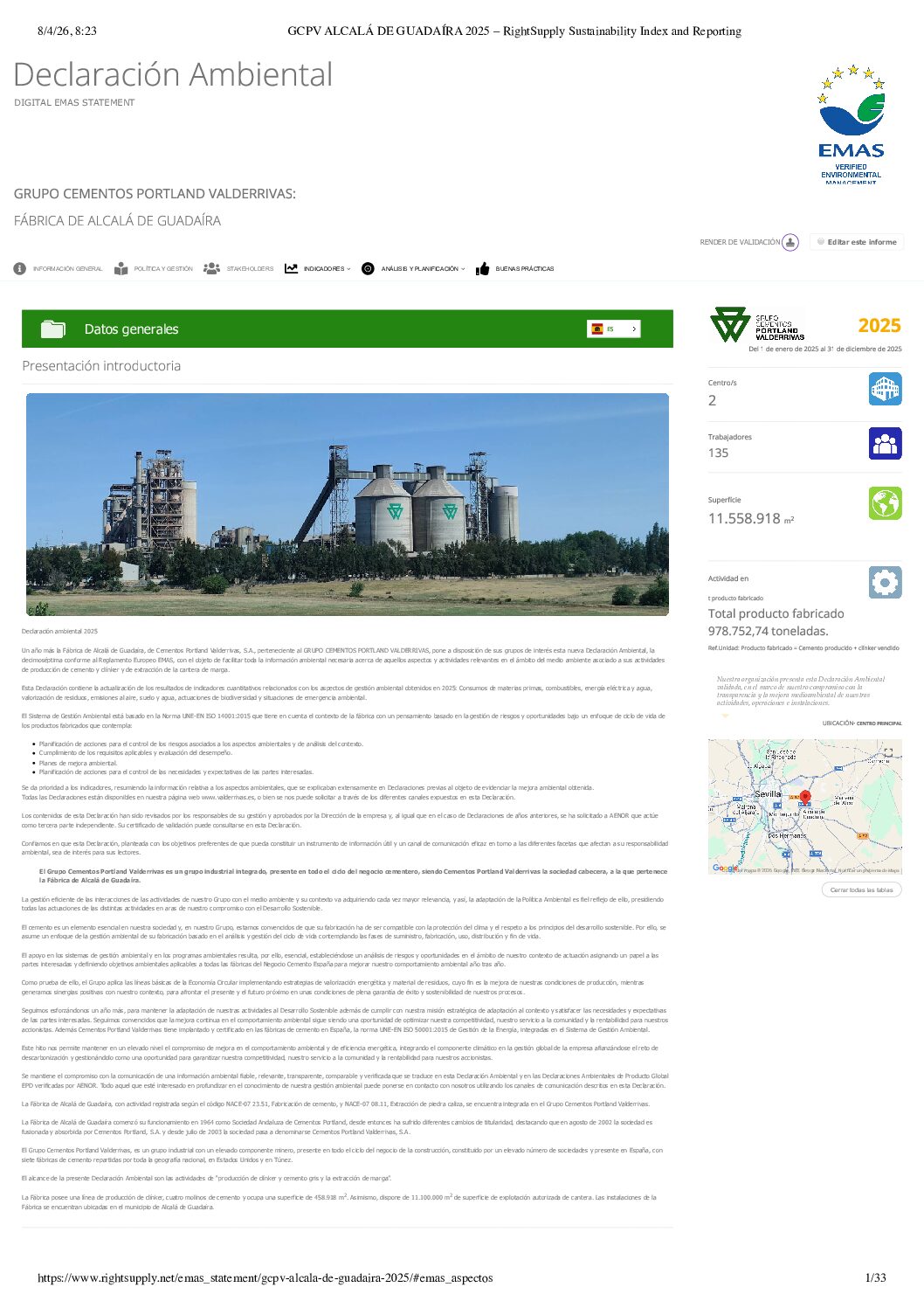
CO₂ eq:stands forcarbon dioxide equivalent. It is used to measure the impact of different greenhouse gases on global warming by converting emissions of these gases into the equivalent amount of carbon dioxide (CO₂) that would produce the same effect.
EMAS: Eco-Management and AuditScheme. It is a voluntary environmental management system developed by the European Union for organizations that wish to assess, manage, and improve their environmental performance.
GJ:Unitof energy. A gigajoule is a unit of energy measurement, equivalent to one billion joules (J).
LPG: Liquefied PetroleumGas. It is a mixture of gaseous hydrocarbons, primarily propane and butane, which are liquefied to facilitate storage and transport.
GN: NaturalGas.
ISO: International Organization for Standardization. It is an entity that develops international standards for various products, services and management systems.
kt:Unitof mass equal to 1,000 tons.
MWh:Unitof energy in megawatt-hours
NACE: is a standard that allows the classification of the different economic activities carried out in the EU, facilitating the comparison of data between countries and the preparation of homogeneous statistics.
PPA:PowerPurchase Agreement. This is a long-term contract between an energy buyer and a renewable energy producer that sets forth the terms and conditions for the sale and purchase of electricity.
S1: Scope 1 for CO2eq emissions.
S2:Scope2 for CO2eq emissions.
S3:Scope3 for CO2eq emissions.
Units:Unit. Units concentration: Unit of concentration.
Units : Productionunit.
UNE:standsfor the Spanish Association for Standardization. It is the body responsible for developing technical standards in Spain, acting as the national standardization body. UNE promotes quality, safety, and efficiency in products and services through the development and dissemination of standards.
∑ (uppercase sigma):usedin mathematics to represent the sum of a series of terms.
Template: 2026 Final