






Environmental Statement
EMAS STATEMENT REPORTING PLATFORM

Environmental Statement
EMAS EUROPEAN REGULATIONS

Environmental Statement
EMAS STATEMENT REPORTING PLATFORM
GRUPO CEMENTOS PORTLAND VALDERRIVAS: HONTORIA FACTORY
 |
General data |
Introductory Presentation
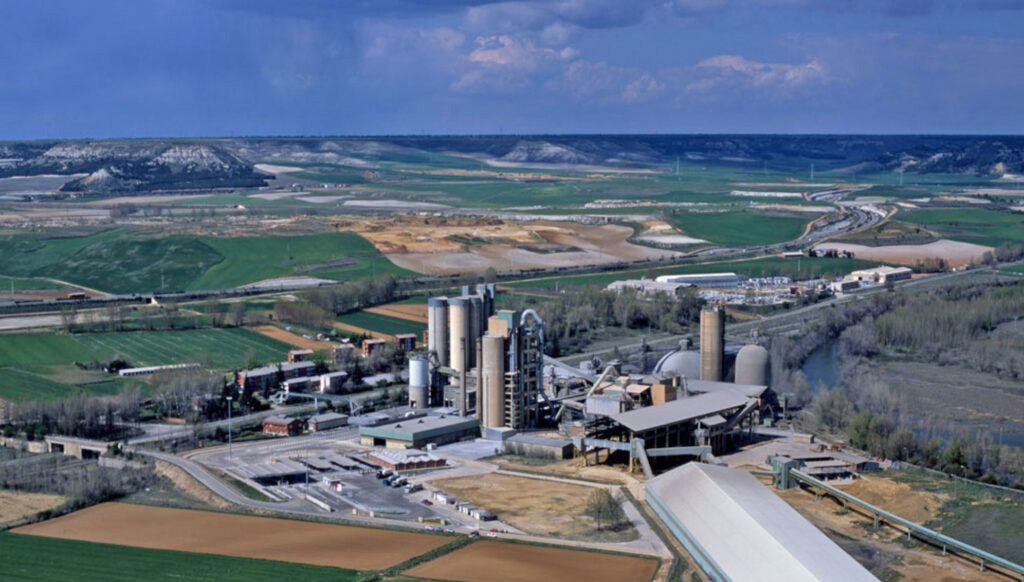
This link contains our updated Environmental Statement for the Hontoria Factory in Venta de Baños, Palencia, which belongs to Grupo Cementos Portland Valderrivas, in accordance with EMAS regulations. It is the first version that we have published that is 100% online and digital. The aim is to provide our stakeholders with all the necessary information on those aspects and activities relevant to the environment associated with their activities of limestone quarrying and the production of clinker, cement, and mortar.
The Grupo Cementos Portland Valderrivas in the cement business based on a commitment to sustainable development, with an Environmental Management System (based on ISO 14001:2015 standards) that takes into account the context of the factory with a mindset based on risk and opportunity management, applying a life cycle approach to the products manufactured that considers:
- Planning of actions to control risks associated with environmental aspects and context analysis.
- Compliance with applicable requirements and performance evaluation.
- Environmental improvement plans.
- Action planning for the control of stakeholders' needs and expectations.
This Statement provides an update on the performance results of quantitative indicators related to environmental management aspects for 2024: consumption of raw materials, fuels, electricity, and water; Recovery ; emissions to air, soil, and water; biodiversity initiatives; and environmental emergencies.
Indicators and results are prioritized, summarizing the environmental evolution with respect to previous declarations in order to demonstrate improvements. All the contents of the Environmental Statement have been reviewed by the Management, with independent validation by AENOR (the certificate can be seen at the end of the document).
 |
2024 |
 Centre/s
2
 Workers
101
 Surface
24.553.791 m2
 Activity in
Tn Product manufactured
588.910
Unit Ref.: P. Fab: Cement produced + Clinker sold
Our organisation presents this validated Environmental Statement as part of our commitment to transparency and environmental improvement of our activities, operations and facilities.
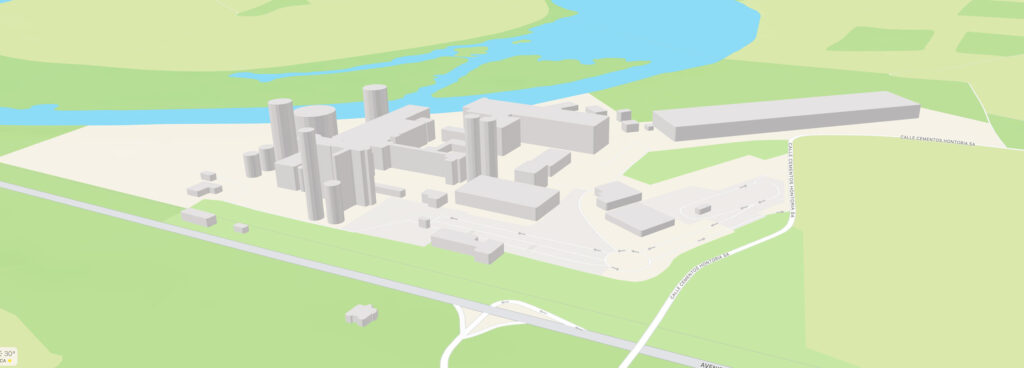
LOCATION- MAIN CENTER
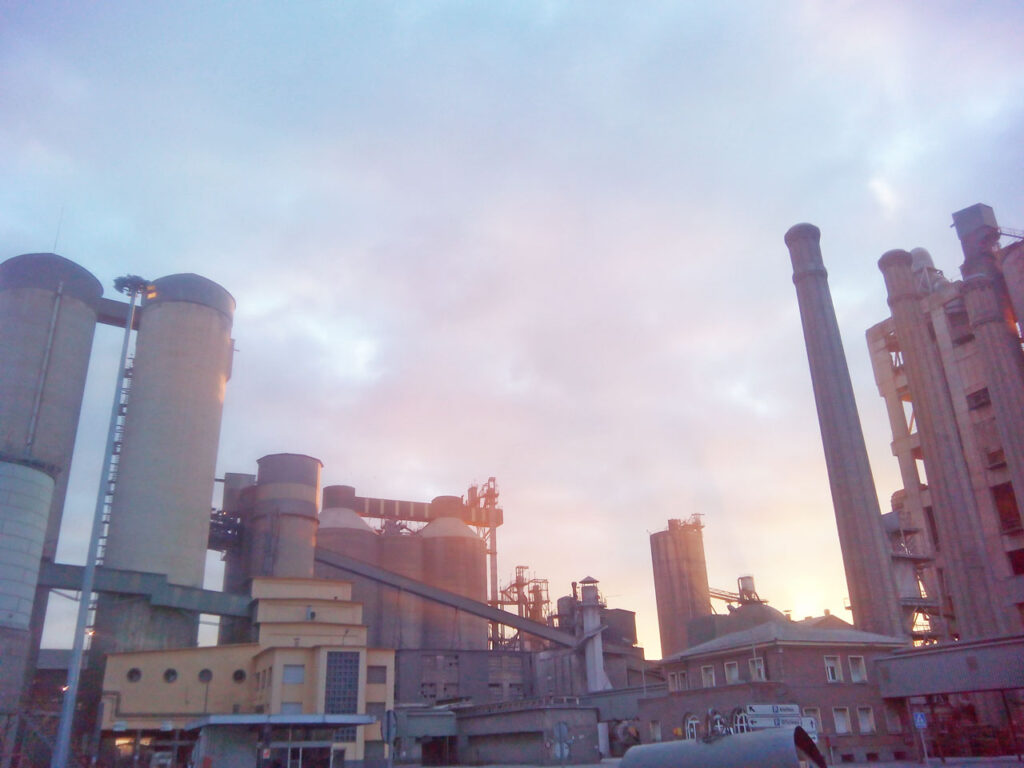
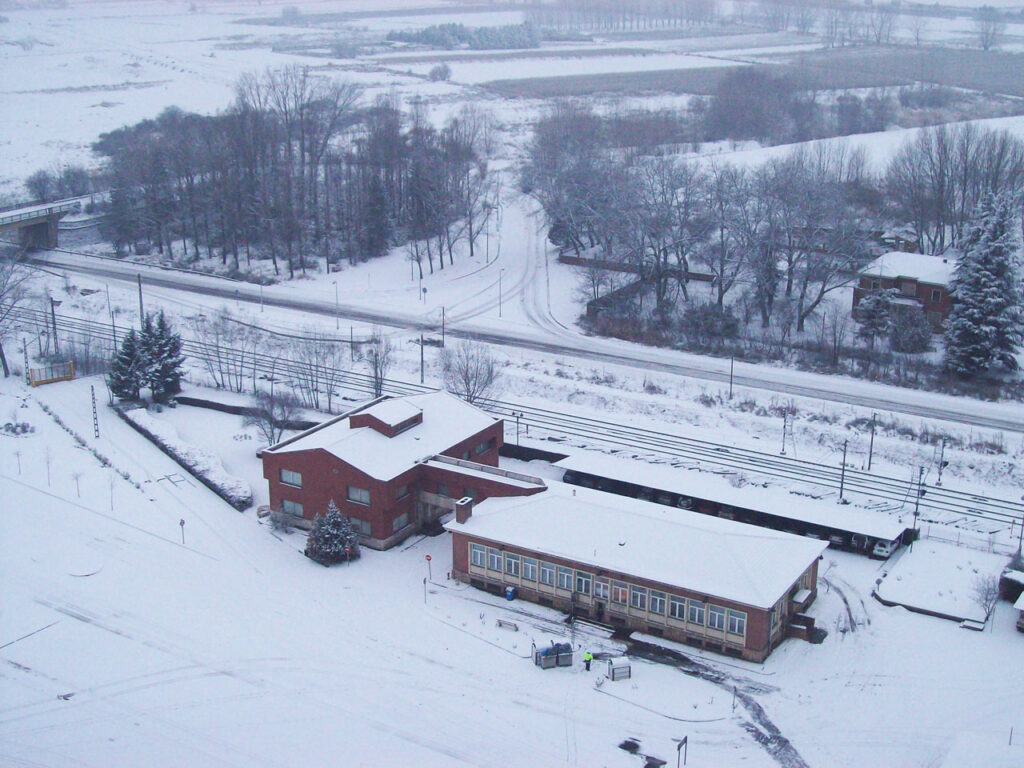
Our organisation presents this validated Environmental Statement as part of our commitment to transparency and environmental improvement of our activities, operations and facilities.

Social information
Link here to our main social networks.
 |
 |
 |
 |
Environmental assessment and performance |
|
Key metrics |
◉ Global indicators 2024
Includes the sum of all the organisation's sites under the EMAS Register.
ENERGY CONSUMPTION

594.656,05 MWh
- Renewable energy consumption 20.83
- Renewable generation 0
WATER CONSUMPTION

157.855 m3
- Supply network 1.22
Origin Well | Network
TOTAL DISCHARGES

0 m3
- Public waterway 0
- Sewage system 0
CO2 EMISSIONS

376.724 Tn
- Indirect 1.62 % Indirect
- Direct 98.38 % Direct
WASTE

952,12 Tn
• Hazardous 2.76%
• Recovery 98.08%
Unit values on production/performance
1,01 MWh/Tn Product manufactured
0,27 m3/Tn Product manufactured
0 m3/Tn Product manufactured
0,64 Tn/Tn Product manufactured
0,0016 Tn/Tn Product manufactured
Unit Ref.: Tn Manufactured Product: Manufactured Cement + Sold Clinker
|
Dimension of the activity |
Evolution of production activity
The wide range of products manufactured allows the ideal selection depending on the application. The cements produced in 2024 from the Hontoria factory include nine different types of products, all of them certified with AENOR's Product Certification N mark, as well as CE marking, complying with current legislation and the regulatory requirements of UNE-EN 197-1 and UNE-EN 197-2.
|
PRODUCT |
NORMA |
% PRODUCTION |
|
CEM I 52.5 N-SR 5 |
UNE EN 197-1 |
3,2% |
|
CEM I 52.5 R BULK |
UNE EN 197-1 |
8.3% |
|
CEM II/A-L 42.5 R BULK |
UNE EN 197-1 |
65,8% |
|
CEM II/B-L 32.5 N BULK |
UNE EN 197-1 |
19% |
|
CEM II/A-L 42.5 N BULK |
UNE EN 197-1 |
3.7% |
Our cements have a Safety Data Sheet that allows customers a safe and responsible use of the product, due to its irritant character associated to its alkalinity, mainly.
 |
Energy use and management |
Environmental management and control
Fuel consumption
In 2024, the consumption of alternative fuels decreased by 19% compared to 2023, as the company prioritized clinker production over the Recovery target for strategic reasons. Despite this, the substitution rate achieved was 36.56%, while the target was 40%, meaning that 91.4% of the target was met.
The percentage of energy derived from alternative fuels is increasingly approaching the percentage derived from fossil fuels. This is due to efforts in recent years that have encouraged us to adapt to the new market for alternative fuels in a way that ensures implementation with maximum technical and economic viability. We will continue to work intensively on improving the Recovery use of biomass fuels to reduce greenhouse gas emissions, always in accordance with best practices and respect for the waste hierarchy.
The percentage of thermal substitution by fuels derived from waste with calorific value in 2024 has decreased with respect to 2023 for the strategic reason mentioned above, reaching 36.56% compared to 50.58% in 2023 and 44.84% in 2022.
Recovery new Recovery target for 2025 is 62%, and it will continue to rise in subsequent years. A chlorine bypass has been installed in the tower at a cost of more than 5.5 million euros to improve energy efficiency and increase the Recovery alternative fuels.
ADVANTAGES OF BIOMASS Recovery
Recovery cement plants is considered one of the most efficient methods for the complete destruction of organic compounds, while inorganic compounds are incorporated into the raw materials and leave the process as part of the clinker.
- It does not increase the total amount of greenhouse gases emitted.
- It contributes to sustainable development by conserving non-renewable energy resources.
- It avoids the accumulation of waste in landfills, managing it in a safe and environmentally friendly way.
- Reduces cement manufacturing costs.
Electricity consumption
Electricity is mainly used in the process for crushing quarried materials and grinding raw materials, fuels, and clinker, with the latter accounting for the highest percentage of electricity consumption. Regardless of production, there are certain levels of energy consumption below which it is very difficult for the facility to operate. We could call this the "baseline consumption of the factory," as the ratios do not fall below a certain level despite several years of low production.
As for the year 2024, an increase in factory electricity consumption can be observed due to the increase in production.
The Recovery new Recovery target for 2025 is 62%.
Evolution of specific metrics and ratios
Units of energy consumption in MWh and their ratios associated with the activity.
|
Renewable energies |
...
Note: Renewable electricity through PPA contracts and Fortia company certificate with 4.7% renewable.
 |
Water use and management |
Environmental management and control
The table above shows that although we increased water consumption at the factory, there was a decrease at the quarry, so the ratios represented also increased. This may be due to occasional water leaks at the factory or to the increase in clinker production in 2024.
Evolution of specific metrics and ratios
 |
Waste water discharge management |
Environmental management and control
Public waterway receiving the discharge: Pisuerga River
 |
Atmospheric emissions |
Environmental management and control
The Hontoria facilities have emission sources from the chimney, the furnace, and the rest of the processes: fuel grinding, cement, bagging, and crushing of raw materials from the marl quarry. All of these have purification systems based on bag filters or electrostatic filters, which are some of the best available techniques in the sector, and continuous pollutant measurement systems, with the exception of the bagging machines, which are checked at appropriate intervals. The recorded particle emissions, expressed inmg/Nm3, are in all cases below the legally established limit value, which is 50mg/Nm3 for the co-incinerating kiln and 30mg/Nm3 for the rest of the sources, with a deviation observed in the clinker cooler filter source. Corrective actions have been implemented in the electrostatic precipitator, and emissions have been checked by OCA in source 4 on 07/22/2025, with results in compliance with the applicable standards for particulate matter. During 2017 there was the modification in the environmental conditions by Order FYM 785/2017 which has established as emission limit value for all particulate matter sources 20 mg/Nm3 and 10 mg/Nm3 for bagging machines. Although some of the emission filtering fabrics may be worn out, they are continuously monitored and maintained so that emissions remain within the acceptable range. As soon as it is detected that any of the outbreaks is close to the emission limit, Maintenance is informed so that the deteriorated sleeves can be changed. The combustion process of both fossil and alternative fuels generates mainly carbon dioxide, sulfur dioxide and nitrogen oxides, whose concentration, in mg/Nm3 at 10% oxygen, is continuously monitored. Data are monitored for compliance in relation to their emission limit value. During 2017 there was a modification in the environmental conditions by Order FYM 785/2017 which established as emission limit value 500 mg/Nm3 co-incinerating and non-co-incinerating for NOx and 50 mg/Nm3 co-incinerating and 400 mg/Nm3 non-co-incinerating for SO2. Flue gas emission values remain in similar ranges to those obtained in previous years. Our facilities have an SNCR system to control NOx emissions. In 2024, 376,724 metric tons of CO2 equivalent were emitted into the atmosphere, resulting from the decarbonation of limestone (through the conversion of limestone into calcium oxide at the high temperatures of the process), and from the combustion process due to the oxidation of carbon in fuels in the presence of oxygen, as well as the consumption of heating oil and generator sets and propane from shrink-wrapping machines. This year, we have not managed to maintain the downward trend in this factor, although efforts remain focused on achieving it. We must continue working on this, though it is equally important to note that more clinker is being produced than in recent years. It should be remembered that the narrow operating window of the kiln and the situation of the domestic fuel market Recovery influence the Recovery data. The use of alternative fuels as a substitute for conventional fuel resulted in a reduction of 44,604.86 t of fossil-derived CO2 eq in 2024, a lower figure than in 2023 (50,971.68 t of fossil-derived CO2 eq). Our continuous concern for the reduction of emission levels has resulted in their maintenance at values below the legal limits. The data corresponding to pollutants are reported annually in the State Pollutant Emissions and Sources Register, PRTR Spain, in the form of pollutant load of channeled emissions. The minimization of emissions resulting from the transfer and movement of powdery materials has been achieved through the adoption of a series of preventive measures such as paving in traffic areas, conveyor belt fairings, suction devices at transfer, loading, and unloading points, etc. The data are collected by the stations and shared with the Administration. Noise emissions in the surroundings of the manufacturing facilities generate, as an impact, nuisances to the population and fauna. In the case of the Hontoria factory, located in the vicinity of an industrial park, a highway and railroad tracks, the impact on the environment is not really significant. However, in previous years a series of actions were undertaken to minimize noise, such as the installation of doors in the crude oil mill or the replacement of blowers. An annual measurement campaign is carried out at representative points on the periphery to ensure compliance with the legal requirements established for the factory.Confined and diffuse atmospheric emissions
Emissions from channeled sources
Emission of combustion gases
Confined greenhouse gas emissions
To a lesser extent, other emissions are generated by our plant’s operations, such as fuel consumption for material transport (816 t CO2 eq, including other minor gases) and gas refills for refrigeration systems, which totaled 15.79 tons of CO2 equivalent—all of which are direct Scope 1 emissions.Specific greenhouse gas emissions
Diffuse source emissions
Air quality is controlled through continuous monitoring by control cabins installed by the company in the factory environment, which receive real-time data.
Immission data for 2024 have remained broadly in the same range as in the previous year, with the most significant parameters analyzed being PM-10,NO2,SO2, andO3. Sound emissions
 |
CO2 emissions |
 |
Waste production and management |
Environmental management and control
In 2024, less Hazardous waste was generated Hazardous in 2023, and less Hazardous waste was also generated Hazardous in 2023. The main reduction occurred in hydrocarbon-contaminated materials for Hazardous waste Hazardous in construction debris and demolition waste for Hazardous waste. However, there was a notable increase in the amount of scrap metal managed for the latter. Recovery of Hazardous waste Hazardous 30.7% of Hazardous were sent for recycling and Recovery .
Follow-up of the waste minimization plan
In 2024, efforts to reduce Hazardous of Hazardous waste continued. It should be noted that all Hazardous waste Hazardous generated during corrective, preventive, or general repair maintenance activities.
In June 2021, the waste minimization plan for the Hontoria plant was presented for the period 2021-2024, with the fundamental objective of reducing the generation of material contaminated with hydrocarbons and fuel oil waste by at least 0.25% compared to the average of the previous three-year period.
Evolution of specific metrics and ratios
 |
Management of raw materials and resources |
Environmental management and control
In recent years, as part of the strategic policy of Grupo Cementos Portland Valderrivas, the Hontoria plant has been committed to replacing these natural raw materials with waste materials as a means of reducing and optimizing its operations. These secondary raw materials come from other industrial processes and are used in conjunction with the traditional ones in the production of raw meal or as an additive, depending on the type of cement to be produced. These Recovery practices Recovery a number of environmental benefits, including a reduction in the extraction of raw materials and the amount of waste sent to landfills, without compromising product quality or the safety of workers and the environment.
The type of cement to be produced based on market demand will influence the ratio of raw materials that can be used and/or substituted. Therefore, the market significantly determines the consumption ratio of certain raw materials relative to others. Similarly, the composition of quarry faces is not 100% homogeneous, and these variations in the natural composition of the soil by area imply variations in the consumption of explosives during quarry operations.
In recent years, one of the secondary raw materials has been mill scale. Due to the large amount of scrap it contributed to the process, its use was reduced to zero in 2024. The use of limonite, of natural origin, has also been reduced to zero, and both raw materials have been replaced by ferrous silicate. Modifications have also been made to the raw material mix so that more silica sand is being used in exchange for quartz-rich clay from quarries.
Starting in 2021, there will be a reduction in the consumption of natural resources and also in the amount of secondary raw materials used. In 2023 and 2024, there will be a significant increase in the consumption of all raw materials compared to previous years, due to the increase in the tons of clinker produced.
One of the main reasons, which is clearly reflected in the adjacent graph, is the scarcity of fly ash as a secondary raw material.
Evolution of specific metrics and ratios
 |
Biodiversity |
Biodiversity indicators
The main impact of our activity on the landscape is the exploitation of natural resources in the raw material supply quarries. The evaluation of the impact on the landscape is carried out by observing the restored surface in relation to the exploited surface. The execution of the restoration consists, in a very summarized form, in the filling of the exploitation holes, supply and spreading of topsoil and subsequent sowing of herbaceous plants and finally the planting of all this surface with species appropriate to the terrain. We can see this sequence in the images on the following page. The improvement objectives set to minimize the impact of the quarry exploitation have continued during the year. Regarding Biodiversity, different forms of land use are described: total use, we can see in this statement in the final table the area occupied and the ratio versus activity. Restoration work during 2024 consisted of morphological repair and planting. For this purpose, appropriate sowing and planting techniques are applied, using native species adapted to the particular soil and climate conditions of the area, such as holm oaks, pine, broom, etc. Plant species of interest that exist in the area before exploitation are also transplanted and, when necessary, maintenance, irrigation and pruning of the areas restored with revegetation are carried out. MAIN CATERING ACTIVITIES
 |
Other information of environmental interest |
Significant and/or sector specific indicators
Sound emissions
Noise emissions in the surroundings of the manufacturing facilities generate, as an impact, nuisances to the population and fauna. In the case of the Hontoria factory, located in the vicinity of an industrial park, a highway and railroad tracks, the impact on the environment is not really significant. However, in previous years a series of actions were undertaken to minimize noise, such as the installation of doors in the crude oil mill or the replacement of blowers.
A measurement campaign is carried out annually at representative points on the periphery to ensure compliance with the legal requirements established for the plant.
|
Impact analysis and improvement planning |
 |
Environmental aspects and impacts |
Description of the most important and significant environmental aspects
The evaluation of environmental aspects is a starting point for the revision of the System and for the definition and updating of operational control procedures, and those for action in the event of potential accidents and emergency situations. The evaluation carried out annually on environmental aspects, in general, is established based on a series of definitive environmental criteria as indicated.
- Hazard or level of environmental impact of the aspect.
- Quantity or volume of the environmental aspect.
- Complaints received from stakeholders and legal non-compliance.
- Severity or level of severity of the impact, generally associated with the intrinsic and objective hazard.
- Probability, frequency or recurrence with which the aspect occurs.
- Capacity to influence economic, technical or human resources to carry out actions for prevention, control and correction of the aspect.
Based on the evaluation carried out, the significant environmental aspects with the greatest impact are determined and which, therefore, have a score higher than that established as significant, in accordance with the criteria indicated. Based on these, the activity plans its operational control and improvement objectives.
Direct environmental aspects are those generated as a result of the activities of the factory and quarry over which there is full control of their management. Grouped according to their environmental vector, the following environmental aspects have been identified and evaluated under normal and abnormal conditions.
- DIURNO noise emission
- NOCTURNO noise emission
- NOx Co-incinerating
- Electricity consumption (kWh/ t cement produced)
- Water consumption
- Material substitution rate in crude oil (t mat/ t ck)
- Material substitution rate (t mat/ t cement produced)
- Gasoil vehicles (t/t product manufactured)
- Hazardous Waste Generation: Fuel Oil Waste
- Hazardous waste generation: Scrap metal
Indirect environmental aspects are those aspects derived from the activities, products and services of the plant over which there is no full control of their management.
Its evaluation is based on the following environmental criteria of quantity - in relation to the previous year - and influence capacity - based on the possibility of establishing actions for its reduction -, and no indirect environmental aspect has been quantified as significant.
Description of significant environmental aspects
 |
Environmental improvement planning |
Environmental improvement planning
The modernization and continuous improvement of production facilities form the basis for reducing the environmental impact of our process, through the consolidation of the implementation of the best available techniques that have been in use for years. It should be noted that the sector is currently in a delicate situation. The small increase in activity is not sufficient to embark on major improvements due to socio-political instability and changes in the greenhouse gas emissions market. Therefore, the steps planned for continuous improvement are small but solid. Thus, we maintain the idea of continuous improvement through ongoing and sustained effort.
Recovery to be one of our pillars of continuous improvement in environmental performance.
During 2024, the challenge of modernizing some of the process's operational control systems to obtain the maximum possible performance was met. In addition, an investment was made to renovate a multi-parameter gas analyzer and install a new continuous mercury analyzer. During 2025, work will continue on these modifications to obtain the maximum possible performance.
The optimization of the catalog of product types (cement) to be manufactured is currently being studied in order to reduce the carbon footprint of cement. In 2024, well into the new 2021-2025 period, we will continue with our challenge of reducing greenhouse gas emissions and contributing to the fight against climate change, and in this regard we will continue to work intensively as we have been doing.
 |
Legal compliance analysis |
List of permits, authorizations and declarations in force
The Environmental Authorization is a permit, granted by the Junta de Castilla y León, where the controls to be carried out and the legal limits to be complied with in most environmental aspects are included.
- AA-PA-001/2006: Environmental Authorization (BOCYL-D-21082007-15.pdf)
- AA-PA-001/2006: MS2 Expansion of Hazardous Recovery Hazardous over 100 t/day). Environmental Impact Statement submitted on 2/25/13; Environmental Impact Statement Order dated 5/28/14 (BOCYL-D-16112012-6.pdf)
- AA-PA-001/2006: RO 1: Review for BAT conclusions (BOCYL-D-22092017-5.pdf)
- AA-PA-001/2006: MNS 14: Adjustment in percentages of alternative fuels use (BOCYL-D-04052018-6.pdf)
- 009-18MNSPA: MNS 15: Inclusion of olive pomace as alternative fuel (BOCYL-D-11022019-10.pdf)
- 009-19MNSPA: MNS 16 new LER (BOCyL n.º 18, January 28, 2020 - Disp. 011)
- 011-20MNSPA: MNS 17: new LER (BOCyL n.º 227, October 30, 2020 - Disp. 012)
- 013-20MNSPA: MNS 18: Use of coal as fuel (BOCyL n.º 248, November 30, 2020 - Disp. 028)
- 016-21MNSPA: MNS 19: Recovery LER Recovery of Rolling Mill Scale (BOCyL No. 135, July 14, 2021 - Prov. 020)
- 017-21MNSPA: MNS 20: Recovery LER Recovery —White Slag (BOCyL No. 135, July 14, 2021 - Disp. 020)
- 022-21MNSPA: MNS 21: Extension of the deadline for the use of coal as fuel (BOCyL n.º 211, November 2, 2021 - Disp. 016)
- 023-21MNSPA: MNS 22: new LER management (BOCyL n.º 129, July 6, 2022 - Disp. 020)
- 009-22MNSPA: MNS 23 - Chlorine bypass installation (BOCyL n.º 187, September 27, 2022 - Disp. 064)
- 016-22MNSPA: MNS 24 - Use of coal as fuel (BOCyL n.º 30, February 14, 2023 - Disp. 019)
- 004-23MNSPA: MNS 25: new LER production (BOCyL n.º 157, August 17, 2023 - Disp. 012)
- 020-25MNSPA: MNS 26: extension of the authorization for the use of coal as fuel (BOCyL n.º 36, February 20, 2024 - Disp. 014)
Regulatory Compliance Summary
The most relevant legal references applicable to our activity are the following:
- Resolution of August 8, 2007, of the Directorate General for Environmental Prevention and Land Management, publishing the Environmental Authorization granted to Cementos Portland Valderrivas, S.A., for the installation of a clinker and cement manufacturing plant and limestone quarry in the municipalities of Venta de Baños, Hontoria de Cerrato, Tariego de Cerrato, and Cevico de la Torre (Palencia).
- The Environmental Authorization is a permit, granted by the Junta de Castilla y León, where the controls to be carried out and the legal limits to be complied with in most of the environmental aspects are included.
- Order FYM/948/2012, dated October 22, regarding the request for Substantial Modification No. 2 submitted by Cementos Portland Valderrivas, S.A., for the co-incineration of Hazardous waste Hazardous more than 100 tons per day) at the facilities located in the municipality of Venta de Baños (Palencia).
- Order FYM/502/2014, dated June 3, amending Order FYM/948/2012, dated October 22, granting environmental authorization to carry out a substantial modification for the co-incineration of Hazardous waste Hazardous more than 100 tons/day) at the facilities located in the municipality of Venta de Baños (Palencia), owned by Cementos Portland Valderrivas, S.A., as a result of non-substantial modification No. 8.
- Order FYM/49/2014, of January 3, on updating integrated environmental authorizations in Castilla y León.
- Order FYM/785/2017, of August 28, amending Order FYM/948/2012, of October 22, granting environmental authorization for the clinker and cement manufacturing plant located in the municipality of Venta de Baños (Palencia), owned by Cementos "Portland Valderrivas, S.A.," as a result of the review of said authorization for adaptation to BATs and the 2016-2022 State Waste Management Framework Plan (PEMAR).
- Order FYM/457/2018, dated April 17, amending Order FYM/948/2012, dated October 22, granting Non-Substantial Modification No. 14.
- ORDER FYM/83/2019, of January 22, amending Order FYM/948/2012, of October 22, granting Non-Substantial Modification 15 (MNS 15).
- ORDER FYM/31/2020, of January 8, amending Order FYM/948/2012, of October 22, granting Non-Substantial Modification No. 16 (MNS 16).
- Resolution of August 8, 2013, of the Directorate General for Environmental Quality and Sustainability, which authorizes the emission of greenhouse gases for the period 2013-2020.
- Resolution of August 3, 2020, of the General Director of Environmental Quality and Sustainability, approving the modification of the monitoring plan v11 for the period 2013-2020.
- Law 9/2018, of December 5, amending Law 21/2013, of December 9, on environmental assessment, Law 21/2015, of July 20, amending Law 43/2003, of November 21, on Forestry and Law 1/2005, of March 9, regulating the greenhouse gas emission allowance trading scheme.
- Resolution of December 2, 2015 of the Secretary of State for the Environment approving emissions adjustments 2015-2020 as the level of activity has recovered.
- Royal Decree 18/2019, of January 25, developing aspects related to the application of the greenhouse gas emission allowance trading scheme in the period 2021-2030.
- In addition, Implementing Regulation (EU) 2019/1842 of 31 October 2019 laying down detailed rules for the implementation of Directive 2003/87/EC of the European Parliament and of the Council as regards additional provisions for the adjustment of the free allocation of allowances due to changes in the level of activity was published.
- Regulation 2019/331 of 19 December 2018 determining the Union transitional rules for the harmonization of the free allocation of allowances pursuant to Article 10a of Directive 2003/87/EC of the European Parliament and of the Council.
- FYM Order 277 of 2015 of March 20 amending FYM Order 948/2012 of October 22 authorizing the use of furnace slag from Lingotes especiales S.A. as raw material.
- FYM Order 992/2015 of November 6 amending FYM Order 948/2012 of October 22 authorizing the use of iron screenings as raw material.
- Order FYM 1120/2016, dated December 28, amending Order FYM/948/2012, dated October 22, authorizing the use of CDR with LER 19 12 10 for R1 Recovery and desulfurization gypsum (LER 10 01 05) for R5 Recovery .
- Agreement of November 8, 2000 of the Government Commission of the City Council of Venta de Baños by which the same agrees to authorize the transfer of the Activity and Opening License in favor of Cementos Portland Valderrivas for the cement factory.
- II Agreement for the sustainable use of resources, the protection of the environment, people's health and the improvement of the competitiveness of the Spanish cement sector", published in the BOE on February 24, 2014.
- Resolution of December 23, 2009, of the D.G. of Energy and Mines to grant an extension for thirty years of the exploitation concession "Hontoria Quarry" No. 3,180, located in the municipality of Hontoria de Cerrato and others in the province of Palencia.
- Resolution of January 14, 2009 of the D.G. of Energy and Mines by which the Demasía is granted to Cantera Hontoria nº 3,180, forming part of the same with a joint extension of 81 squares.
- Decree of August 18, 2004 of the Mayor's Office of Venta de Baños, according to which it is resolved to change the name of the activity and opening licenses of Cementos Pórtland to Cementos Pórtland Valderrivas.
- Authorization for the abstraction in favor of Cementos Portland, S.A. of 51 l/s of water to be derived from the Pisuerga river, in the municipal district of Venta de Baños (Palencia) on September 13, 2002.
- Royal Decree 638/2016, of December 9, amending the Regulation of the Public Hydraulic Domain approved by Royal Decree 849/1986, of April 11, the Regulation of Hydrological Planning, approved by Royal Decree 907/2007, of July 6, and other regulations on flood risk management, ecological flows, hydrological reserves and wastewater discharges.
- Order of April 26, 2011, of the Regional Ministry of the Environment, authorizing as a non-substantial modification the project for the use of white steel slag as raw material in the cement and clinker factory located in the municipality of Venta de Baños (Palencia) belonging to the company Cementos Pórtland Valderrivas S.A.
- Resolution of November 4, 2011, of the Directorate General for Environmental Quality and Sustainability, publishing the Order authorizing, as a non-substantial modification, the project for the use of various types of rubble and railway ballast as raw materials in the cement and clinker factory located in the municipality of Venta de Baños (Palencia), owned by the company Cementos Portland Valderrivas, S.A.
- Order of October 26, 2011, of the Regional Ministry of Development and Environment, authorizing, as a non-substantial modification, the project for the use of paper mill sand as raw material in the cement and clinker factory located in the municipality of Venta de Baños (Palencia) belonging to the company Cementos Pórtland Valderrivas S.A.
- Commission Regulation (EU) 2017/1505 of 28 August 2017 amending Annexes I, II and III to Regulation (EC) No 1221/2009 of the European Parliament and of the Council on the voluntary participation by organizations in a Community eco-management and audit scheme (EMAS).
- COMMISSION REGULATION 2018/2026 of 19 December 2018 amending Annex IV to Regulation (EC) No 1221/2009 of the European Parliament and of the Council on the voluntary participation by organizations in a Community eco-management and audit scheme (EMAS).
- Resolution of September 10, 2013 of the General Director of Environmental Quality and Sustainability renewing the registration in the EMAS Registry of the Hontoria Factory.
- Communication of October 2, 2014 of permanence of the registration in the EMAS Registry of the Hontoria Factory.
- Communication of October 29, 2015 of permanence of the registration in the EMAS Registry of the Hontoria Factory.
- Communication of June 22, 2017 of permanence of the registration in the EMAS Registry of the Hontoria Factory.
- Communication of August 8, 2018 of permanence of the registration in the EMAS Registry of the Hontoria Factory.
- Royal Decree 183/2015, of March 13, amending the Regulation for the partial development of Law 26/2007, of October 23, 2007, on Environmental Responsibility, approved by Royal Decree 2090/2008, of December 22.
- Decree 53/2015, of July 30, establishing the procedures for the processing, suspension and cancellation of registration in the Register of organizations adhering to the Community Eco-Management and Audit Scheme in the Community of Castilla y León.
- State Waste Management Framework Plan (PEMAR) 2016-2022
- Resolution of February 21, 2017 of the Directorate General of Environmental Quality and Sustainability establishing the periodicity and content of the soil situation reports of the company Cementos Portland Valderrivas S.A.
- On December 5, 2017, the soil risk analysis was presented based on the levels detected in the previous status report.
- The ACR result showed only moderate risks.
- Royal Legislative Decree 7/2015 of October 30, 2015, approving the revised text of the Law on Land and Urban Rehabilitation.
- Legislative Decree 1/2015, of November 12, 2015, approving the revised text of the Environmental Prevention Law of Castilla y León.
- Order PRA/321/2017, of April 7, regulating the procedures for determining emissions of atmospheric pollutants SO2, NOx, particulate matter and CO from large combustion facilities, the control of measuring instruments and the processing and remission of information relating to such emissions.
- Law 1/2012, of February 28, 2012, on Tax, Administrative and Financial Measures of the Community of Castilla y León.
- The Tax on waste disposal in landfills is created (arts. 26 to 35) (landfills located within the scope of the Autonomous Community).
- Law 8/2014, of October 14, amending Law 11/2003, of April 8, on Environmental Prevention of Castilla y León.
- Commission Implementing Decision of March 26, 2013, establishing Best Available Techniques (BAT) conclusions for the manufacture of cement, lime and magnesium oxide in accordance with Directive 2010/75/EU of the European Parliament and of the Council on industrial emissions.
- Law 21/2013 of December 9, 2013, on environmental assessment.
- Decree 11/2014, of March 20, approving the Regional Plan of Sectorial Scope called "Integrated Waste Plan of Castilla y León".
- Law 5/2013 of June 11, amending Law 16/2002 of July 1, 2002, on integrated pollution prevention and control and Law 22/2011 of July 28, 2011, on waste and contaminated soils.
- Royal Decree 815/2013 of October 18, 2013, approving the Regulation on industrial emissions and development of Law 16/2002 of July 1, 2002, on integrated pollution prevention and control.
- Resolution of August 6, 2013 of the General Directorate of Environmental Quality and Sustainability authorizing the emission of greenhouse gases for the period 2013-2020 to the Cementos Portland Valderrivas de Venta de Baños facility, in Venta de Baños (Palencia).
- Resolution of November 18, 2014 of the Secretary of State for the Environment approving adjustments to greenhouse gas emission allowance allocations for the 2014-2020 period.
- Royal Legislative Decree 1/2016 of December 16, 2016, approving the revised text of the Law on Integrated Pollution Prevention and Control.
- Royal Decree 773/2017, of 28 July, amending various royal decrees on industrial products and emissions.
- Royal Decree 656/2017, of June 23, approving the Regulation on the Storage of Chemical Products and its Complementary Technical Instructions MIE APQ 0 to 10.
- Resolution of October 10, 2017, of the Directorate General of Employment, registering and publishing the III Agreement for the sustainable use of resources, protection of the environment, people's health and improvement of the competitiveness of the Spanish cement sector.
- Resolution of October 3, 2018, of the General Secretariat of the Ministry of Development and Environment, by which the proposed Order of September 26, 2018, regulating the procedure for the provision of information on pollutant releases and transfers for the European Pollutant Release and Transfer Register (EPRTR) in the Autonomous Community of Castilla y León is submitted for public information.
- Law 9/2018, of December 5, amending Law 21/2013, of December 9, on environmental assessment, Law 21/2015, of July 20, amending Law 43/2003, of November 21, on Forestry and Law 1/2005, of March 9, regulating the greenhouse gas emission allowance trading scheme.
- Commission Regulation 2018/2026 of 19 December 2018 amending Annex IV to Regulation (EC) No 1221/2009 of the European Parliament and of the Council on the voluntary participation by organizations in a Community eco-management and audit scheme (EMAS).
- Royal Decree 18/2019, of January 25, developing aspects related to the application of the greenhouse gas emission allowance trading scheme in the period 2021-2030.
- Implementing Regulation (EU) 2019/1842 settings free allocation
- Order TEC/351/2019, of March 18, approving the National Air Quality Index.
- Order TEC/1023/2019, of October 10, establishing the date as from which the constitution of the mandatory financial guarantee will be required for the activities listed in Annex III of Law 26/2007, of October 23, on Environmental Responsibility, classified as priority level 3, by Order ARM/1783/2011, of June 22.
- ORDER AGR/1073/2019, of October 22, regulating the Register of establishments and operators of animal by-products and derived products not intended for human consumption in the Community of Castilla y León.
- The Junta de Castilla y León was consulted and indicated that in our case it is not necessary to be registered in the RES (register of SANDACH establishments). Since we are not under the scope of the assumptions indicated in the Order of the Junta de Castilla y León.
- Order FYM/83/2019, dated January 22, amending Order FYM/948/2012, dated October 22, granting an environmental permit to the cement and clinker manufacturing and Hazardous waste co-incineration facility located in the municipality of Venta de Baños (Palencia), owned by “Cementos Portland Valderrivas, S.A.,” as a result of Non-Substantial Modification No. 15 (MNS 15).
- Order FYM/31/2020, dated January 8, amending Order FYM/948/2012, dated October 22, granting an environmental permit to the cement and clinker manufacturing and Hazardous waste co-incineration facility Hazardous in the municipality of Venta de Baños (Palencia), owned by “Cementos Portland Valderrivas, S.A.,” as a result of Non-Substantial Modification No. 16 (MNS 16)
- 03-07-2019 Renewal of EMAS Registration Castilla y León
- Order FYM/1150/2020, of October 14, amending Order FYM/948/2012, of October 22, obtaining authorization for the treatment of fly ash as waste, with LER code 10 01 02 (MNS 17).
- ORDER FYM/1295/2020, of November 17, amending Order FYM/948/2012, of October 22 and obtaining temporary authorization for the use of coal as the main fuel (MNS 18).
- Royal Decree 1089/2020, of December 9, developing aspects related to the adjustment of the free allocation of greenhouse gas emission allowances in the period 2021-2030.
- Resolution of November 19, 2020, of the General Directorate of Environmental Quality and Sustainability, authorizing the emission of greenhouse gases for the period 2021-2030 at the Cementos Portland Valderrivas facilities in Venta de Baños (Palencia).
- Royal Decree 646/2020, of July 7, regulating the disposal of waste by landfill.
- Royal Decree 553/2020 of 2 June, which regulates the shipment of waste within the territory of the State.
- ORDER FYM/849/2021, of July 6, amending Order FYM/948/2012, of October 22, and obtaining authorization for the use of mill scale, authorization is also obtained for the use of untreated slag and slag treatment residues (MNS 19 AND MNS 20 respectively).
- ORDER FYM/1278/2021, of October 13, amending Order FYM/1278/2021, of October 13, amending Order FYM/1278/2021, of October 13, amending Order
- FYM/948/2012, dated October 22 and obtaining authorization for the extension of the use of coal as fuel, for an additional year (MNS 21).
- Law 7/2022 of 8 April on waste and contaminated soils for a circular economy.
- Royal Decree 1055/2022, of December 27, 2002, on packaging and packaging waste.
- ORDER MAV/792/2022, of June 29, amending Order FYM/948/2012, of October 22, and obtaining authorization as producers of used waxes and fats with LER code 12 01 12* (MNS 22).
- ORDER MAV/1243/2022, of September 7, amending Order FYM/948/2012, of October 22, obtaining authorization for the installation of the Chlorine By-pass (MNS 23).
- Authorization for cross-border transfer of alternative fuels from France. Authorization renewed annually, in force.
- ORDER MAV/164/2023, of February 2, amending Order FYM/948/2012, of October 22, obtaining authorization for the extension of the use of coal as fuel, for an additional year (MNS 24).
- ORDER MAV/1012/2023, dated August 9, amending Order FYM/948/2012, dated October 22, regarding the application for substantial modification No. 2 for the co-incineration of Hazardous waste Hazardous 100 tons Hazardous day as a result of non-substantial modification No. 25 (MNS25)
The applicable legal requirements are observed and complied with, although the emissions section specifies the deviation produced in the clinker cooler filter focus. The appropriate corrective actions have already been implemented and emissions control by OCA was carried out in focus 4 on 07/22/2025, with results in compliance with applicable particle standards.
There are several relevant new legislative developments that will arise in the year 2024 and will be incorporated into the requirements applicable to cement manufacturing.
- REGULATION (EU) 2024/590 of 7 February 2024 on substances that deplete the ozone layer, and repealing Regulation (EC) No. 1005/2009.
- REGULATION 2024/573 of the European Parliament and of the Council of 7 February 2024 on fluorinated greenhouse gases, amending Directive (EU) 2019/1937, and repealing Regulation (EU) No. 517/2014.
- REGULATION (EU) 2024/197 of 19 October 2023 amending Regulation (EC) No 1272/2008 with regard to the harmonized classification and labeling of certain substances.
- RESOLUTION of July 3, 2024, of the Directorate General for Energy Planning and Coordination, updating Annex I of Order TED/845/2023, of July 18, which approves the catalog of standardized energy efficiency measures.
|
Good environmental management practices |
Ecodesign and life cycle analysis
Life Cycle Assessment (LCA) of a product, process or technology is a methodology that attempts to identify, quantify and characterize the different potential environmental impacts associated with each stage of a product's life cycle. The LCA will provide valuable information that will allow the industry and users to make decisions aimed at improving the environmental performance of processes and products.
The cement sector, as a sector sensitive to sustainable development, has developed a life cycle analysis across the sector through AENOR's Global EDP Program, which has resulted in the Environmental Product Declarations (EPD).
A panel of experts, among which Cementos Portland Valderrivas S. A. was represented, developed Product Category Rule 003 "cements" considering, among others, the UNE-EN ISO 14040 Environmental Management. Life cycle analysis. Principles and reference framework. and UNE-EN ISO 14044 Environmental management. Life cycle analysis. Requirements and guidelines.
In the following link you can consult the corresponding Environmental Statement: AENOR - GlobalEPD Statements in force
◉ Verification record
This Digital Environmental Statement has been verified by:
- AENOR
The most valid document, or in case of discrepancies, is the PDF digitally signed by the verifying body. This document is a true reflection and printout of this Digital Environmental Declaration or rendered web page. You can download this render here as the CURRENT ENVIRONMENTAL DECLARATION: EMAS-PORTLAND CEMENT REPORT-SIGNED PDF.pdf
Date of lastedit: – Master File Version No.: 0
ORGANIZATION: GRUPO CEMENTOS PORTLAND VALDERRIVAS – CENTER(S) – COVERAGE: HONTORIA FACTORY
ACCESS TO THE EUROPEAN REGISTRY: EUROPEAN COMMISSION
TRANSLATIONS OF THIS ENVIRONMENTAL STATEMENT: This EMAS Environmental Statement has been verified in its original language. The browsers used by stakeholders for consultation, or the Platform RightSupply itself, may automatically translate its direct transcription, without the certifying body considering its translated content as validated a priori. Methods such as sworn translation are recommended for this purpose.
EXTERNAL LINKS AND AUDIOVISUAL CONTENT: This EMAS Environmental Statement has been verified in its entirety, with the exception of external links and audiovisual or videographic content that may have been included for complementary purposes.
DIGITALIZATION: Digitization of environmental statements is a best practice with multiple sustainability benefits. By eliminating the use of paper, a significant reduction in energy and water consumption is achieved, which in turn minimizes the carbon footprint. This digital transition not only supports the environment, but also improves data accuracy and consistency, optimizing management efficiency, environmental reporting and access to information for stakeholders. This initiative was recognized as a best practice in 2022 within the European Union's INTERREG EUROPE public policy program (ENHANCE EMAS), underlining its importance in promoting a greener and more efficient administration across Europe.
Template: 2026 Extended