





Environmental Statement
EMAS STATEMENT REPORTING PLATFORM

Environmental Statement
EMAS EUROPEAN REGULATIONS

Environmental Statement
EMAS STATEMENT REPORTING PLATFORM
GRUPO CEMENTOS PORTLAND VALDERRIVAS:
MONJOS FACTORY
 |
General data |
Introductory Presentation
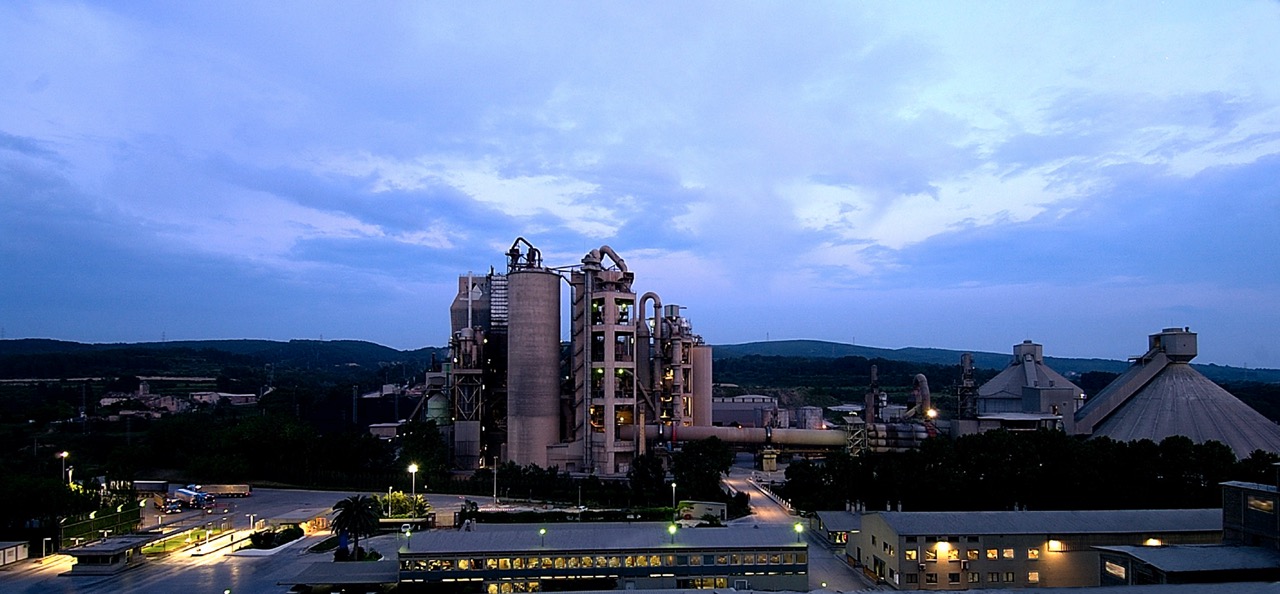
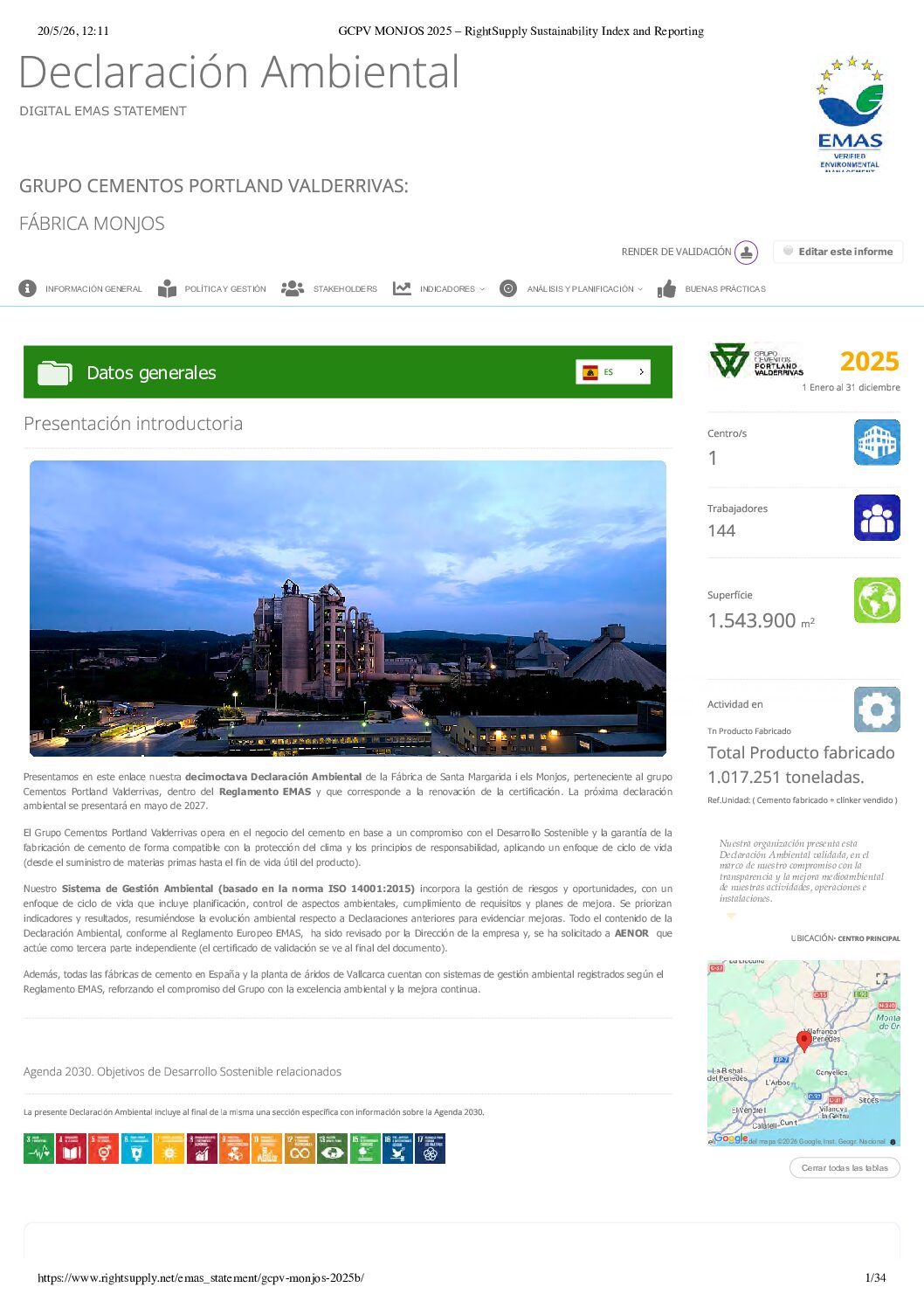
This link provides our eighteenth Environmental Statementfor the Santa Margarida i els Monjos Plant, part of grupo Cementos Portland Valderrivas, prepared in accordance with the EMAS Regulation and submitted as part of the certification renewal process. The next environmental statement will be submitted in May 2027.
The Grupo Cementos Portland Valderrivas operates in the cement business on the basis of a commitment to Sustainable Development and the guarantee of manufacturing cement in a way that is compatible with climate protection and responsibility principles, applying a life-cycle approach (from the supply of raw materials to the end of the product's useful life).
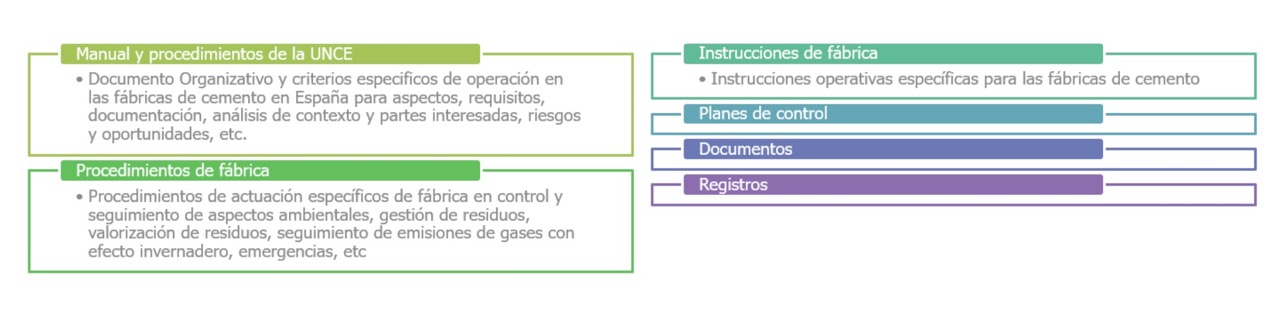
OurEnvironmental Management System (based on the ISO 14001:2015 standard) incorporates the management of risks and opportunities, using a life-cycle approach that includes planning, control of environmental aspects, compliance with requirements, and improvement plans. Indicators and results are prioritized, summarizing environmental performance compared to previous Statements to demonstrate improvements. The entire content of the Environmental Statement, in accordance with the European EMAS Regulation, has been reviewed by company management, and AENOR has been requested to act as an independent third party (the validation certificate is shown at the end of the document).
In addition, all cement plants in Spain and the Vallcarca aggregates plant have environmental management systems registered under the EMAS Regulation, reinforcing the Group's commitment to environmental excellence and continuous improvement.
Agenda 2030. Related Sustainable Development Goals
This Environmental Statement includes at the end a specific section with information on the 2030 Agenda.




 |
2025 |
January 1 through December 31
 Centre/s
1
 Workers
144
 Area
Area
1,543,900 m²
 Activity in
Tn Product Manufactured
Total production: 1,017,251 tons.
Unit Ref: ( Cement manufactured + clinker sold )
LOCATION- MAIN CENTER



Social information
Link here to our main social networks.
 |
 |
 |
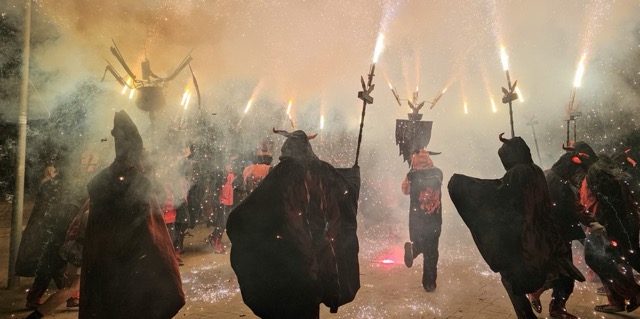
Sponsorship of local festivals.
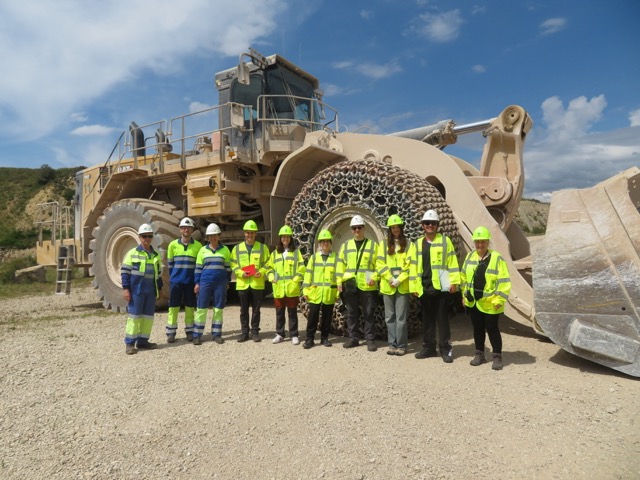
Factory tour for geology students from the University of Barcelona.
 |
Environmental assessment and performance |
|
Key metrics |
◉ Global indicators 2025
Includes the sum of all the organisation's sites under the EMAS Register.
ENERGY CONSUMPTION

1,144,917.36MWh
• Renewable energy consumption : 32.9%
• Renewable generation0%
WATER CONSUMPTION

37,278.1m³
- Supply network 0
Origin Well | Others
SANITARY DISCHARGES

3,672m³
•100% sewerage system
CO2 EMISSIONS

783,873metric tons
• Indirect: 1.73%
• Direct 98.27%
WASTE

3,577.89tons
• Hazardous 0.004%
• Recovery 78.16%
Unit values on production/performance
1.13 MWh/ton of manufactured product
0.037 m³/Tn of Manufactured Product
0.004 m³/Tn of Product Manufactured
0.771 Tn/Tn Manufactured Product
0.0035 Tn/Tn Manufactured Product
Unit Ref: Tn Product Manufactured ( Cement manufactured + clinker sold )
|
Dimension of the activity |

Evolution of production activity
Business performance
Type of productive activity
Evolution of production activity
Evolution of production activity
The wide range of products manufactured in Monjos allows for the ideal selection of cement type based on the end use. The cements currently on the market, which include 10 grades, are certified with the AENOR Product Certification "N" markand theCE marking, complying with the UNE-EN 197-1 and UNE-EN 197-2 standards. Some cements also holdAFNOR's NF certification.
In line with the sector’s goals to achieve climate neutrality, efforts are underway to manufacture cements with a lower carbon footprint, thereby actively contributing to the decarbonization of the industry. These new products, Types II and III, incorporate a higher proportion of active additives to replace clinker, which is the primary source of emissions in the manufacturing process. In 2025, two new, more sustainable cements were certified: CEM III/A 42.5 N/SRC and CEM II/B-M (S-L) 42.5 R with slag admixture, both designed to reduce environmental impact without compromising product quality.
In 2025, clinker production fell by approximately 20% compared to the previous year, mainly as a result of a four-month shutdown of the highest-capacity kiln, caused by the implementation of the investment in the new grate cooler. Despite this reduction, total cement production remained at levels similar to the previous year, with lower bulk product shipments, aligning operations with the actual performance of the Catalan market, which in 2025 was characterized by subdued cement demand.
Our cements have a Safety Data Sheet (SDS), which provides key information for a safe and responsible use of the product. This is especially important because of its irritant nature due to its alkalinity.

 |
Energy use and management |
Environmental management and control
In 2025, there was a decrease in total energy consumption (fuels and electricity), with the decline being more significant in fuel consumption. This decrease is primarily due to reduced furnace operation resulting from a four-month shutdown of Furnace 5E—the one with the highest capacity—to replace the satellite cooler with a more efficient grate cooler. Likewise, the graph also shows a reduction in the consumption of alternative fuels, associated with furnace shutdowns due to instabilities in the production process.
On the contrary, the data show an increase in the electricity consumption ratio. This increase is related, on the one hand, to the production of cement with active additives that require longer grinding times to ensure equivalent performance, and on the other hand, to consumption associated with major investments made during this period. The shutdown of kiln 5E for several months has also influenced the calculation of this ratio.
Fuel consumption
The use of alternative fuels containing biomass is a key strategy in the fight against climate change, as they are considered carbon-neutral in terms of greenhouse gas emissions and allow for the partial replacement of fossil fuels. In this context, the Cementos Portland Valderrivas group integrates both the fight against climate change and the promotion of the circular economy into its strategy, committing to the gradual incorporation of these alternative fuels.
Recovery from waste in cement plants is a safe and effective solution that reduces greenhouse gas emissions, conserves non-renewable resources, and prevents waste from being sent to landfills. This process is carried out under strict environmental controls, ensuring the protection of human health and the environment, while moving toward more sustainable production. For more information, visit: www.recuperaresiduosencementeras.org.
The Monjos facility is registered in the Catalonia Waste Management Registry under code E-1165.10, underscoring its commitment to Recovery .
In 2025, the plant achieved a 34.4% energy substitution rate by using the alternative fuels described in the previous section. All of these fuels come from waste that could not be reused or recycled and would otherwise have ended up in a landfill. In addition, grape pomace and grape seeds—materials from the agricultural industry that are 100% biomass and have a high calorific value—have been used as fuels.
Electricity consumption
Significant investments are currently being made at the plant to improve the energy efficiency of the production process and reduce specific electricity consumption. At the same time, the company has adopted a more sustainable energy mix, prioritizing the use of electricity from renewable sources, in line with a responsible energy transition.
The effects of these investments, combined with the improvements resulting from the energy targets set for 2025, are expected to take hold starting in 2026, contributing to a reduction in the kWh/ton of manufactured product metric.
Evolution of specific metrics and ratios
Units of energy consumption in MWh and their ratios associated with the activity.
Energy consumption by fuel
Uses of energy
|
Renewable energies |
Energías Renovables
Configuración Colores
Note: Renewable energies are considered to be those from the use of biomass as fuel in the clinker kilns, and electricity contracted with guaranteed renewable origin within the energy mix.
 |
Water use and management |

Environmental management and control
For years, the Monjos plant has been working on responsible and efficient management of this resource. Facilities have been improved to reduce consumption and, as a priority, wastewater from the Alcoholera Catalana company is reused in the conditioning of gases before passing through the sleeve filters, which represents the largest consumption of water in the facility.
In 2025, the increase in water consumption was primarily due to the lifting of the restrictions imposed over the previous two years under the Drought Decree, which allowed for increased irrigation of roads and restored areas. Additionally, there was higher water consumption for human use as a result of the increase in staff associated with the implementation of new investments. This increase was managed by maintaining measures to control and monitor water consumption, while promoting the efficient use of this resource at all times.
On a quarterly basis, the volumes of water consumed are declared to the Agència Catalana de l'Aigua in accordance with Decree 47/2005, of March 22nd.
Evolution of specific metrics and ratios
Water consumption (m³) and ratios
Water Uses
 |
Waste water discharge management |
Environmental management and control
To guarantee the quality of the receiving environment, periodic analyses are carried out on the water discharged into the sewage system, the municipal wastewater treatment plant (WWTP), and the water discharged into public waterways. The self-monitoring parameters, as well as the sampling frequency and limits are defined in the facility's Integrated Environmental Authorization. Throughout 2025, all limits set forth in the Environmental Permit were met in the internal tests conducted by an accredited laboratory, as well as in the inspections carried out by the Catalan Water Agency. The results of all inspections are reported annually to the government during the first quarter of the year, and every four years, the Water Use and Pollution Report (DUCA) is submitted to the Catalan Water Agency. The most recent report was submitted in December 2024.
Public waterway receiving the discharge: Sewage system: Vilafranca del Penedès municipal wastewater treatment plant / Public watercourse: River Foix
 |
Atmospheric emissions |

Environmental management and control
In order to minimize the environmental impact of the activity, specific measures have been implemented to prevent and control gas and particle emissions. These actions are based on the use of Best Available Techniques, periodic and continuous emission controls at localized sources, preventive filter maintenance, preventive measures to minimize diffuse emissions and air quality monitoring. In addition, emissions are strictly controlled and monitored, ensuring legal compliance and promoting continuous improvement in environmental performance. To ensure the proper functioning of the particulate filtration systems, a regular preventive maintenance plan has been established for all emission sources. In addition, every two years, an accredited monitoring body verifies compliance with emission limit values at the 31 most significant sources—which account for 90% of the total flow—through spot checks of particulate emissions. The furnace sources are subject to stricter continuous monitoring and are connected to the XEAC (Catalan Atmospheric Emissions Network). In 2025, isolated instances of exceeding the emission limit value were detected at two points in the cement grinding and clinker transport stages. However, the overall assessment of legal compliance is conducted using the virtual point, in accordance with Article 6.2 of Royal Decree 815/2013. According to this methodology, the virtual emission concentration was 4.8 mg/Nm3, significantly lower than the limit value applicable to the plant (16.9 mg/Nm3). Emissions generated during the combustion process in clinker kilns are monitored using continuous emission monitors connected to the regulatory agency via the XEAC, which enable continuous monitoring of the following pollutants: NOx, SO2, CO, particulate matter, HCl, total organic carbon (TOC), NH3, and Hg. Emissions of other minor pollutants are monitored through quarterly spot measurement campaigns. In 2025, all pollutants continuously monitored at the three emission points associated with the clinker kilns complied with the emission limit values established in the Environmental Permit. With regard to periodic monitoring, a single instance of exceeding the Cd+Tl limit value was recorded in kiln 5E (Vila side) during the first quarter of 2025. Following an analysis conducted jointly with the monitoring agency and the Air Monitoring and Control Service, it was concluded that the result obtained for the concentration of these metals is invalid due to a measurement error. Specific measures to reduce and control emissions are implemented for the main air pollutants generated during the process: Throughout the year, we have been working on key projects aimed at optimizing processes and increasing the use of alternative fuels, the effects of which are expected to result in a reduction in the CO2 emission ratio starting in 2026. Key initiatives include: Data on channeled emissions are reported annually to the State Pollutant Emissions and Sources Register (PRTR Spain), expressed as pollutant load and publicly available at www.prtr-es.es. The minimization of emissions resulting from the transfer and movement of powdery materials has been achieved by applying preventive measures such as belt fairing, road paving, suction systems at transfer points and frequent watering, among others. To assess the environmental impact on air quality, two PM10 monitors and a continuous NO₂ analyzer are in operation in La Ràpita and Els Monjos, urban areas near the factory that are considered to be at risk of potential impact. This equipment is part of the XVPCA (Catalonia Air Pollution Monitoring and Forecasting Network), and the data is publicly available on the website of the Department of Territory and Sustainability. Data from 2025 confirm that levels remain stable compared to previous years and within the reference values established in Royal Decree 102/2011, regarding the improvement of air quality. In addition, a test for settleable particles is conducted at the quarry every three years. The most recent test was conducted in 2025, and the results at all sampling points were below the reference value. It should be noted that air quality in a given area depends on its nature, urban or rural, and is influenced by multiple external factors such as traffic, industrial activity and meteorological conditions (rainfall, wind, atmospheric stability). In April 2025, a highly reputable company conducted a new study to monitor pollutants in the vicinity of the plant, continuing the monitoring campaigns that began in 2000 with the aim of assessing the long-term trends in levels of metals, dioxins, and furans in soil, air, and vegetation. The results confirm levels below the limits established by Catalan and European legislation, with values comparable to those in other rural areas of Catalonia. The risk levels—both carcinogenic and non-carcinogenic—associated with exposure to metals, dioxins, and furans in the vicinity of the factory are considered acceptable in accordance with national and international standards.Particulate matter emissions
Flue gas emissions
Diffuse emissions of particles and gases
 |
CO2 emissions |
CO₂ emissions per center.
 |
Waste production and management |

Environmental management and control
As part of its environmental best practices, the Monjos plant reuses waste generated from factory dust, refractory residues, mortar and concrete test specimens, and construction debris. These materials are incorporated into the clinker manufacturing process along with limestone from quarries, thereby helping to improve Recovery rates Recovery the Monjos plant.
The organization regularly monitors trends in waste generation, analyzing the results annually to identify trends, explain possible variations, and establish improvement measures that reinforce its commitment to continuous environmental improvement. External waste management is carried out by authorized waste management companies, with whom treatment contracts are formalized, and each delivery is documented in accordance with current legislation.
The plant has a Hazardous Waste Minimization Plan, which is integrated into the environmental management system, and whose main objective is to reduce the generation of this type of waste through prevention and the efficient use of resources. Specifically, in 2025, actions were established to extend the useful life of industrial oils, conducting annual analyses to verify their condition and ensure they retain the properties necessary for use; and, when necessary, filtration treatments are performed to extend their life cycle and reduce the amount of waste generated.
In 2025, the generation of Hazardous waste Hazardous by 10% compared to the previous year, mainly due to a one-time increase in oil change operations for machinery, which led to higher generation of this type of waste. The generation of other types of Hazardous waste Hazardous stable.
As for Hazardous waste, the temporary increases in wood, general waste, and cardboard were linked to construction work on new investment projects. However, the total volume generated decreased as a result of lower rubble production following the completion of civil engineering work on the new chiller.
Evolution of specific metrics and ratios
Generación de residuos
 |
Management of raw materials and resources |

Environmental management and control
The variation in the consumption ratios of natural and secondary raw materials is influenced by several factors: the composition of the stone extracted from the quarry, the type of cement produced according to market demand, and the availability of materials in the market.
The graph shows a decrease in total raw material consumption in 2025, due primarily to the four-month shutdown of furnace 5E; there are no significant changes in consumption rates per unit of product manufactured compared to previous years.
Variations in the consumption ratios of natural and secondary raw materials are influenced by both the composition of the quarry stone and the type of cement being produced.
In 2025, the use of secondary raw materials in clinker—such as steel slag and iron ore—decreased, due to the characteristics of the quarry raw material and the type of clinker produced. Conversely, the percentage of secondary materials used in cement relative to total materials consumed increased slightly, rising from 2.6% in 2024 to 2.8%, due to greater use of granulated slag in the production of more sustainable cements.
In the case of cement, the most significant environmental indicator is the clinker content per ton of cement produced, since reducing this content means using less clinker in the process, which helps lower CO2 emissions while maintaining the same performance of the final product. In 2025, this figure decreased by approximately 3% compared to the previous year.
The consumption table also includes auxiliary raw materials required for the production process but that do not directly contribute to the manufacture of clinker or cement, such as the explosives used in quarry blasting and the packaging for bagged products.
With regard to packaging, compliance with the requirements set forth in Royal Decree 1055/2022 on packaging and packaging waste is ensured; this decree regulates the prevention, reuse, recycling, and sustainable design of packaging, in line with the principles of the circular economy.
Evolution of specific metrics and ratios
Resource consumption
Type of materials
 |
Biodiversity |
Biodiversity indicators
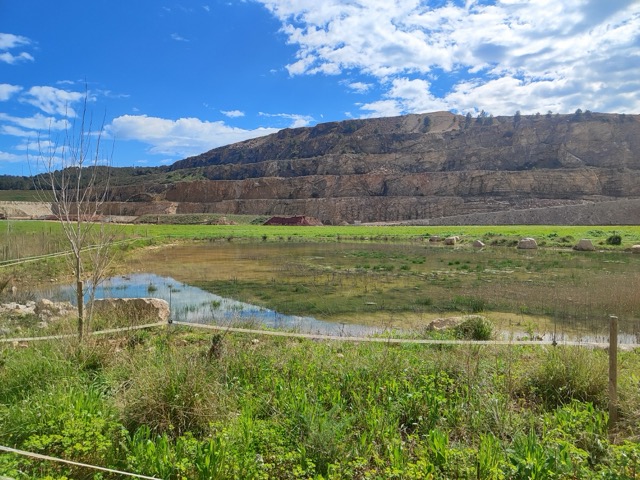
The main impact on the landscape derived from our activity is the exploitation of natural resources in our own marl and limestone quarry. For this reason, the Grupo Cementos Portland Valderrivas has defined as a future challenge the "development of integrated management criteria for the restoration of quarries and the promotion of biodiversity", a challenge that is in line with the measures established in the Environmental Authorization of the Monjos plant. The restoration of the quarry is carried out simultaneously with its exploitation, as part of the commitment to protect the environment. In addition, since 2007, 6 small plots of approximately 1 hectare each have been maintained in the quarry area, where cereals and leguminous plants are grown to promote biodiversity and attract local fauna such as the Bonelli's eagle that lives near the area. In July 2019, the Administration approved the new restoration program, incorporating it into Uniland exploitation no. 3,875. And, with a view to the future, a landscape study was presented in collaboration with a firm of architects and the municipalities of Santa Margarida i Els Monjos and Olèrdola, which contemplates the recovery of the quarry after its exploitation, integrating environmental, social, economic, urban and landscape criteria. By 2025, the restored area will total 45.84 hectares, representing 41.2% of the total affected area. Each year, actions are carried out in accordance with the work plan, which is consistent with the approved restoration program. Throughout the year, the following restoration actions have been carried out:Biodiversity and restoration work
Restoration evolution
 |
Other information of environmental interest |

Significant and/or sector specific indicators
Sound emissions
The main impact of noise emissions in the surroundings of the manufacturing facilities is the disturbance of the population and fauna. In the case of the Monjos factory, located near the town of Santa Margarida i Els Monjos, and the quarry, near the Daltmar housing development, various measures have been implemented to minimize this impact.
At the plant, silencers have been installed at the main noise sources and buildings such as the cement and crude oil mills have been closed to minimize the propagation of noise to the nearest inhabited areas.
In the quarry, a natural mound is maintained as a noise barrier to minimize the noise generated by the crusher, especially in the direction of the Daltmar development. In addition, the advance of the quarry is strategically planned to reduce the noise emitted by the activity.
Every two years, noise measurement campaigns are conducted at representative locations around the factory and quarry to verify compliance with legal limits. The most recent official inspections, carried out by an accredited body in 2025 at the factory and in 2024 at the quarry, confirm that emission levels remain stable compared to previous years and comply with current regulations.
Vibrations
Vibrations generated by blasting in the quarry are controlled in accordance with the UNE 22381:93 standard "control of vibrations produced by blasting", taking as a reference the limits established for group II buildings (residential buildings). To minimize vibrations, the Monjos factory has been using a non-electrical initiation load sectioning system for years, which reduces the vibration velocities recorded. In addition, in blasting near the Daltmar housing development, the benches are divided into two heights, which allows for smaller and less impactful blasting.
In 2025, the annual average of the measurements was 9.2% above the legal limit, a figure very similar to that of the previous year. The variations observed are due to the distance between the blast site and the seismograph.
Soil and groundwater protection
The activities carried out in the factory and the quarry involve the handling of potentially polluting substances, such as oils, greases, diesel, ..... The Environmental Authorization establishes specific requirements for monitoring and control of the subsoil and groundwater at different points of the facilities. The last control was carried out in 2021 and no incidents were recorded.
In response to a request from the Catalan Water Agency dated October 2025, an environmental characterization and diagnostic study was conducted in February 2026 at two locations within the factory where isolated hydrocarbon contamination had historically been detected. The study, prepared by a government-accredited monitoring entity, also included a risk analysis concluding that the health risk to potential recipients is acceptable. Additionally, a biennial groundwater quality monitoring program has been established to track changes in the quality of groundwater and the subsoil.
 |
Environmental aspects and impacts |

Description of the most important and significant environmental aspects
Identification of environmental and energy aspects
Direct environmental and energy aspects are those generated by the activities of the factory and quarry, over which there is total control of their management. These are grouped according to their environmental vector and are evaluated under normal and abnormal operating conditions. Examples of these aspects include confined and diffuse atmospheric emissions, CO2 emissions, energy consumption, exploitation of natural resources,...
Indirect environmental and energy aspects arise from activities, products and services over which there is no direct control. In particular, the following are considered: greenhouse gas emissions associated with the transportation of raw materials and fuels purchased, emissions from electricity consumption, packaging waste placed on the market after use, and the management of cement waste at the end of its useful life.
And the emergency aspects refer to the analysis of abnormal operating conditions that could cause damage to the environment. This analysis makes it possible to anticipate risks and establish appropriate preventive and response measures.
Evaluation of significant aspects
The evaluation of environmental and energy aspects is the basis for the revision of the management system, the planning of objectives and the definition of control and improvement measures.
The evaluation methodology distinguishes between different types of operating conditions:
- normal operating conditions: aspects are evaluated according to the criteria of hazardousness (understood as proximity to legal limits or internal objectives), quantity (comparing data with those of the previous year) and complaints or legal non-compliance.
- abnormal conditions: these are valued according to the quantity generated and the complaints or non-compliances recorded.
- indirect aspects: they are analyzed considering the quantity (comparing ratios with the previous year) and the capacity of influence (possibility of establishing actions for their reduction).
- aspects in emergency situations: these are evaluated according to the probability of occurrence, the severity of the impact (taking into account the resilience of the environment) and complaints or legal non-compliance.
Once the evaluation has been carried out, those aspects with a score above the established threshold are identified as significant, which allows us to focus our efforts on the most relevant impacts and guide the continuous improvement of environmental and energy performance.
This statement covers the environmental and energy aspects assessed in March 2025, based on data from 2024. As a result, electricity consumption and the consumption of additives have been identified as significant, for which targets have been set for 2025, as well as other aspects for which no targets have been established because they are considered to be adequately controlled.
No significant environmental impacts have been identified in emergency situations or as a result of indirect effects.
Description of significant environmental aspects
 |
Environmental improvement planning |

Environmental improvement planning
The table shows the degree to which the objectives set out in the Environmental and Energy Program for 2025 have been achieved.
Compliance has been monitored on a regular basis through meetings of the factory’s Environmental Committee and the Environmental Committees of the Spain Operations Division at the corporate level.
ENVIRONMENTAL AND ENERGY IMPROVEMENTS
The modernization and continuous improvement of production facilities help reduce the environmental and energy impacts of the process by applying the best available techniques to prevent and minimize pollution.
Investments made in 2025 have focused on minimizing significant environmental and energy impacts by increasing Recovery and material Recovery , as well as improving energy efficiency. The main initiatives are detailed below:
- Installation of a system to add a fourth component to cement mills: increased Recovery and a reduced carbon footprint for the final product.
- Installation and commissioning of the 5E furnace cooler and construction work on an alternative fuel gasification plant: increased Recovery and reduced CO2 emissions from fossil fuels.
- Installation of variable frequency drives on the fans of the coal mill and the M3G separator: optimization of electricity consumption.
- Improvements to the alternative fuel storage and dispensing system: increased Recovery and reduced CO2 emissions from fossil fuels.
- Purchase of a new wheel loader: reduced emissions and energy consumption associated with transportation, as it is a new vehicle.
In addition to these major investments, a number of smaller-scale environmental and energy-efficiency improvements have also been implemented, helping to reduce the impacts associated with the operation. These include the replacement of motors with IE3-class models, the conversion to LED lighting, the replacement of air conditioning units, and the restoration of 0.99 hectares of the quarry.
 |
Legal compliance analysis |

List of permits, authorizations and declarations in force
The facility has an Integrated Environmental Authorization (AAI), granted by the Generalitat de Catalunya, which includes the technical requirements and the control regime to be followed for most environmental aspects, guaranteeing compliance with regulations and the application of the Best Available Techniques to prevent or reduce pollution.
The main applicable legal references are as follows:
- Resolution of April 11, 2019, renewing to Cementos Portland Valderrivas, S.A. the environmental authorization for the cement manufacturing activity, and partially modified on October 17, 2019 after resolution of the appeal for reconsideration filed by the company.
- Resolution of May 5, 2006 of the Agència Catalana de l'Aigua (ACA), to grant Uniland Cementera, S.A. the maximum use of 93,000 m3/year of water. On September 4, 2015, the ownership was transferred to Cementos Porland Valderrivas S.A. by resolution of the ACA.
- Resolution of July 24, 2019, on the incorporation of the new restoration program to the Uniland exploitation concession No. 3875.
- Resolution, dated May 16, 2019, of authorization of emissions of potentially polluting activities to the atmosphere for the establishment of Monjos quarry.
- Resolution, dated July 28, 2020, for the non-substantial modification of the Environmental Authorization to update the table of waste generated by the activity and the modification of the percentage of energy substitution to 48%.
- Resolution, dated December 22, 2020, renewing the greenhouse gas emission authorization for the period 2021-2030 for the Monjos cement manufacturing facility.
- Resolution, dated April 15, 2021, for the non-substantial modification of the environmental authorization for the use of coal as fuel and the inclusion of the ash management activity through the R13 route.
- Resolution, dated August 8, 2021, regarding a non-substantial amendment to the Environmental Permit for the construction of a syngas facility, the modification of waste storage areas, and the Recovery of steel slag and gypsum waste.
- Resolution of May 17, 2022, establishing the obligation of continuous measurement of mercury emissions in furnaces.
- Resolution, dated October 14, 2022, for a non-substantial modification consisting of the construction of a new waste storage building and a new dosing of alternative fuels to the furnace. Subsequent resolution of an appeal for reconsideration on February 27, 2023.
- Authorization, dated September 12, 2023, for the discharge of quarry wastewater into a public waterway.
- Resolution, dated October 25, 2023, of non-substantial modification for the incorporation of fluorspar and granulated blast furnace slag as raw materials, as well as the replacement of the satellite cooler of furnace 5E with a new generation grate cooler.
- Resolution, dated October 25, 2024, regarding a non-substantial modification consisting of the modification of a waste storage facility, the construction of a new dosing system for kiln 5E, the construction of a facility to add a fourth component to cement mills, and the modification of the raw materials table.
Regulatory Compliance Summary
Legislative developments at the European, national, regional, and local levels regarding the environment and energy are continuously analyzed, incorporating into the system the requirements applicable to cement manufacturing and quarry operations, and keeping the corresponding register of legal requirements up to date. In 2025, the periodic review of applicable legislation was conducted, identifying and updating the relevant legal requirements.
An annual assessment of compliance with environmental and energy regulations is conducted with the participation of the company’s Legal Counsel, who verifies the degree of compliance with all identified requirements. As a result of the assessment conducted in 2025, no violations of applicable laws were detected.
|
Good environmental management practices |
ADVANCES IN SUSTAINABILITY AND ENVIRONMENTAL COMMUNICATION
Ecodesign and LCA
Eco-design and life cycle analysis are essential tools for improving the environmental performance of products from their origin through to the end of their useful life. Their application makes it possible to optimize processes, reduce environmental impacts, and move toward more sustainable production. In the cement industry, they are applied alongside circular economy strategies such as Recovery (use of secondary raw materials) and energy Recovery (use of alternative fuels), contributing to more sustainable production.
Life Cycle Assessment (LCA) makes it possible to identify, quantify, and characterize the environmental impacts of a product throughout its entire life cycle. At the grupo Cementos Portland Valderrivas, this analysis has been conducted through AENOR’s GlobalEPD program, resulting in assessments that help manage the use of waste as raw materials or fuels, track the disposal of packaging, and monitor processes to improve environmental performance.
Environmental Product Declarations
Environmental Product Declarations (EPDs) are environmental communication tools that provide transparency and credibility as they are based on third-party verified LCA studies. They allow you to report on the environmental impact of your products in a clear and standardized way.
In 2024, Cementos Portland Valderrivas drafted and verified the Product Data Sheets (PDS) for the cements it markets at all its plants in Spain; for the Monjos plant, PDSs for seven cements have been published. The DAPs have been verified by AENOR in accordance with standards EN ISO 14025:2010, EN 15804:2012+AD:2019, and EN 16908:2017+A1:2022, ensuring a rigorous assessment of environmental impact.
In addition, the process and certification of all cements under AENOR's Ns mark, an evolution of the traditional N mark for quality, has begun. This certification establishes a new sustainability standard, being the first in Spain to guarantee that a product is sustainable from an integral approach, evaluating not only technical and performance quality, but also environmental impact, social responsibility and corporate governance.
Integration with SDG of Agenda 2030


◉ Verification record
This Digital Environmental Statement has been verified by:
– AENOR
The document with the highest validity, or in the event of discrepancies, shall be the PDF digitally signed by the verifying body. This document is an accurate representation and printout of this Digital Environmental Declaration or rendered website. Interested parties may download this rendering here as a sample and proof of the consistency and integrity of the data validated in this DIGITAL ENVIRONMENTAL DECLARATION. DAD-EMAS-GCPV-Monjos-ES-2025L-y-DV.pdf
Date of lastedition: – Render version File No.: 0
ORGANIZATION: GRUPO CEMENTOS PORTLAND VALDERRIVAS - CENTER/s - COVERAGE: MONJOS FACTORY
ACCESS TO THE EUROPEAN REGISTRY: EUROPEAN COMMISSION
TRANSLATIONS OF THIS ENVIRONMENTAL STATEMENT: This EMAS Environmental Statement has been verified in its original language. The browsers used by stakeholders for consultation, or the Platform RightSupply itself, may automatically translate its direct transcription, without the certifying body considering its translated content as validated a priori. Methods such as sworn translation are recommended for this purpose.
EXTERNAL LINKS AND AUDIOVISUAL CONTENT: This EMAS Environmental Statement has been verified in its entirety, with the exception of external links and audiovisual or videographic content that may have been included for complementary purposes.
DIGITALIZATION: Digitization of environmental statements is a best practice with multiple sustainability benefits. By eliminating the use of paper, a significant reduction in energy and water consumption is achieved, which in turn minimizes the carbon footprint. This digital transition not only supports the environment, but also improves data accuracy and consistency, optimizing management efficiency, environmental reporting and access to information for stakeholders. This initiative was recognized as a best practice in 2022 within the European Union's INTERREG EUROPE public policy program (ENHANCE EMAS), underlining its importance in promoting a greener and more efficient administration across Europe.
Template: 2026 Final